Want to learn more? Visit us at
http://www.shalimarfamilydentistry.com
http://www.northstapleydentalcare.com
Want to learn more? Visit us at
http://www.shalimarfamilydentistry.com
http://www.northstapleydentalcare.com
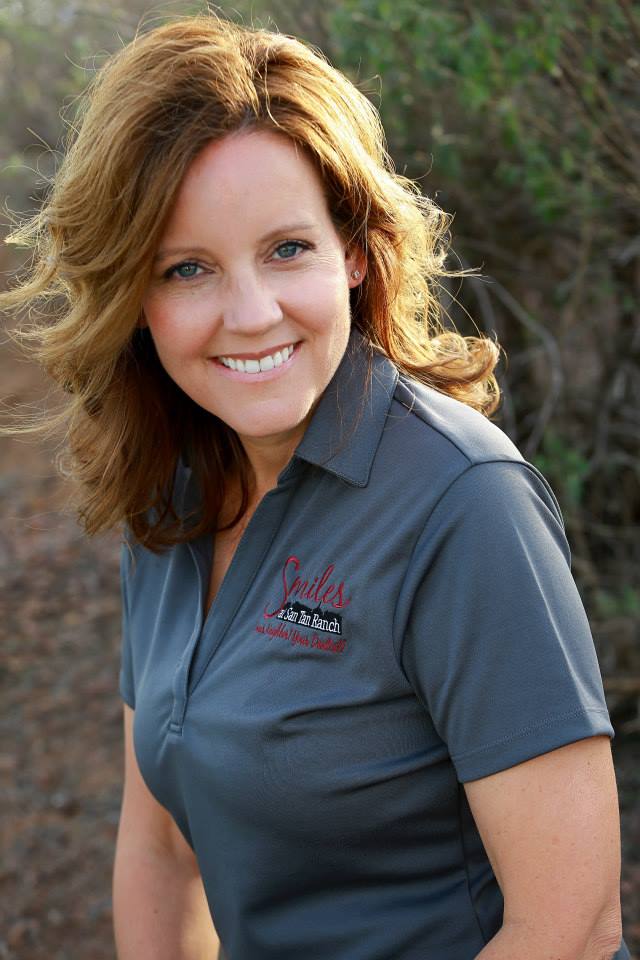
Katie Moynihan, BS RDH
No Insurance? No Problem!
Just when you thought you couldn’t afford dental treatment because you do not have dental insurance, think again. We have you covered, and are here to help! Our offices offer an in-office savings plan for patients who do not carry insurance. This savings plan provides members preventative and diagnostic treatment at a discounted fee. Knowing how important preventative care is to keeping treatment costs low and your oral health high, we have designed our plan to reward you and your family for coming in for your regular check ups.
In-Office Savings Plan
Annual Membership Cost is paid each year by the 15th of the month during the month the patient first begins the plan with the office. This annual membership fee is due each year to remain a current savings plan member.
Annual Membership Cost
Single Member $99/YR
Member +1 $165/YR
Member +2 $235/YR
New Patient Specials
18+ yrs – New Exam, Full Set of X-rays, Oral Cancer Exam and Routine Cleaning – $150
6-17 yrs – New Exam, X-rays, Child Cleaning, Fluoride Treatment and 2 Sealants – $150
1-6 yrs – New Exam, X-rays, Child Cleaning, and Fluoride Treatment – $100
Preventative and Diagnostic Treatments
Established Patient Exam $30 membership fee -vs- $59 full fee without insurance
Check-up X-rays (7 films) $40 membership fee -vs- $100 full fee without insurance
Full Series or Panoramic X-ray $60 membership fee -vs- $140 full fee without insurance
Routine Cleaning (adult) $45 membership fee -vs- $102 full fee without insurance
Routine Cleaning (child) $30 membership fee -vs- $76 full fee without insurance
Fluoride Treatment $20 membership fee -vs- $47 full fee without insurance
Sealant (per tooth) $25 membership fee -vs- $45 full fee without insurance
*Periodontal Maintenance $70 membership fee -vs- $510 full fee without insurance
Restorative Treatment – tooth colored fillings, porcelain crowns, porcelain bridges, dentures, and partial dentures
First year on the plan = 20% discount off of Usual, Customary, Reasonable (UCR) Fees
Second year on the plan = 25% discount
Third year on the plan = 30% discount
Oral Surgery Treatment – extractions, implants, and bone grafts *Excludes Sedation
First year on the plan = 20% discount off of UCR Fees
Second year on the plan = 25% discount
Third year on the plan = 30% discount
Endodontic Treatment – root canals
First year on the plan = 20% discount off of UCR Fees
Second year on the plan = 25% discount
Third year on the plan = 30% discount
Periodontal Therapy – gum disease treatments *Excludes Periodontal Maintenance
First year on the plan = 20% discount off of UCR Fees
Second year on the plan = 25% discount
Third year on the plan = 30% discount
IV Sedation-
$450 – 90 minutes of sedation
$100 – 30 minutes following initial 90 minutes
Cosmetic Treatment – whitening, veneers, all porcelain crowns for front teeth, and Invisalign
10% discount off of UCR Fees
In-Office Savings Plan Disclaimer:
If the cost of dental treatment is preventing you from scheduling an appointment with us, please think again. We are here to help you and provide you with all the resources you need. Our office happily accepts most insurance programs including but not limited to: Dental Dental, Cigna, Principal, Aetna, Guardian, Assurant, MetLife, Blue Cross Blue Shield, Humana, and United Health Care. We also offer OAC (on approved credit) financing such as CareCredit. With CareCredit, you can pay for treatment and procedures right away and then make convenient monthly payments. For more information about CareCredit please visit: www.carecredit.com or visit our offices and we would be happy to help you!
Want to learn more? Visit us at
http://www.shalimarfamilydentistry.com
http://www.northstapleydentalcare.com
Becky Larson, RDH
Oral Cancer Awareness
It’s April again! Which means Oral Cancer Awareness month. I can’t even begin to tell you how critical it is to receive regular oral cancer screenings. Your dentist and/or dental hygienist should perform a basic screening at your six month check-ups. We also recommend having a more in depth oral cancer screening (such as the Velscope, Oral ID, or Identafi) annually. These more in depth screenings use florescent or ultra violet lights that can detect signs of oral cancer much earlier. The earlier cancer is caught, the sooner treatment can begin and the better the prognosis.
Oral cancer is any abnormal growth of cells in the oral cavity (mouth). Abnormal cell growth can be benign (no cause for concern) or malignant (can be life-threatening). The oral cavity consists of the lips, cheek lining, salivary glands, hard and soft palates, uvula, tongue, floor of the mouth (underneath the tongue), gums, and tonsils. The tongue and the floor of the mouth are the most common areas for oral cancer to occur. However, the cancer can spread to other areas of the oral cavity and/or other areas of the body.
Oral cancer can manifest itself in many ways including swellings, lumps or bumps, numbness, abnormal bleeding, white patches, red patches, speckled patch, sores that do not heal, sore throat, pain when chewing/speaking/etc., changes in voice, ear pain, and dramatic weight loss. If you are experiencing any of these symptoms please visit your dentist or primary care physician.
Risk factors for oral cancer include tobacco use, alcohol use, sun exposure, having HPV (Human papillomavirus), and a history of having oral cancer previously. Tobacco use is the reason for most oral cancers, especially in those individuals who have used tobacco for lengthy amounts of time. The risk increases when tobacco users become heavy alcohol drinkers. Three out of every four oral cancers occur in people who use alcohol, tobacco, or both. The Human papillomavirus is mainly linked to oropharyngeal cancers. Limiting sun exposure and the use of sun screen and lip balm can help reduce the risk. Men are twice as likely to develop oral cancer than women. It is also important to note that more than 25% of oral cancers are found in individuals with no risk factors.
Everyone is at risk! Make sure to visit your dentist and dental hygienist for regular oral cancer screenings.
Want to learn more? Visit us at
http://www.shalimarfamilydentistry.com
http://www.northstapleydentalcare.com
http://www.alamedadentalaz.com
http://www.dentistingilbert.com
Sources:
http://www.medicinenet.com/oral_cancer/article.htm
http://www.webmd.com/oral-health/guide/oral-cancer
http://www.cdc.gov/std/hpv/STDFact-HPVandOropharyngealCancer.htm
Amanda Orvis, RDH
Pregnancy and Oral Health
Being pregnant comes with various responsibilities and it is important that you continue to maintain your normal brushing and flossing routine throughout your pregnancy.
For most women your routine dental visits are safe throughout your pregnancy. Make sure when calling to make your dental appointments you let your dental office know what stage of your pregnancy you are in. Let the office know if you have had any changes in your medications or if you have received any special instructions from your physician. Depending on your specific situation and your treatment needs, some of your dental appointments and procedures may need to be postponed until after your pregnancy.
Dental x-rays are sometimes necessary if you suffer a dental emergency during your pregnancy, or if they are needed for diagnostic purposes. It may be wise to contact your physician prior to your dental appointment to get their approval to have x-rays done if they are necessary.
During pregnancy some women may develop a temporary condition known as pregnancy gingivitis which is typically caused by hormonal changes you experience during pregnancy. This is a mild form of periodontal disease that can cause the gums to be red, tender and/or sore. It may be recommended that you be seen for more frequent cleanings to help control the gingivitis. If you notice any changes in your mouth during pregnancy, please contact your dentist.
During your pregnancy you may have the desire to eat more frequently. When you feel the need to snack try to choose foods that are low in sugar and that are nutritious for you and your baby. Frequent snacking can cause tooth decay. It is also a great idea to incorporate fluoridated mouth rinse into your daily routine. There are several different brands to choose from. Make sure to look for the ADA seal of approval which guarantees safety and effectiveness
If you experience morning sickness anytime throughout your pregnancy you can try rinsing with a teaspoon of baking soda mixed with water. This mixture lowers the acidity present in your mouth. This acidity can cause erosion of the enamel. Your gag reflex may also become overly sensitive during your pregnancy, so switching to a smaller toothbrush head may be beneficial.
Please remember that the body goes through many changes during pregnancy and maintaining your normal brushing and flossing routine plays an important role in your overall health.
Want to learn more? Visit us at
http://www.shalimarfamilydentistry.com
http://www.northstapleydentalcare.com
http://www.alamedadentalaz.com
http://www.dentistingilbert.com
Sources:
Tips for Toddlers
Want to learn more? Visit us at
http://www.shalimarfamilydentistry.com
http://www.northstapleydentalcare.com
Andra Mahoney, BS RDH
Your Pets Teeth are Important Too!
Next week is February and February is National Pet Dental Health Month. Just like in humans, it’s very important for your pets to have healthy, happy teeth! Plaque and tartar grow on animals teeth, just as they do in humans. Animals can get periodontal disease, just like humans. The down side is when your pet’s mouth hurts, they cannot tell you the same way humans can.
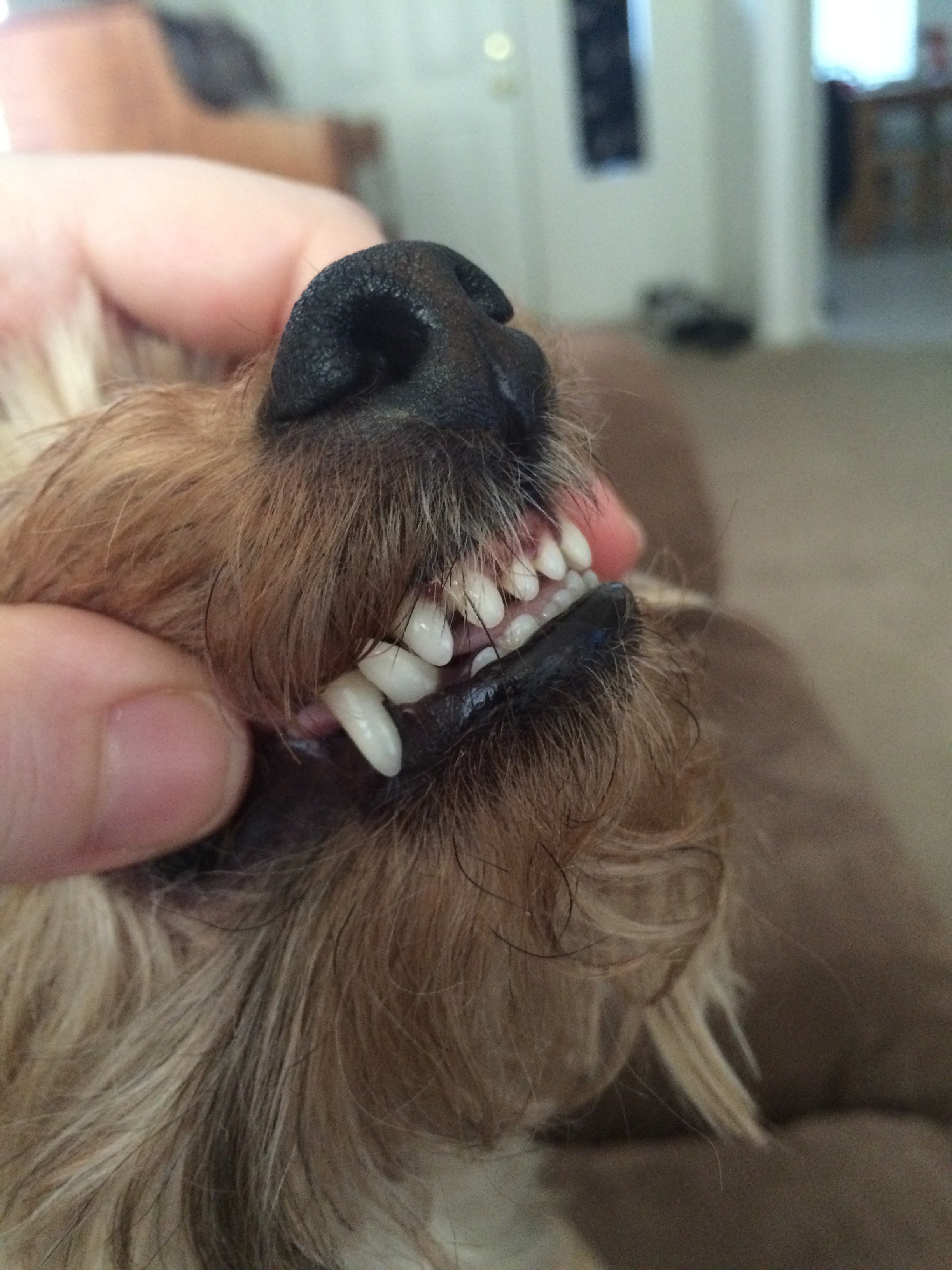
This is a 6 year old, male, Yorkshire Terrier. His owners has taken care of his mouth his whole life. He has received healthy, crunchy, dog kibble, and minimal human food. His teeth are brushed. He has appropriate chew toys and treats. As you can see his teeth are white and shiny. Gums are healthy and happy too!
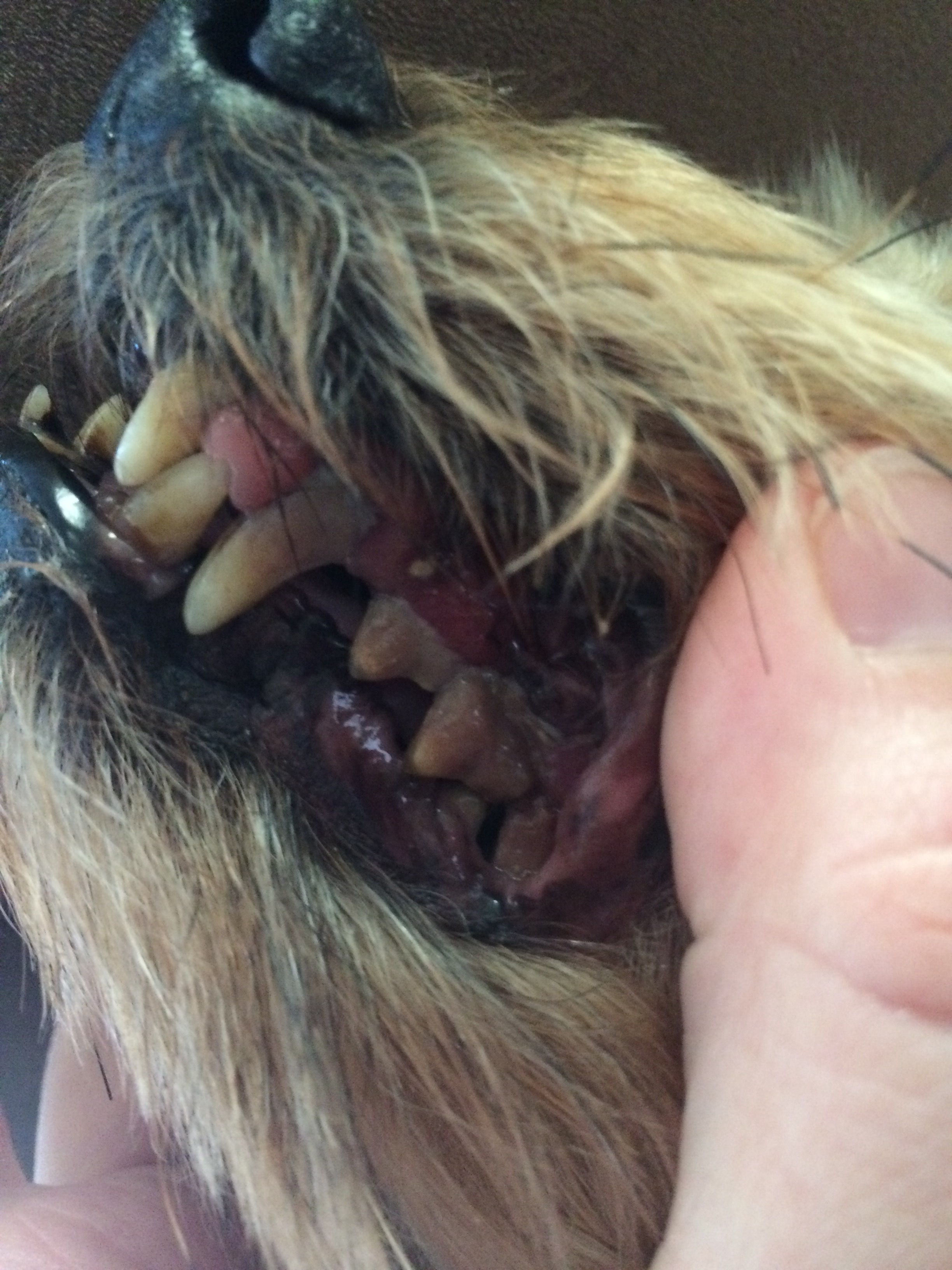
This is a 12 year old, female, Yorkshire Terrier. Her pervious owners did not take care of her mouth. As a result you can see her yellow/brown teeth covered in tartar. Her gums are angry and inflamed. She has periodontal disease and will soon loose more teeth than she already has. Until she has her cleaning and her teeth/gums are in health, she cannot eat crunchy kibble. Her food has to consist of soft foods she doesn’t have to really chew. She cannot enjoy the same treats as the previous dog. And the vet has said that her periodontal bacteria has caused her to have a respiratory condition.
The American Veterinarian Medical Association has a wonderful article on the importance of your pet’s dental health. You will find a lot of similarities between the importance of keeping your mouth keep and the importance of keeping your pet’s mouth clean!
“Dental health is a very important part of your pet’s overall health, and dental problems can cause, or be caused by, other health problems. Your pet’s teeth and gums should be checked at least once a year by your veterinarian to check for early signs of a problem and to keep your pet’s mouth healthy.
Veterinary dentistry includes the cleaning, adjustment, filing, extraction, or repair of your pets’ teeth and all other aspects of oral health care. These procedures should be performed by a veterinarian or a board-certified veterinary dentist. Subject to state or provincial regulation, veterinary technicians are allowed to perform certain dental procedures under the supervision of a veterinarian.
The process begins with an oral exam of your pet’s mouth by a veterinarian. Radiographs (x-rays) may be needed to evaluate the health of the jaw and the tooth roots below the gumline. Because most dental disease occurs below the gumline, where you can’t see it, a thorough dental cleaning and evaluation are performed under anesthesia. Dental cleaning includes scaling (to remove dental plaque and tartar) and polishing, similar to the process used on your own teeth during your regular dental cleanings.
Your pet’s teeth should be checked at least once a year by your veterinarian for early signs of a problem and to keep your pet’s mouth healthy.
Have your pet’s teeth checked sooner if you observe any of the following problems:
Some pets become irritable when they have dental problems, and any changes in your pet’s behavior should prompt a visit to your veterinarian. Always be careful when evaluating your pet’s mouth, because a painful animal may bite.
Although cavities are less common in pets than in people, they can have many of the same dental problems that people can develop:
Periodontal disease is the most common dental condition in dogs and cats – by the time your pet is 3 years old, he or she will very likely have some early evidence of periodontal disease, which will worsen as your pet grows older if effective preventive measures aren’t taken. Early detection and treatment are critical, because advanced periodontal disease can cause severe problems and pain for your pet. Periodontal disease doesn’t just affect your pet’s mouth. Other health problems found in association with periodontal disease include kidney, liver, and heart muscle changes.
It starts with plaque that hardens into tartar. Tartar above the gumline can often easily be seen and removed, but plaque and tartar below the gumline is damaging and sets the stage for infection and damage to the jawbone and the tissues that connect the tooth to the jaw bone. Periodontal disease is graded on a scale of 0 (normal) to 4 (severe).
The treatment of periodontal disease involves a thorough dental cleaning and x-rays may be needed to determine the severity of the disease. Your veterinarian or a board-certified veterinary dentist will make recommendations based on your pet’s overall health and the health of your pet’s teeth, and provide you with options to consider.
When you go to the dentist, you know that what’s being done is meant to help you and keep your mouth healthy. Your dentist uses techniques to minimize pain and discomfort and can ask you how you are feeling, so you accept the procedures and do your best to keep still. Your pet does not understand the benefit of dental procedures, and he or she reacts by moving, trying to escape, or even biting.
Anesthesia makes it possible to perform the dental procedures with less stress and pain for your pet. In addition, anesthesia allows for a better cleaning because your pet is not moving around and risking injury from the dental equipment. If radiographs (x-rays) are needed, your pet needs to be very still in order to get good images, and this is unlikely without heavy sedation or anesthesia.
Although anesthesia will always have risks, it’s safer now than ever and continues to improve so that the risks are very low and are far outweighed by the benefits. Most pets can go home the same day of the procedure, although they might seem a little groggy for the rest of the day.
Prevention of the most common oral disease in pets consists of frequent removal of the dental plaque and tartar that forms on teeth that are not kept clean. Regularly brushing your pet’s teeth is the single most effective thing you can do to keep their teeth healthy between dental cleanings, and may reduce the frequency or even eliminate the need for periodic dental cleaning by your veterinarian. Daily brushing is best, but it’s not always possible and brushing several times a week can be effective. Most dogs accept brushing, but cats can be a bit more resistant – patience and training are important.
There are many pet products marketed with claims that they improve dental health, but not all of them are effective. Talk with your veterinarian about any dental products, treats, or dental-specific diets you’re considering for your pet, or ask your veterinarian for their recommendation.”
Below is a video produced by the AVMA that is published on their youtube page. It is very informative video on how to brush your pet’s teeth. Check it out: https://youtu.be/wB3GIAgrTPE
Want to learn more? Visit us at
http://www.shalimarfamilydentistry.com
http://www.northstapleydentalcare.com
http://www.alamedadentalaz.com
http://www.dentistingilbert.com
Sources:
https://www.avma.org/public/PetCare/Pages/Pet-Dental-Care.aspx
https://www.avma.org/events/pethealth/pages/February-is-National-Pet-Dental-Health-Month.aspx
Amanda Orvis, RDH
Tips for Flossing and Maintaining Your Oral Health While in Braces
Flossing may seem like it is almost impossible when you are in braces. It can even seem intimidating. It is a fact that it takes longer to floss your teeth if you have traditional wired braces. Thankfully there are tools that can help take some of the hassle out of flossing around braces. Please read below for some suggestions.
Floss Threaders
These threaders are a great tool to help achieve getting your floss behind your wire and between your teeth. Simply grab a normal piece of floss and one threader. Thread the floss through the loop hole in the threader, the same way you would thread a needle. After you have threaded the floss threader, simply guide the threader behind your orthodontic wire and floss between your teeth. See picture below.
Super Floss
Super floss is a pre-threaded flosser. It consists of three parts. Part one is the stiffened needle-like end. Part two is the spongy floss. Part three is the regular floss. This one piece threaded floss is great for maneuvering around those orthodontic wires. The great thing about super floss is that you do not have to thread the floss at all; it is already done for you! The spongy part of the floss is great for those wider spaces between your teeth that you get while your teeth are moving and shifting while you are in braces. The traditional end of the floss is great for those tighter spaces. See picture below.
Proxabrushes
These small brushes are great for cleaning between the teeth and behind your orthodontic wires. Proxabrushes help to remove the plaque in those hard to reach areas which are commonly missed. To use these brushes, you simply guide the brush behind the wire and move the brush up and down cleaning any remaining plaque on the teeth after brushing.
Waterpik
Waterpiks, also known as water flossers, are great to use around orthodontic brackets and wires. They are easy and effective. You simply point the water flosser between your teeth along the gumline and let the water spray between the teeth. Water flossers help to remove plaque and food debris in those hard to reach areas.
*If you would like a demonstration on any of these products please ask your dentist or dental hygienist at your next dental visit.
Want to learn more? Visit us at
http://www.shalimarfamilydentistry.com
http://www.northstapleydentalcare.com
http://www.alamedadentalaz.com
http://www.dentistingilbert.com
Sources:
Becky Larson, RDH
What is a filling?
As a dental hygienist, I find that more often than not, my patients are confused. Dental professionals tend to speak a “different language” and it can be very hard to understand. A dental filling is a very common procedure that is performed at the dental office. This post will go over what a dental filling is.
Unfortunately, teeth are prone to decay. When decay occurs on one or more surfaces of a tooth, a hole or cavity forms. A dental filling is the standard treatment used to fix a tooth with one or more areas of small decay. By placing a filling, a dentist is able to restore a tooth back to its normal function and shape. When a dentist gives you a filling, he or she first removes the decayed tooth material with a dental drill, cleans the affected area, and then fills the cleaned out cavity with a filling material.
A filling also helps to prevent future decay because it closes off spaces where bacteria may enter. Materials used for fillings include gold, porcelain, composite resin (tooth-colored fillings), and amalgam (an alloy of mercury, silver, copper, tin and sometimes zinc).
It is important to follow your dentist’s recommendations for placing fillings. When decay is left untreated it can cause the tooth to fracture, cause an abscess or infection, and/or destroy the inside or pulp of the tooth. As a result, more extensive treatment such as a crown, root canal, and/or extraction may be needed.
Want to learn more? Visit us at
http://www.shalimarfamilydentistry.com
http://www.northstapleydentalcare.com
http://www.alamedadentalaz.com
http://www.dentistingilbert.com
Sources:
http://www.colgate.com/en/us/oc/oral-health/procedures/fillings/article/what-is-a-filling
Sharma Mulqueen RDH
Is Your Toothbrush Making you Sick?
Everyone’s focusing on the hand washing when they’re sick, with good reason. But how about washing your toothbrush? Washing your hands can reduce the risk of illness since we put our hands in our mouths, our eyes, our ears. So why is there no focus on cleaning the toothbrush during illness when we stick it directly into our mouths? What can we do to prevent the germs from passing on?
Reintroducing that toothbrush back into your mouth could be the worst thing you could be doing for your health on a daily basis.
That doesn’t mean don’t brush.
Many studies clearly state that all of the presently available toothbrushes have the ability to be infected by a wide range of microorganisms, including viruses which can cause the common cold to even herpes. Pneumonia-causing bacteria also are found on a toothbrush.
What can you do?
According to the Centers for Disease Control (CDC), a simple regimen for toothbrush care is sufficient to remove most microorganisms from your toothbrush and limit the spread of disease. Here are some common-sense steps you can take:
In summary, do not reuse your floss, keep your toothbrush clean, and replace during and after illness. Store it outside the bathroom and use it several times per day. Brush twice a day for two minutes and floss daily and see your dentist every six months for check ups!
Want to learn more? Visit us at
http://www.shalimarfamilydentistry.com
http://www.northstapleydentalcare.com
http://www.alamedadentalaz.com
http://www.dentistingilbert.com
Sources:
Andra Mahoney, BS RDH
AZ Mission of Mercy
Next month, Decemeber 11th-12th, our offices will be going down to the AZ State Fairgrounds in Phoenix and volunteer again at the 4th Annual AZ Mission of Mercy.
“Since 1994, Mission of Mercy has been providing free healthcare, free dental care, and free prescription medications to the uninsured, under-insured, and those who “fall through the cracks” of our healthcare system.
An independent nonprofit 501 (c)(3), faith-based community organization, Mission of Mercy receives no government funding. Because of this, we can provide healthcare without any pre-qualifications. None of our patients must prove their poverty or residency.
Founded in 1991 and launched in 1994 by clinical pharmacist, Gianna Talone Sullivan, Pharm D., headquartered in Pennsylvania and serving clinics in Arizona, Maryland, Pennsylvania and Texas, Mission of Mercy now has 17 clinics providing more than 25,000 free patient visits each year.”
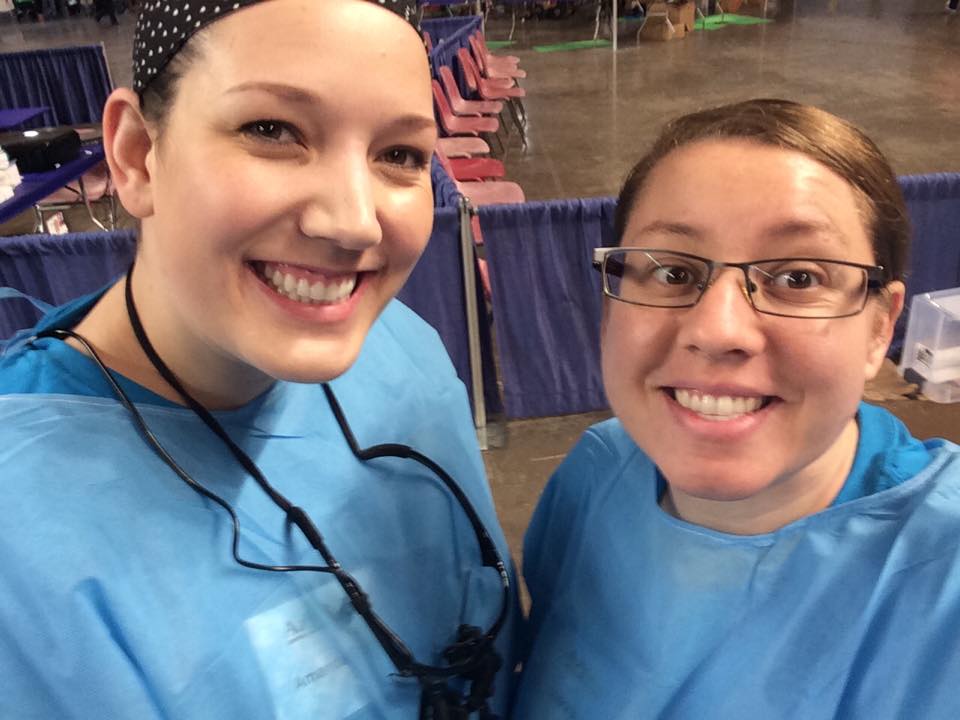
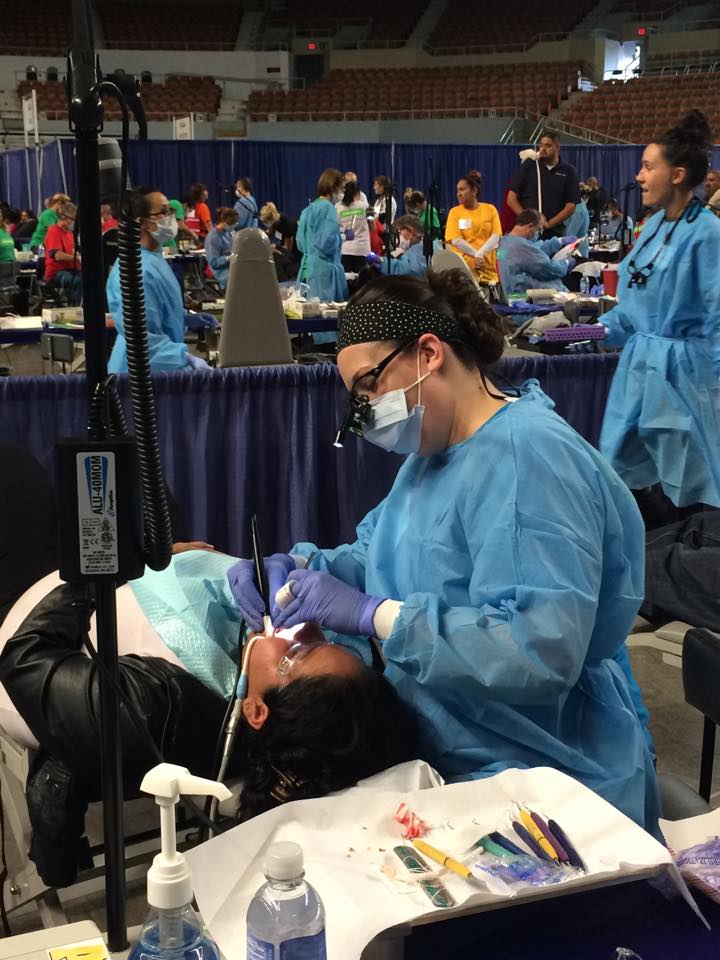
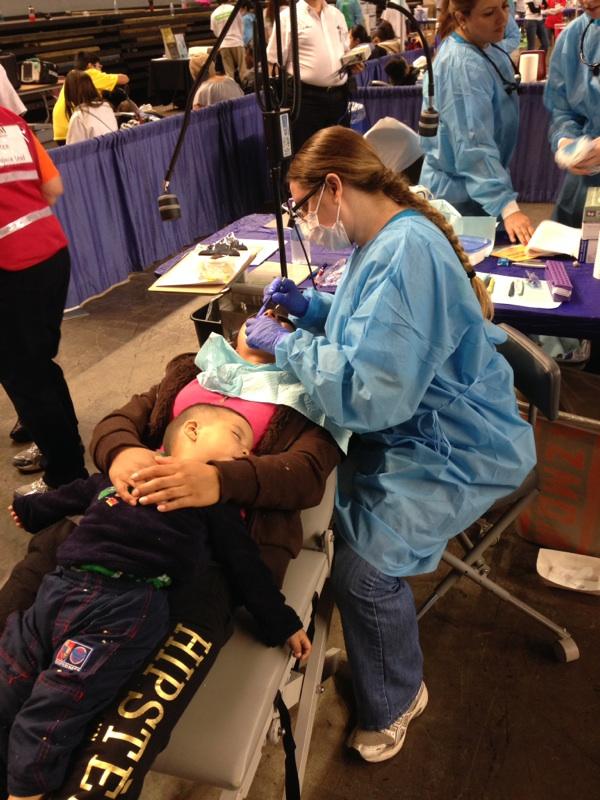
Here are some pictures of when our offices volunteered last year:
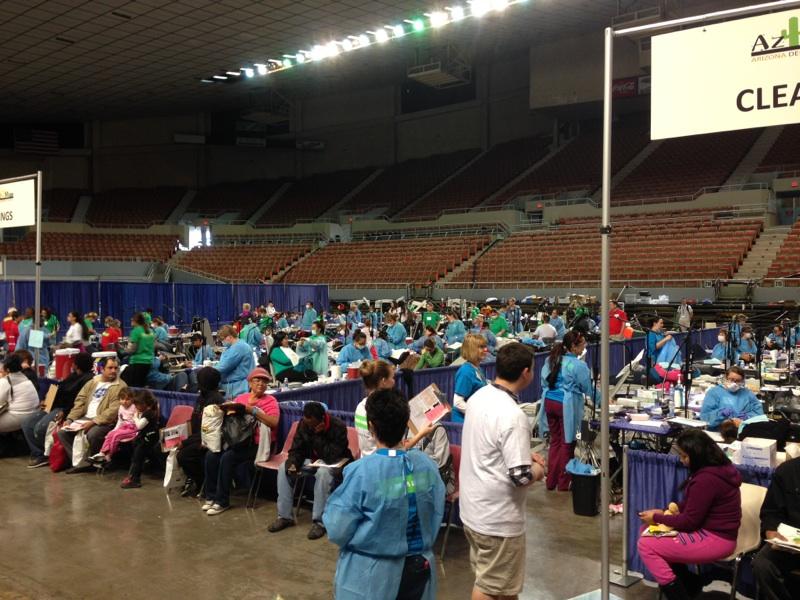
This was the line waiting to get in. Thousands of people waited overnight and in the rain to receive dental care.
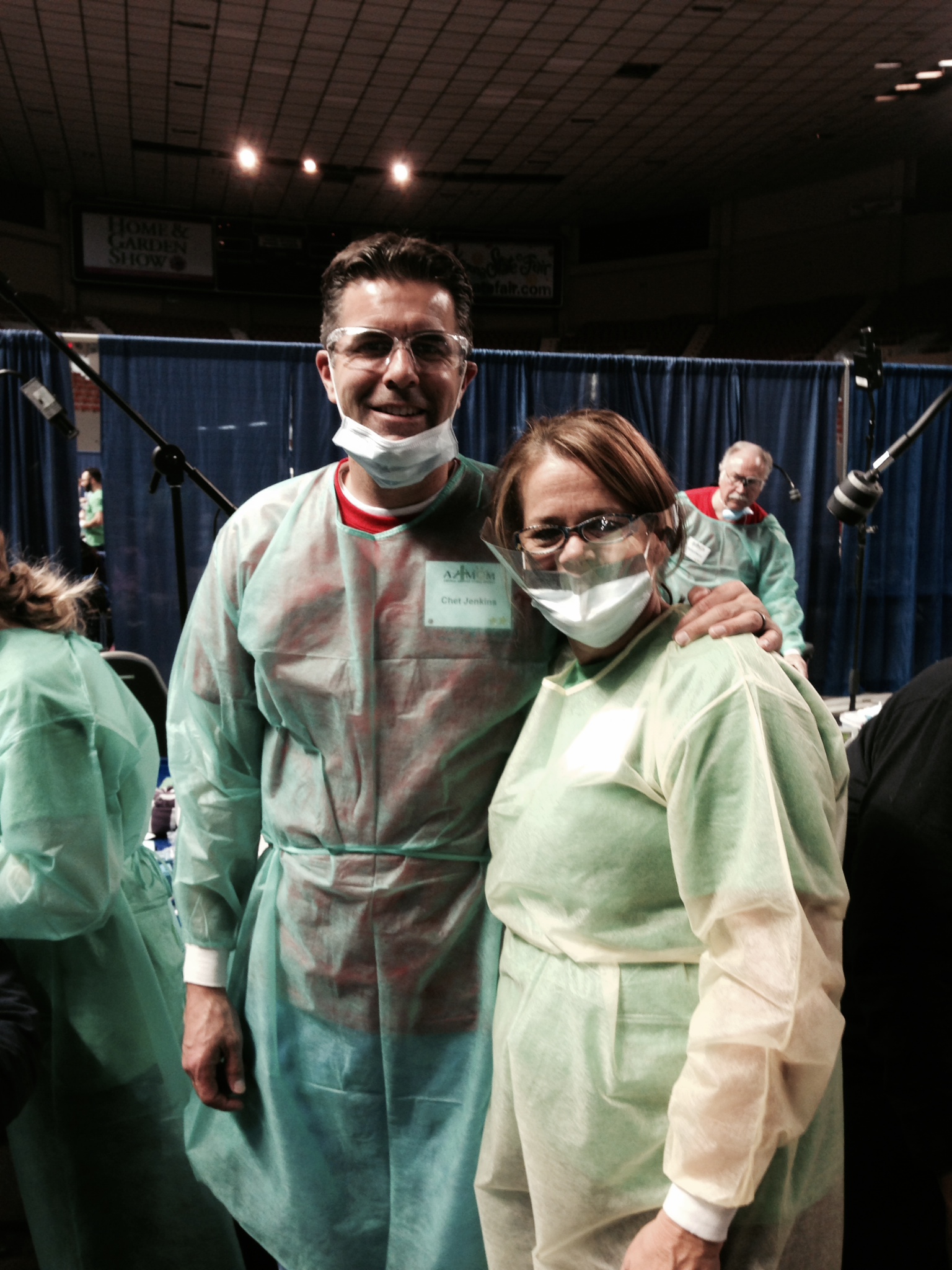
Some of our great team! From Left to Right: Dr Dastrup, Ann – Hygienist, Dr Miller, Morgan – Assistant, Darlene – Assistant, Jennifer – Assistant, and Dr Jenkins.
Dr Jenkins and Darlene
Dr Miller and Morgan
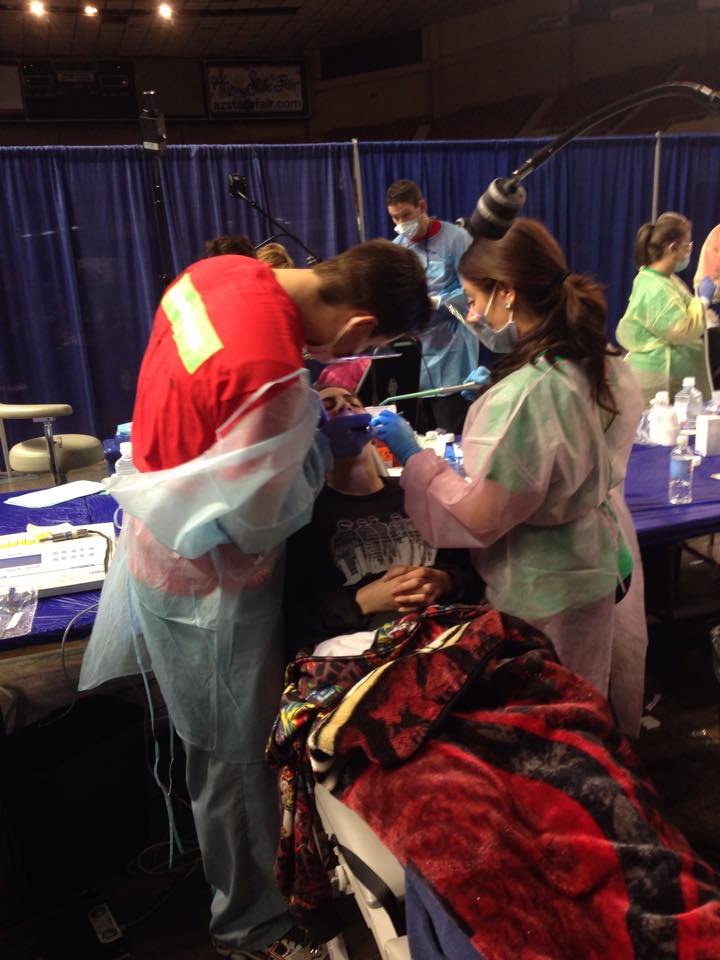
Dr Dastrup and Jennifer, hard at work!
Ann, Hygienist, helping brighten smiles!
Amanda and Andra, Hygienists, getting ready to clean!
Amanda, Hygienist, helping fight plaque and tartar build-up to make a happy mouth!
After waiting in such a long line, it feels nice to relax and have Andra, Hygienist, clean your teeth!
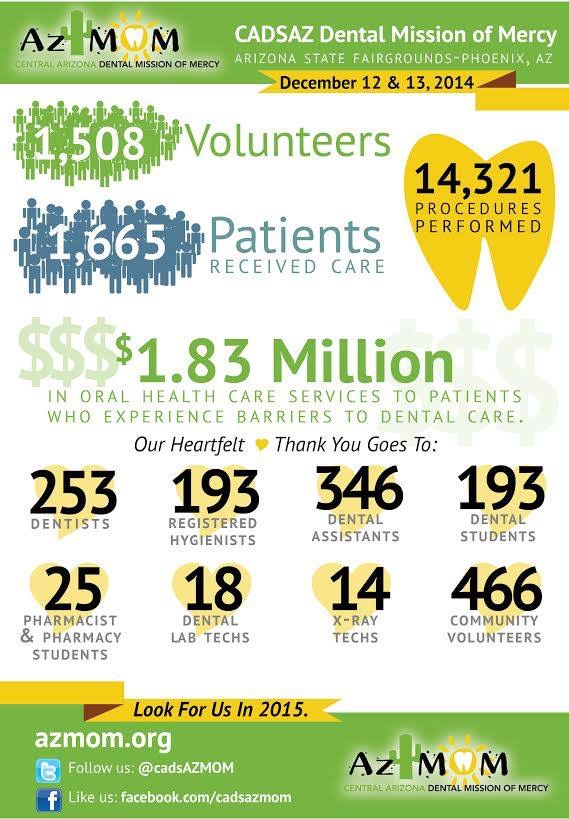
Here are the awesome statistics from last years Mission of Mercy event. We are looking forward to going again this year! If you are interested in volunteering for this event, everyone is welcome! You do not have to be a medical profession, there is a job for everyone.
Want to learn more? Visit us at
http://www.shalimarfamilydentistry.com
http://www.northstapleydentalcare.com
http://www.alamedadentalaz.com
http://www.dentistingilbert.com
Sources: