Oral Cancer Awareness

KO6A3321-Edit

Becky Larson, RDH

Oral Cancer Awareness

It’s April again!  Which means Oral Cancer Awareness month.  I can’t even begin to tell you how critical it is to receive regular oral cancer screenings.  Your dentist and/or dental hygienist should perform a basic screening at your six month check-ups.  We also recommend having a more in depth oral cancer screening (such as the Velscope, Oral ID, or Identafi) annually.  These more in depth screenings use florescent or ultra violet lights that can detect signs of oral cancer much earlier.  The earlier cancer is caught, the sooner treatment can begin and the better the prognosis.

Oral cancer is any abnormal growth of cells in the oral cavity (mouth).  Abnormal cell growth can be benign (no cause for concern) or malignant (can be life-threatening).  The oral cavity consists of the lips, cheek lining, salivary glands, hard and soft palates, uvula, tongue, floor of the mouth (underneath the tongue), gums, and tonsils.  The tongue and the floor of the mouth are the most common areas for oral cancer to occur.  However, the cancer can spread to other areas of the oral cavity and/or other areas of the body.

Oral cancer can manifest itself in many ways including swellings, lumps or bumps, numbness, abnormal bleeding, white patches, red patches, speckled patch, sores that do not heal, sore throat, pain when chewing/speaking/etc., changes in voice, ear pain, and dramatic weight loss.  If you are experiencing any of these symptoms please visit your dentist or primary care physician.

Risk factors for oral cancer include tobacco use, alcohol use, sun exposure, having HPV (Human papillomavirus), and a history of having oral cancer previously.  Tobacco use is the reason for most oral cancers, especially in those individuals who have used tobacco for lengthy amounts of time.  The risk increases when tobacco users become heavy alcohol drinkers.  Three out of every four oral cancers occur in people who use alcohol, tobacco, or both.  The Human papillomavirus is mainly linked to oropharyngeal cancers.  Limiting sun exposure and the use of sun screen and lip balm can help reduce the risk.  Men are twice as likely to develop oral cancer than women.  It is also important to note that more than 25% of oral cancers are found in individuals with no risk factors.

Everyone is at risk!  Make sure to visit your dentist and dental hygienist for regular oral cancer screenings.

Want to learn more? Visit us at

http://www.shalimarfamilydentistry.com

http://www.northstapleydentalcare.com

http://www.alamedadentalaz.com

http://www.dentistingilbert.com

Sources:

http://www.medicinenet.com/oral_cancer/article.htm

http://www.webmd.com/oral-health/guide/oral-cancer

http://www.cdc.gov/std/hpv/STDFact-HPVandOropharyngealCancer.htm

 

Your Tongue Says a lot About Your Health

KO6A8495-Edit - Copy

Lora Cook, RDH

Your Tongue Says a lot About Your Health

Look into the mirror, stick out your tongue.  What does it look like?  What is the color, the texture, what do you think it is saying about you?  Here are some examples of what you might see and what it means.

WHITE PATCHES: 

This may be a sign of a overgrowth of candida or yeast in your mouth. You may have also heard this condition called thrush.  This condition is very treatable with prescription from your dentist for a anti fungal mouth wash from the pharmacy.

BLACK AND HAIRY:

This can have several different causes; poor oral hygiene, bacteria overgrowth, or yeast growth.  This may look alarming it does not cause any health problems and is usually painless.  This condition will usually resolved without treatment.


RED AND WHITE SPOTS:

These are usually areas where your taste buds have worn down. This is very common and no need to treat.

WEBBED OR STRIPED LOOK:

This is a chronic auto immune disease that effects the mucus membrane in your mouth.

RED TONGUE:

This may simply indicate a fever or strep throat.  However chronic redness in tongue may indicate a deficiency in certain vital nutrients such as; folic acid, B12, or iron.  This is a photo of a individual with B12 deficiency; smooth, beefy, red tongue.

RIDGES:

This is a result of the tongue pressing into teeth, usually while you are sleeping.  This may be a tell tale sign that you tend to clinch and grind your teeth in your sleep, usually stress induced.

This ridges will go away, the treatment for clinch and grinding is a custom night guard.

Another potential cause of these ridges is if your tongue becomes slightly enlarged or swollen.  This may be a indication of thyroid problems.

Want to learn more? Visit us at

http://www.shalimarfamilydentistry.com

http://www.northstapleydentalcare.com

http://www.alamedadentalaz.com

http://www.dentistingilbert.com

Sources:

http://www.skinsight.com/adult/oralCandidiasisThrush.htm

http://www.mayoclinic.org/diseases-conditions/black-hairy-tongue/multimedia/black-hairy-tongue/img-20006420

http://www.care2.com/greenliving/do-your-taste-buds-change-as-you-get-older.html

http://www.aaom.com/oral-lichen-planus

http://stanfordmedicine25.stanford.edu/the25/tongue.html

http://www.healcure.org/tongue/tongue-problems/scalloped-tongue-causes-pictures-hyperthyroid-diagnosis-treatment/

Tips for Toddlers

KO6A0979-Edit[1]

Tips for Toddlers

Have you ever tried to brush the little one’s teeth and been so frustrated you just give up?!?  I have!  With 4 children of my own, I can tell you first hand that it’s not the easiest task to accomplish and each child is so different and will respond just a little differently.  So if one of these techniques don’t work for you, just try, try again.

Tip #1: For the babies who are teething or whose teeth are just breaking through, chewing on a toothbrush is an excellent idea!  No toothpaste needed, just the brush and lots of saliva!  

Tip #2:For the little ones, just when they’re starting to get their teeth – You sit on the floor, criss-cross apple sauce, and lay their head in your lap with their legs facing away from you.  (It will look like they’re laying in a dental chair, without the chair.)  Then have them extend their chip up towards you as you lightly brush their teeth in circular motions, just doing the best you can.  At first, you may be only able to brush for a few seconds, but after a while, they’ll get more used to it (and you, too) and before you know it, you’re brushing morning and night!  There are finger brushes that you can try as well if they don’t like the toothbrush.

Tip #3: Use a timer.  Any timer will do, just make sure that it stays in the bathroom where they’ll see it on the counter and use it.  It can be a one minute timer, one minute for the top and then flip it and do it again for the bottom teeth.  That way they are counting down to when they’re finished.

Tip #4: SING!  Sometimes I sing so much that my children tell me to stop, however, it truly works.  Find a song they like to sing or a number they like to count up to, and do it while you are brushing their teeth!  Some songs that worked well for my littles were “Itsy Bisty Spider,” sung twice, The ABC song, Wheels on the Bus, or London Bridges.  Whatever the song, decide how to break it up into two sections, brush the bottom teeth first, pause for a second to let them swallow and then finish on the top.  They think it’s fun and brushing time will go quickly and end up being fun instead of a drag.

Most importantly…..BE PATIENT!  It will come and eventually they will brush their teeth on their own.  It just takes time and lots of patience.  Don’t let this little thing become a battle early in their little lives.  If you need extra tips or help, don’t be afraid to ask your hygienist on your next visit in to see us!  Happy Brushing!
IMAG0913
Wendy Parker, R.D.H. and also known as M.O.M.

Are You a Mouth Breather?

KatieM

Katie Moynihan, BS RDH

Are You a Mouth Breather?

Breathing out of your mouth may not seem like a huge problem, but in terms of oral health and facial development, mouth breathing can create numerous oral health concerns. Chronic mouth breathing occurs when your body cannot get enough oxygen through your nose, therefore, must resort to your mouth for the necessary oxygen supply. It can be caused by several different factors – obstructive, habitual, and anatomic conditions. In most cases, mouth breathing is caused by chronic nasal obstruction. Examples of this include enlarged tonsils, allergies, nasal congestion, asthma, and nasal polyps. It may also be caused just by habit. A person might not even know any better because it is the norm for them to breathe through their mouth. Some anatomic conditions that can cause mouth breathing include Down syndrome, malocclusion, tongue thrusting, cerebral palsy, and sleep apnea. Each of these conditions contribute to the deprivation of oxygen which can lead to a host of unpleasant symptoms.

Signs and symptoms of mouth breathing in dentistry include:

  • dry lips and mouth
  • decreased saliva
  • inflamed and bleeding gums
  • increased plaque
  • frequent cavities
  • chronic bad breath
  • swollen tonsils/adenoids

Mouth breathing has been known to cause developmental problems in children. Often times children breathe through their mouth habitually and many parents never think twice about it. However, if left undiagnosed and untreated, it may lead to permanent skeletal deformities. The face can begin to grow long and narrow, the nose can become flat with small nostrils, and the lips can be thin on top and quite pouty on the bottom. This, in addition to the other negative effects to oral health, shows that mouth breathing is a whole body problem and should be treated as early as possible.


Yes, you read that right, mouth breathing can be treated! You would think that it would be an easy habit to change – just close your mouth, right? Unfortunately, for people who struggle with mouth breathing, it’s not that easy. The body simply doesn’t know how to breathe normally, and the muscles of the face and mouth have compensated and learned to work incorrectly. In order to stop mouth breathing, the muscles must be re-trained to function in new ways. Treatment includes respiratory exercises, lifestyle changes, and in some cases medical surgeries and devices. If you feel as though your mouth breathing is occurring more than normal, please consult with your dental or health care professional to determine the cause and treatment needed to correct your chronic mouth breathing.

Want to learn more? Visit us at

http://www.shalimarfamilydentistry.com

http://www.northstapleydentalcare.com

http://www.alamedadentalaz.com

http://www.dentistingilbert.com

Sources:

http://www.myfaceology.com/mouth-breathing/

http://www.knowyourteeth.com/infobites/abc/article/?abc=m&iid=296&aid=7327

http://besthealthus.com/conditions/oral-health/mouth-breather/

Tips for Flossing and Maintaining Your Oral Health While in Braces

KO6A3300-Edit[1]


Amanda Orvis, RDH

Tips for Flossing and Maintaining Your Oral Health While in Braces

Flossing may seem like it is almost impossible when you are in braces. It can even seem intimidating. It is a fact that it takes longer to floss your teeth if you have traditional wired braces. Thankfully there are tools that can help take some of the hassle out of flossing around braces. Please read below for some suggestions.

Floss Threaders

These threaders are a great tool to help achieve getting your floss behind your wire and between your teeth. Simply grab a normal piece of floss and one threader. Thread the floss through the loop hole in the threader, the same way you would thread a needle. After you have threaded the floss threader, simply guide the threader behind your orthodontic wire and floss between your teeth. See picture below.


Super Floss

Super floss is a pre-threaded flosser. It consists of three parts. Part one is the stiffened needle-like end. Part two is the spongy floss. Part three is the regular floss. This one piece threaded floss is great for maneuvering around those orthodontic wires. The great thing about super floss is that you do not have to thread the floss at all; it is already done for you! The spongy part of the floss is great for those wider spaces between your teeth that you get while your teeth are moving and shifting while you are in braces. The traditional end of the floss is great for those tighter spaces. See picture below.


Proxabrushes

These small brushes are great for cleaning between the teeth and behind your orthodontic wires. Proxabrushes help to remove the plaque in those hard to reach areas which are commonly missed. To use these brushes, you simply guide the brush behind the wire and move the brush up and down cleaning any remaining plaque on the teeth after brushing.


Waterpik

Waterpiks, also known as water flossers, are great to use around orthodontic brackets and wires. They are easy and effective. You simply point the water flosser between your teeth along the gumline and let the water spray between the teeth. Water flossers help to remove plaque and food debris in those hard to reach areas.


*If you would like a demonstration on any of these products please ask your dentist or dental hygienist at your next dental visit.

Want to learn more? Visit us at

http://www.shalimarfamilydentistry.com

http://www.northstapleydentalcare.com

http://www.alamedadentalaz.com

http://www.dentistingilbert.com

Sources:

http://oralb.com/en-us/products/super-floss

http://www.gumbrand.com/between-teeth-cleaning/floss-threaders/gum-eez-thru-floss-threaders-840a.html

http://www.gumbrand.com/between-teeth-cleaning/interdental-brushes/gum-go-betweens-proxabrush-cleaners-tight-872rn.html

https://www.waterpik.com/oral-health/how-to-floss/

What is a filling?

KO6A3321-Edit

Becky Larson, RDH

What is a filling?

As a dental hygienist, I find that more often than not, my patients are confused.  Dental professionals tend to speak a “different language” and it can be very hard to understand.  A dental filling is a very common procedure that is performed at the dental office.  This post will go over what a dental filling is.

Unfortunately, teeth are prone to decay.  When decay occurs on one or more surfaces of a tooth, a hole or cavity forms.  A dental filling is the standard treatment used to fix a tooth with one or more areas of small decay.  By placing a filling, a dentist is able to restore a tooth back to its normal function and shape.  When a dentist gives you a filling, he or she first removes the decayed tooth material with a dental drill, cleans the affected area, and then fills the cleaned out cavity with a filling material.

A filling also helps to prevent future decay because it closes off spaces where bacteria may enter.  Materials used for fillings include gold, porcelain, composite resin (tooth-colored fillings), and amalgam (an alloy of mercury, silver, copper, tin and sometimes zinc).

It is important to follow your dentist’s recommendations for placing fillings.  When decay is left untreated it can cause the tooth to fracture, cause an abscess or infection, and/or destroy the inside or pulp of the tooth. As a result, more extensive treatment such as a crown, root canal, and/or extraction may be needed.

Want to learn more? Visit us at

http://www.shalimarfamilydentistry.com

http://www.northstapleydentalcare.com

http://www.alamedadentalaz.com

http://www.dentistingilbert.com

Sources:

http://www.colgate.com/en/us/oc/oral-health/procedures/fillings/article/what-is-a-filling

https://www.nlm.nih.gov/medlineplus/ency/article/001055.htm

Is Your Toothbrush Making you Sick?

Sharma RDH

Sharma Mulqueen RDH

Is Your Toothbrush Making you Sick?

Everyone’s focusing on the hand washing when they’re sick, with good reason. But how about washing your toothbrush? Washing your hands can reduce the risk of illness since we put our hands in our mouths, our eyes, our ears. So why is there no focus on cleaning the toothbrush during illness when we stick it directly into our mouths? What can we do to prevent the germs from passing on?

Reintroducing that toothbrush back into your mouth could be the worst thing you could be doing for your health on a daily basis.

Screen Shot 2015-12-05 at 1.42.45 PM

That doesn’t mean don’t brush.

Many studies clearly state that all of the presently available toothbrushes have the ability to be infected by a wide range of microorganisms, including viruses which can cause the common cold to even herpes. Pneumonia-causing bacteria also are found on a toothbrush.

Screen Shot 2015-12-05 at 1.42.56 PM

What can you do?

According to the Centers for Disease Control (CDC), a simple regimen for toothbrush care is sufficient to remove most microorganisms from your toothbrush and limit the spread of disease. Here are some common-sense steps you can take:

  • Wash your hands thoroughly with soap and warm water before and after brushing or flossing.
  • After brushing, rinse your toothbrush with warm water and store it upright to air-dry.
  • Don’t cover your toothbrush or place it in a closed container until it is completely dry. A moist environment can foster bacterial growth.
  • Use a completely dry toothbrush. Everyone should have two toothbrushes to give ample time (24 hours) for it to dry out in between uses.
  • Don’t share a toothbrush with anyone. Also, don’t store toothbrushes in a way that might cause them to touch and spread germs.
  • Replace your toothbrush every three or four months. Dentists recommend this practice not as prevention against contamination, but because toothbrushes wear out and become less effective at cleaning teeth.
  • Always replace your toothbrush after a cold or other illness to prevent contamination.
  • If you or someone else in your family is sick, that person should use a different tube of toothpaste (travel size, for example), to prevent spreading germs to other toothbrushes.
  • The toothbrush should be viewed as a necessary evil as well as a bio hazard. Make sure it is clean before using it!

In summary, do not reuse your floss, keep your toothbrush clean, and replace during and after illness. Store it outside the bathroom and use it several times per day. Brush twice a day for two minutes and floss daily and see your dentist every six months for check ups!

Want to learn more? Visit us at

http://www.shalimarfamilydentistry.com

http://www.northstapleydentalcare.com

http://www.alamedadentalaz.com

http://www.dentistingilbert.com

Sources:

https://www.deltadentalins.com/oral_health/toothbrush.html

http://guidetodentistry.com

http://www.cdc.gov/oralhealth/infectioncontrol

AZ Mission of Mercy

KO6A0990-Edit

Andra Mahoney, BS RDH

AZ Mission of Mercy

Next month, Decemeber 11th-12th, our offices will be going down to the AZ State Fairgrounds in Phoenix and volunteer again at the 4th Annual AZ Mission of Mercy.

“Since 1994, Mission of Mercy has been providing free healthcare, free dental care, and free prescription medications to the uninsured, under-insured, and those who “fall through the cracks” of our healthcare system.

An independent nonprofit 501 (c)(3), faith-based community organization, Mission of Mercy receives no government funding. Because of this, we can provide healthcare without any pre-qualifications. None of our patients must prove their poverty or residency.

Founded in 1991 and launched in 1994 by clinical pharmacist, Gianna Talone Sullivan, Pharm D., headquartered in Pennsylvania and serving clinics in Arizona, Maryland, Pennsylvania and Texas, Mission of Mercy now has 17 clinics providing more than 25,000 free patient visits each year.”

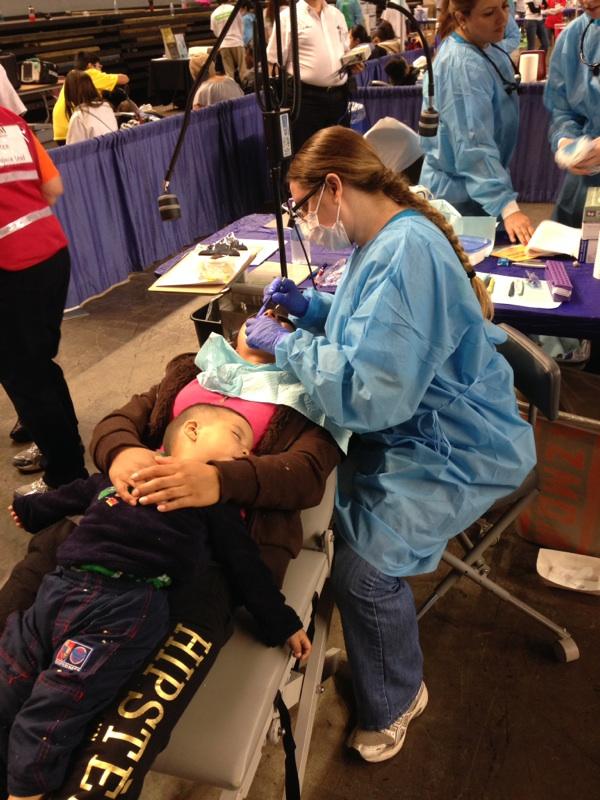
Here are some pictures of when our offices volunteered last year:

AZ MOM Line

This was the line waiting to get in.  Thousands of people waited overnight and in the rain to receive dental care.

IMG_0414

IMG_0425

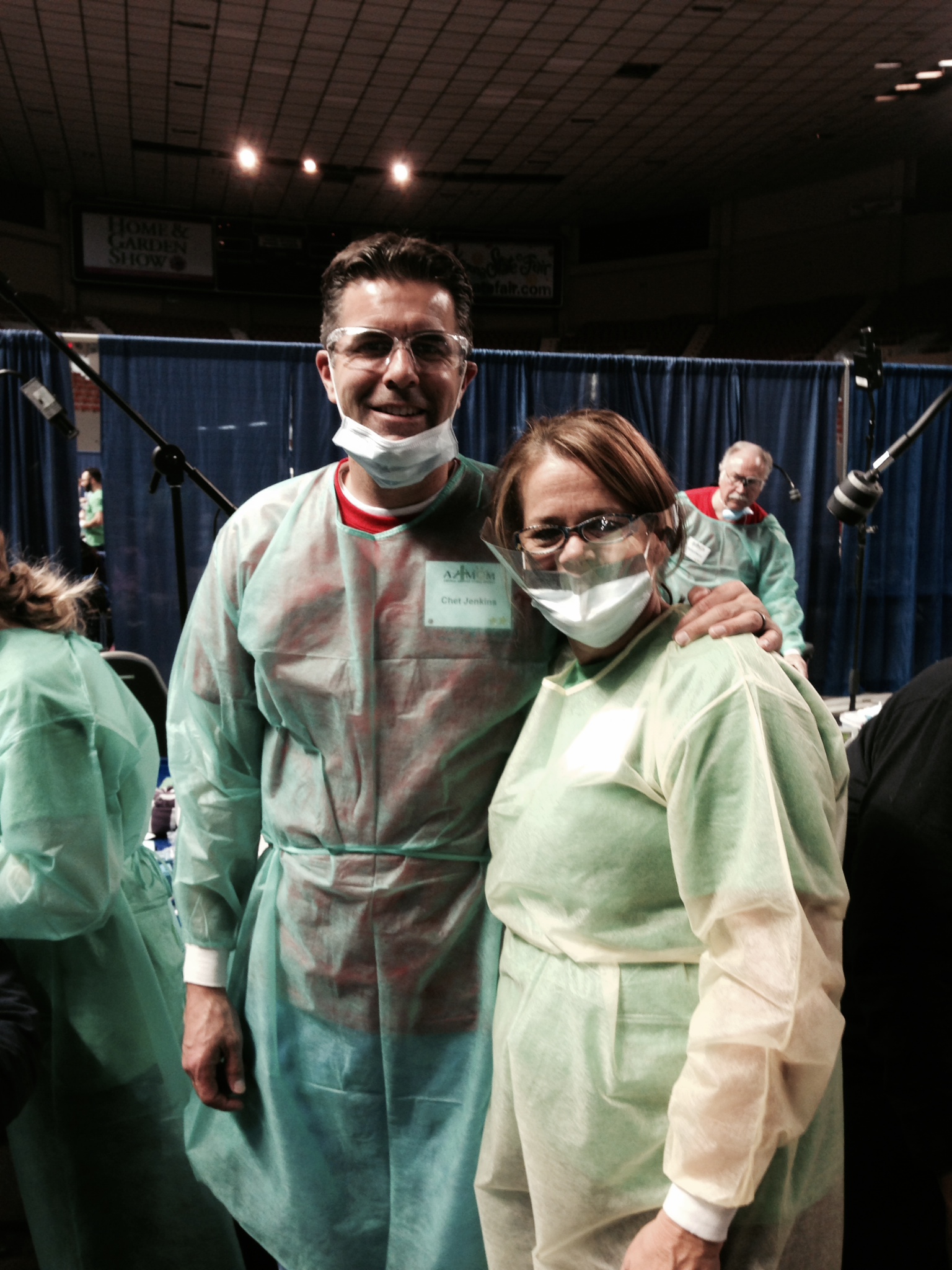
Some of our great team!  From Left to Right: Dr Dastrup, Ann – Hygienist, Dr Miller, Morgan – Assistant, Darlene – Assistant, Jennifer – Assistant, and Dr Jenkins.

IMG_0415

Dr Jenkins and Darlene

IMG_0416

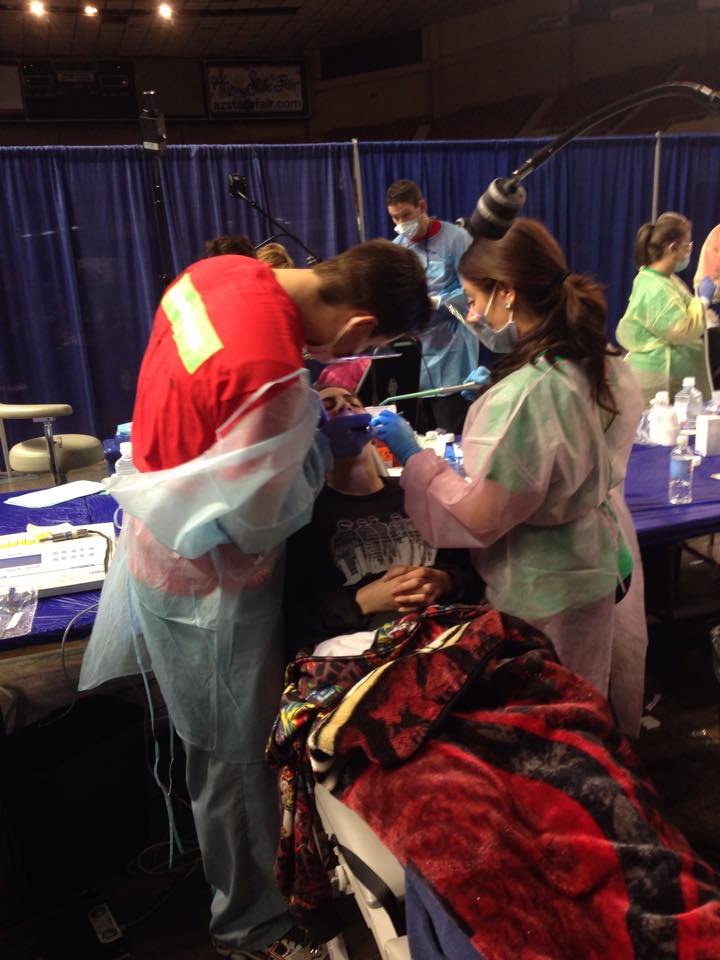
Dr Miller and Morgan

Dr D AZ MOM

Dr Dastrup and Jennifer, hard at work!

Anne AZ MOM

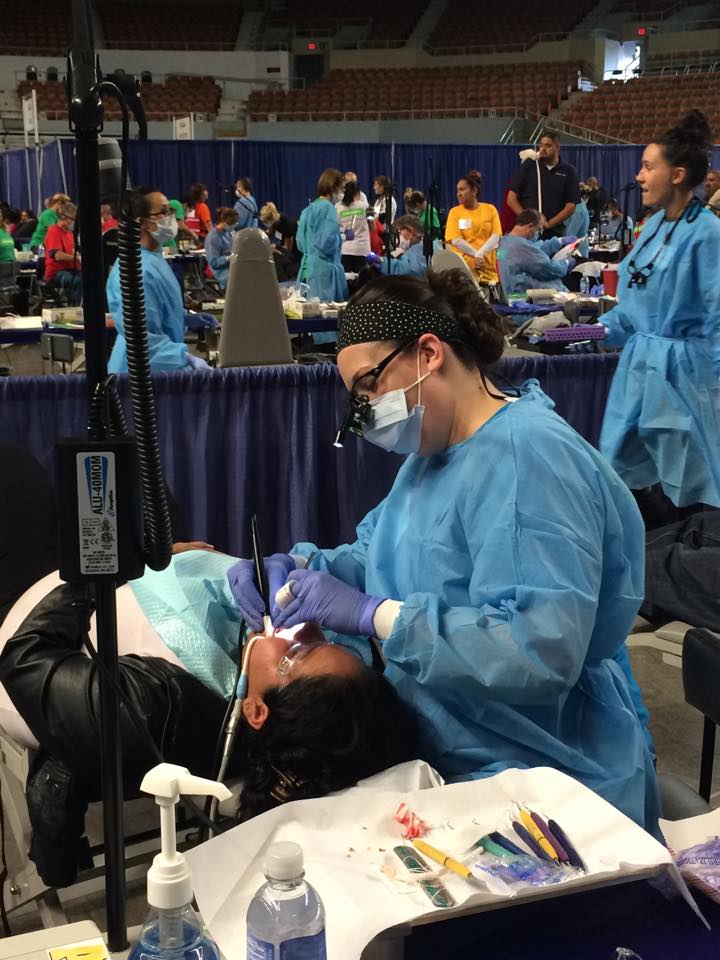
Ann, Hygienist, helping brighten smiles!

Amanda Andra AZ MOM

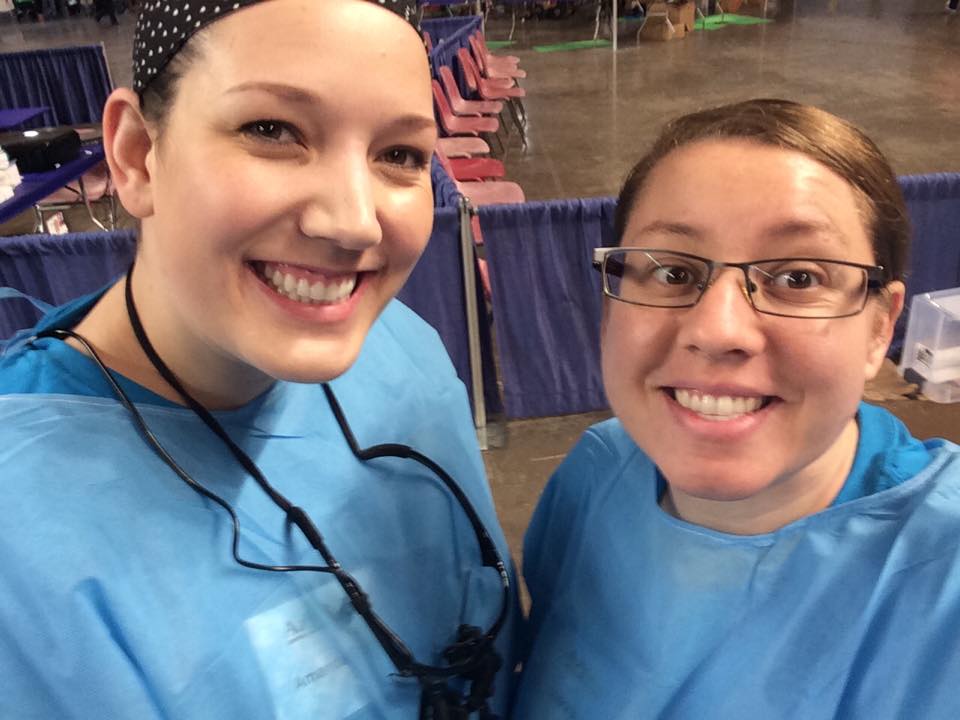
Amanda and Andra, Hygienists, getting ready to clean!

Amanda AZ MOM

Amanda, Hygienist, helping fight plaque and tartar build-up to make a happy mouth!

IMG_0413

After waiting in such a long line, it feels nice to relax and have Andra, Hygienist, clean your teeth!

IMG_0347

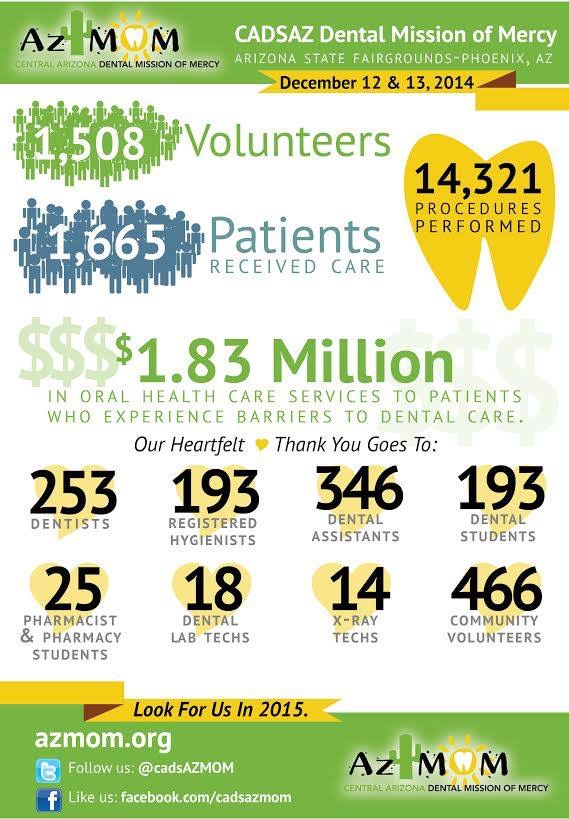
Here are the awesome statistics from last years Mission of Mercy event.  We are looking forward to going again this year!  If you are interested in volunteering for this event, everyone is welcome!  You do not have to be a medical profession, there is a job for everyone.

Want to learn more? Visit us at

http://www.shalimarfamilydentistry.com

http://www.northstapleydentalcare.com

http://www.alamedadentalaz.com

http://www.dentistingilbert.com

Sources:

https://www.azmom.org/


A little dental humor to keep you smiling

KO6A8495-Edit - Copy

Lora Cook, RDH

A little dental humor to keep you smiling…

Flossing

Flossing More

AirFloss

You can always air floss!

Loose Canine

For more fun, Visit us at

http://www.shalimarfamilydentistry.com

http://www.northstapleydentalcare.com

http://www.alamedadentalaz.com

http://www.dentistingilbert.com

Sources:

http://www.sugarfixdental.com/

http://www.viralnova.com/funny-dog-faces/

http://www.buzzfeed.com/ailbhemalone/things-youll-only-know-if-your-parents-were-dentists?sub=2681816_1827186

http://themetapicture.com/must-visit-the-dentist/

Do Not Forget About Your Tongue

KO6A3300-Edit[1]


Amanda Orvis, RDH

Do Not Forget About Your Tongue

There are a significant number of bacteria in our mouths. These bacteria are found in the build-up surrounding our teeth and coating our tongues. If these bacteria are left untouched they can lead to severe bad breath which is also known as halitosis. In order to keep these bacteria to a minimum we need to maintain healthy brushing and flossing habits as well as scraping or brushing our tongues daily.

Tongue Scraping

Tongue scraping should be done at least once a day and there is a specific way to remove the bacteria. When using a tongue scraper the scraper should be placed on the back of the tongue and gently scraped from the back to the front for approximately 5-10 strokes. Make sure to rinse your tongue scraper between scrapes so you do not push the bacteria back and forth on the tongue. Tongue scraping can trigger the gag reflex, so make sure to scrape gently and take a break between scrapes if needed.

Screen Shot 2015-09-26 at 8.47.10 PM

Screen Shot 2015-09-26 at 8.47.47 PM
Tongue scrapers can come in various shapes and sizes and can be found in most drug stores.

Screen Shot 2015-09-26 at 8.47.22 PM Screen Shot 2015-09-26 at 8.47.35 PM

There are other causes of bad breath such as smoking, dry mouth, yeast infections and/ or medication use. Research shows that by maintaining regular tongue scraping habits most people can be effective in eliminating their bad breath even with these other causes.

Tongue Brushing

Tongue brushing can also be effective in reducing bad breath and removing bacteria; however research shows that tongue brushing is less effective than tongue scraping. The reason for this is that tooth brushes are meant to remove bacterial coating and debris from the smooth surfaces of our teeth. Our tongues have many small projections called papilla and can often have deep grooves and/or crevices. When tongue brushing with your regular toothbrush the toothbrush bristles may push the bacteria further into the grooves. So be gentle when brushing and move in the same direction as tongue scraping, rinsing between brush strokes.

Screen Shot 2015-09-26 at 8.46.50 PM

Quick Tips:

  • Start scraping or brushing from the back of your tongue moving forward.
  • Rinse your scraper between scrapes and after you are finished.
  • Scrape for at least 5-10 strokes.
  • Scrape the full top surface of your tongue.
  • If using a toothbrush or tongue brush move in the same direction as your tongue scraper from the back to the front, rinsing between each stroke.
  • Rinse your mouth out after you are done tongue scraping or tongue brushing.

Want to learn more? Visit us at

http://www.shalimarfamilydentistry.com

http://www.northstapleydentalcare.com

http://www.alamedadentalaz.com

http://www.dentistingilbert.com

Sources

http://www.colgate.com/en/us/oc/oral-health/conditions/bad-breath/article/sw-281474979266546

https://en.wikipedia.org/wiki/Tongue_cleaner