Periodontal Probing 101

LindsayW

Lindsay Whitlock RDH

John, the patient, is taken back to the dental operatory for his dental cleaning appointment.  The dental hygienist reviews John’s chart, his medical history, and John addresses any concerns he has in his mouth. The hygienist lays John back in the chair. John cringes, as he sees the hygienist holding a pointy tool in her hand. She informs him, “John, I am going to take a few measurements around each tooth, to assess how healthy your gums, and bone levels are.” John opens his mouth, and thinks to himself “I wonder if this going to hurt?” “What is she even doing with that tool anyways?”

Prior to becoming a dental hygienist, I too was like John. I did not understand what that “pointy” tool was, or why it needed to be used. With this blog post, I would like to briefly educate my dental patients of what a periodontal probe is, and why it is utilized in the dental office.

Screen Shot 2015-04-26 at 12.55.54 PM


That pointy tool the hygienist uses at the beginning of a dental appointment is called a periodontal probe. The periodontal probe is marked in millimeter increments, which is used to evaluate the health of the patient’s gum, and surrounding bone levels of the jaw, with little to NO discomfort!


Screen Shot 2015-04-26 at 12.56.06 PM

Each of your teeth are sitting in jawbone. Additionally, each tooth is surrounded by gum tissue (gingiva). To simplify this concept, your gums surround each tooth like a turtleneck sweater.

Screen Shot 2015-04-26 at 12.56.17 PM

There is a natural space of pocket between the gum and tooth. The periodontal probe is used to measure this pocket depth, at each dental appointment.

Screen Shot 2015-04-26 at 12.56.53 PM

 In health, the tooth is surrounded by a gum pocket depth of 1-3 mm (No bone loss of the jaw bone).

Screen Shot 2015-04-26 at 12.57.17 PM

 If gingivitis is present (Swollen gums-no bone loss of the jaw bone) the tooth is surrounded by a 4 mm. pocket depth.

Screen Shot 2015-04-26 at 12.57.30 PM

 A periodontal pocket (Mild-Advanced periodontitis) is present when the space between the tooth and gum has been deepened by disease and bone loss. A 5-12 mm pocket depth surround the tooth or teeth.

Screen Shot 2015-04-26 at 12.57.42 PM

Screen Shot 2015-04-26 at 12.57.59 PM

 The next time you are in the dental chair, feel free to ask your dentist or dental hygienist your latest periodontal probing scores. If you have never had these measurements taken before, call our office today and schedule a new patient exam, to determine the health of your mouth!

Want to learn more? Visit us at

http://www.shalimarfamilydentistry.com

http://www.northstapleydentalcare.com

http://www.alamedadentalaz.com

http://www.dentistingilbert.com

Sources:

http://image.slidesharecdn.com/probing-150304002025-conversion-gate01/95/probing-4-638.jpg?cb=1425450081

http://www.google.com/imgres?imgurl=http://www.jabfm.org/content/23/3/285/F6.large.jpg&imgrefurl=http://imgkid.com/oral-cavity-diagram.shtml&h=929&w=1280&tbnid=QTPxgTXY_157NM:&zoom=1&docid=muXuT2D8a_l-rM&ei=gik0VeWcGZKHgwTj8oL4Bw&tbm=isch&ved=0CGwQMyhIMEg

https://www.google.com/url?sa=i&rct=j&q=&esrc=s&source=images&cd=&cad=rja&uact=8&ved=0CAcQjRw&url=http%3A%2F%2Fwww.anicesmile.com%2Fgum_care.htm&ei=eB00VZSAAcWqgwS6uIH4DA&bvm=bv.91071109,d.eXY&psig=AFQjCNEelreU-hCgZkFOw-zD66VytX1oWw&ust=1429565102055540

https://www.google.com/url?sa=i&rct=j&q=&esrc=s&source=images&cd=&cad=rja&uact=8&ved=0CAcQjRw&url=http%3A%2F%2Fpixshark.com%2Fperiodontal-probe-measurements.htm&ei=IzI0VabtA8HYggTXhICoAQ&bvm=bv.91071109,d.eXY&psig=AFQjCNG8JqFvrTWfgyW7lJDBKPoToB2P0g&ust=1429570410736621

https://www.google.com/url?sa=i&rct=j&q=&esrc=s&source=images&cd=&cad=rja&uact=8&ved=0CAcQjRw&url=http%3A%2F%2Fimgbuddy.com%2Fperiodontal-probe-measurements.asp&ei=bBc0Vd3rJYa_ggT9tYHIAg&bvm=bv.91071109,d.eXY&psig=AFQjCNGZO6FQ7Orbd5mXZx5HOFLLyJqYdA&ust=1429563605237318

The Platypus Orthodontic Flosser

KO6A8495-Edit - Copy

Lora Cook RDH

“Help! I just got my braces on and it takes me 20 minutes to floss my teeth.”

I have heard this statement before from some of my patients.  Well I am here to tell you that your dental hygienist is here to the rescue.

I am sure that the orthodontist carefully demonstrated how to use floss threaders to thread the floss under the wire.

 Screen Shot 2015-04-21 at 6.18.48 PM

Well I am here let you know about another alternative to threaders.  This orthodontic flossing device was invented my a hygienist trying to help her patients with the time consuming and frustrating chore of flossing under braces. It is called the platypus.

Screen Shot 2015-04-21 at 6.18.58 PM

The Platypus orthodontic flosser was co-invented by pediatric dental hygienist Laura Morgan and hygiene product developer Fred Van de Perre.

This device fits easily under arch wire and between brackets. Flossing daily will help gum tissue stay health and help to prevent tooth decay. Best of all it will only take you 2 minutes instead of 20!

How to use the Platypus orthodontic flosser.

*Insert spatula end of the flosser under your wire and press lightly against the teeth.

*Press spatula against your teeth to remove floss slack. Slide floss up between your teeth.

*In difficult to reach area, it is key to maintain pressure against your teeth while flossing.

*The bracket brush cleans around your brace brackets.

Where do I get these?

Amazon or  drugstore.com sells them.

Screen Shot 2015-04-21 at 6.19.12 PM

Want to learn more? Visit us at

http://www.shalimarfamilydentistry.com

http://www.northstapleydentalcare.com

http://www.alamedadentalaz.com

http://www.dentistingilbert.com

Sources:

http://www.drugstore.com/platypusco-orthodontic-flosser/qxp361704

http://www.drugstore.com/popups/largerphoto/default.asp?pid=361704&catid=183799&size=500&trx=29888&trxp1=361704&trxp2=1

http://drmodjeski.com/oralhygiene.html

http://audrey5942f.blogspot.com/2013/01/platypus-ortho-flosser-for-braces.html

http://www.scottsdental.com/product_images/w/972/346-T106__82881_zoom.jpg

What is a Periodontal Maintenance?

AriannaM

Arianna Ritchey RDH

What is a Periodontal Maintenance?

One of the terms that is commonly used by dental professionals, and also commonly misunderstood by patients, is ‘Periodontal Maintenance.’  A periodontal maintenance procedure is similar to a prophy, or general adult cleaning, but is a more involved procedure meant for patients who have periodontal disease.

Periodontal disease, or gum disease, is characterized by deep periodontal pockets, inflammation, and bone loss.  Periodontal disease is an irreversible condition which, if left untreated, may lead to further bone loss and eventually tooth loss.  In order to treat periodontal disease, a dental hygienist or dentist will likely recommend a procedure called a “deep cleaning,” also known as SRP, or scaling and root planing.  Once a deep cleaning is completed, inflammation will reduce and periodontal pockets may decrease in depth.  When the patient’s periodontal status has stabilized, the next step in the care of the teeth and gums is periodontal maintenance, or more colloquially, “perio maintenance.”

Perio_Health

Periodontal maintenance is a teeth cleaning procedure which is done at either 3, 4, or 6 month intervals, depending on the patient’s needs.  The purpose of the periodontal maintenance procedure is to maintain the level of the periodontal disease present, and to prevent it from getting any worse.  Unfortunately, bone that has been lost as a result of periodontal disease does not grow back, and as such, periodontal pockets may remain at a deeper-than-optimal level despite the initial deep cleaning therapy.  These deep periodontal pockets collect plaque and tartar, and are impossible to clean properly with a toothbrush, floss, and other dental hygiene aids.  In order to keep these periodontal pockets clean and prevent further bone loss, it is necessary to have a dental hygienist regularly perform professional cleanings.

perio probe

Periodontal maintenance involves a dental hygienist scaling and root planing some areas in order to remove irritating tartar buildup.  When a dental hygienist performs root planing, instrumentation is completed below the gumline all the way to the bottom of the periodontal pocket.  This cleaning of the root surface below the gumline is what makes a periodontal maintenance different, more involved, and potentially more costly  than a prophy, or regular cleaning.

scaling-root-planing

In patients who have deep periodontal pockets, a prophy, or general cleaning, is not beneficial, because the irritating plaque and tartar below the gumline that is causing the most irritation and loss of bone is not removed during a prophy or general cleaning.  Performing a general cleaning on a patient with periodontal disease would be similar to sweeping dirt under the rug instead of properly cleaning a floor.  The offending dirt in the case of the floor,  or the bacteria-infused-tartar in the case of the mouth, is still present and causing harm.


Sweep-Dirt-Under-the-Rug-570x566

As dental hygienists, our primary goal and concern is to assist patients in maintaining the healthiest oral cavity possible.  Providing periodontal maintenance treatments for our patients who have periodontal disease at 3, 4, or 6 month intervals, along with the patient’s good oral hygiene care at home, is the best way to work towards a stable periodontal health status and to help our patients from experiencing bone and tooth loss.

perfect-smile

Want to learn more? Visit us at

http://www.shalimarfamilydentistry.com

http://www.northstapleydentalcare.com

http://www.alamedadentalaz.com

http://www.dentistingilbert.com

Sources

http://jdh.adha.org/content/82/suppl_2/16.refs

http://www.rdhmag.com/articles/print/volume-0/issue-9/columns/staff-rx/prophy-vs-perio-maintenance.html

https://www.deltadental.com/Public/Study/StudyPerio.jsp

What Is Calculus Exactly?

KO6A0979-Edit[1]

Wendy Parker RDH


Ever heard your hygienist use the words, “build up” or “calculus” while they were cleaning your teeth? Ever wondered what that was, exactly, or what they were talking about?

Growing up, most of us heard about plaque and the importance of removing it daily, but nowadays we hear about bioflim and calculus.  What is this all about? Well, my friends, read on and you’ll find out.

In the dental world, dental plaque has been changed to the term “Biofilm.”It is a more accurate term than plaque. It is more than just the soft fuzzy stuff on your teeth.  Biofilm is everywhere in our surroundings and can form on just about anything. Ranging from clogged drains, to slippery coated rocks, and in your mouth. Biofilm is bacteria’s home. Millions of bacteria stick together in biofilm which adheres to surfaces in moist environments. Biofilms excrete a slimy glue-like substance that sticks to all kinds of materials, including your teeth! Dental plaque IS the yellowish biofilm that builds up on teeth and is composed of a complex baterial community that causes gingivitis, in the mild form, cavities, and periodontal disease, in the more advanced cases.

 staphylococcus_aureus_biofilm_01_cmyk

Typically, you can remove this biofilm, a.k.a. plaque, with your fingernail in the early stages where it still feels like the soft fuzz-like feeling on your teeth.

However, within 48 hours, if undisturbed, it begins to harden and causes gingivitis (inflammation of the gum tissues).

 imgres

     If still undisturbed, about 10 days later, it becomes calculus (a.k.a. tartar), which is difficult to remove.  But don’t worry, we know a few good hygienists that can take care of that for you!

If, by some chance, the calculus stays there for a long period of time, the bacteria that is making it’s home in your mouth, then begins to affect the surrounding tissues, causing periodontal disease (bone and gum disease).

images

     So now that we KNOW what and how we get biofilm and calculus, how do we get rid of it?  The solution is something that we already know and that we have been hearing from the beginning of time.  There is no new shocking treatment, but it’s simple…you have to disrupt the bacteria from forming in your mouth and the best way to do this is to brush twice a day, floss once a day, and see your dentist/hygienist regularly.  If you wear some kind of appliance at night, like a nightguard or retainer, be sure you are brushing it and soaking it regularly.  Be sure to let us help you with any issues or needs you have to keep your smile working for you!

imgres


Want to learn more? Visit us at

http://www.shalimarfamilydentistry.com

http://www.northstapleydentalcare.com

http://www.alamedadentalaz.com

http://www.dentistingilbert.com

Sources:

http://www.colgateprofessional.com/patient-education/articles/what-is-biofilm

http://en.wikipedia.org/wiki/Dental_plaque

http://www.dujs.dartmouth.edu

http://www.meadfamilydental.com

www.johngoodmandds.net

www.clipartbest.com

Hydrogen Peroxide

KO6A8495-Edit - Copy

Lora Cook RDH

 Is Using Hydrogen Peroxide as a Mouth Rinse Safe?

Screen Shot 2015-01-25 at 9.24.33 PM

Many commercial mouth washes and whitening strips have hydrogen peroxide as one of the key active ingredients. However many are using straight hydrogen peroxide as a mouth wash to kill germs. Is this a safe and effect practice?

Hydrogen peroxide is compose of water and oxygen that works to kills germs and bacteria, and helps to whiten teeth.  It comes in either 1% or 3% concentrations. You can even see it in action!  When it foams in your mouth you know that it is working at killing bacteria.  It also can be used to clean your night guard, retainers, or even soak your tooth brush in.  Best of all it is inexpensive. 

 However this is not the magic cure all, there are some strong precautions that I would like to share with you.  While there are many benefits it can be harmful on gum tissue if used in too strong a solution or too long.  It is very drying to the tissues. This will also work to kill good bacteria in the mouth.  This will leave opportunity for yeast infections of the mouth to flourish, also called thrush.  Candidiasis is a fungal or yeast infection of the mouth or throat. Candida yeast that normally live in the mucosa membrane will flourish causing a over growth of candida, commonly called yeast infections. 

This can be a relatively safe practice by following a few guidelines; dilute peroxide with 50% water, and do use every day.  If you are one of the many people who suffer from dry mouth stick with a over the counter rinse formulated for dry mouth sufferers. 

Want to learn more? Visit us at

http://www.shalimarfamilydentistry.com

http://www.northstapleydentalcare.com

http://www.alamedadentalaz.com

http://www.using-hydrogen-peroxide.com/hydrogen-peroxide-as-mouthwash.html

http://copublications.greenfacts.org/en/tooth-whiteners/l-3/6-tooth-whitening-side-effects.htm

http://www.healthline.com/health/thrush#Symptoms4

What is a Dental Implant?

KO6A3300-Edit[1]

Amanda Orvis RDH

A dental implant is a titanium post used to replace missing teeth and support dental prosthetics. Implants are surgically guided into the jaw bone and integrate with the bone to support a dental prosthesis such as a crown, bridge and/or denture.

Success or failure of dental implants can depend on a few factors. Smoking is one of the number one causes of implant failure. Smoking can slow down the healing as well as act as an irritant to the tissue and bone surrounding the implant. Certain prescription medications can affect the integration of the implant with the surrounding bone as well. Stress to the implant due to clenching and/or grinding, also known as bruxing, can also be a significant factor on the success or failure of the implants. All of these potential issues will be discussed during your implant evaluation appointment.

untitled

Individual tooth replacement

For an individual tooth, an implant is selected and placed into the site of the missing tooth. The implant is given 3-6 months time to heal and integrate into the surrounding bone so that it becomes permanently stable. Once the implant has integrated with the surrounding bone the implant is ready to be restored. An impression is taken to allow a custom crown to be fabricated. Once the crown is fabricated, an implant abutment is placed into the implant and secured by a screw. The crown is then cemented in place on top of the implant abutment.

images

Implant supported bridge

An implant supported bridge is a group of teeth supported by two or more dental implants. The process of placing an implant supported bridge is very similar to the individual implant placement discussed above. To begin, implants are selected and placed into the sites of two or more missing teeth. The implants are given time to heal and to integrate with the surrounding bone. Once the implants have integrated with the surrounding bone the implants are ready to be restored. An impression is taken to allow a custom bridge to be fabricated. Implant abutments are placed into the implants and then secured with screws. The implant abutments will act as anchors to support the floating teeth between the implants known as pontics. The bridge is then cemented in place on top of the implant abutments.

imagesCA92SE8S

Implant Supported Denture

Implant supported dentures can be made to be removable or permanently fixed into the mouth. Removable implant supported dentures can be disconnected from the implant abutments with finger pressure by the wearer. To enable this, the abutment is shaped as a small connector, which can be connected to an adapter on the underside of the denture. A permanently fixed implant supported denture is secured in place by your dentist with screws. Even though dentures are placed, it is still import to note that you must visit with your dentist at least once a year to have your tissue and implants examined.

 untitled

Want to learn more? Visit us at

http://www.shalimarfamilydentistry.com

http://www.northstapleydentalcare.com

http://www.alamedadentalaz.com


https://www.google.com/search?q=dental+implants&rlz=1T4GGNI_enUS478US479&source=lnms&tbm=isch&sa=X&ei=rdJqVJ6MK8XNiAKv9YCQCQ&ved=0CAgQ_AUoAQ&biw=2133&bih=952&dpr=0.75#facrc=_&imgdii=_&imgrc=eMm4N-kgaUlBlM%253A%3B3WWM7H1IqnqHuM%3Bhttp%253A%252F%252Fwww.elkgrovesmilecenter.com%252Fthedentalsitecontent%252F887%252FImage%252Fdental-implants-scenarios.jpg%3Bhttp%253A%252F%252Fwww.elkgrovesmilecenter.com%252FServices%252FElk-Grove-Village-Dental-Implants%252F2390%3B700%3B190

https://www.google.com/search?q=parts+of+a+dental+implant&rlz=1T4GGNI_enUS478US479&source=lnms&tbm=isch&sa=X&ei=zdFqVKW1F8bAiAL3ooCQCw&ved=0CAgQ_AUoAQ#facrc=_&imgdii=_&imgrc=hx7UArv80aA4QM%253A%3B9CZitcw3Pnhl3M%3Bhttp%253A%252F%252Fwww.orlyvilla.com%252Fparts-of-a-dental-implant-250x.jpg%3Bhttp%253A%252F%252Fwww.orlyvilla.com%252Fapps%252Fvideos%252F%3B250%3B188

https://www.google.com/search?q=implant+supported+bridge&rlz=1T4ADRA_enUS397US398&source=lnms&tbm=isch&sa=X&ei=p4tjVM-nPI-sogTz8ILQCw&ved=0CAgQ_AUoAQ&biw=1440&bih=708%20-%20facrc=_&imgdii=_&imgrc=ky4WogzaSbnB7M%253A%3BzRnYA9mCT4yCFM%3Bhttp%253A%252F%252Fwww.longislandperio.com%252Ffiles%252F2012%252F01%252F3-unit-implant-bridge_ti-abutments_tcm261-41493.jpg%3Bhttp%253A%252F%252Fwww.longislandperio.com%252Fdental-implants%252#facrc=_&imgdii=_&imgrc=BaJFRVOs6xP5WM%253A%3BWRT69acQ4lnnqM%3Bhttp%253A%252F%252Fwww.foralifetimeofsmiles.com%252Fwp-content%252Fuploads%252F2013%252F07%252Fimplant-supported-bridge.gif%3Bhttp%253A%252F%252Fwww.foralifetimeofsmiles.com%252Foral-surgery%252F%3B400%3B164

https://www.google.com/search?q=types+of+implant+supported+denture&rlz=1T4ADRA_enUS397US398&source=lnms&tbm=isch&sa=X&ei=JY1jVJDkCNLSoATo-YDQBg&ved=0CAgQ_AUoAQ&biw=1440&bih=708%20-%20facrc=_&imgdii=_&imgrc=o0SUhE97Ov1DRM%253A%3B9ZakGA12S_8WBM%3Bhttp%253A%252F%252Floulyprostheticdentistry.com%252Fuploads%252F3%252F2%252F4%252F8%252F3248400%252F6261953.jpg%253F318%3Bhttp%253A%252F%252Fwww.loulyprostheticdentistry.com%252Fdental-implants

Oil Pulling

KO6A8495-Edit - Copy

 Lora Cook RDH


WHAT IS OIL PULLING?

Oil pulling is a folk remedy that has recently been growing in popularity, mostly due to social media.  This is an ancient Indian practice, an ancient Ayurvedic ritual.  The origins come from Indian  medicine.  Most recently Dr F. Karach, MD. introduced it to the modern world in 1992.  This practice is promoted as a supplement to regular daily hygiene practice along with brushing and flossing. It involves swishing with a tablespoon of oil.


HOW IS OIL PULLING PRACTICED? 

Take a tablespoon of a plant based cold pressed organic oil and swish for twenty minutes, then spit.  Some oils that are recommended are sesame, coconut, sunflower, or olive oil.  The oil will then mix with the saliva and the claims are the oil works to pull out toxins and kill certain types of bacteria.  Depending on which website that you read, oil pulling claims to have a long list of positive results.


THE ORAL BENEFITS THAT HAVE BEEN CLAIMED.

Reducing plaque

Reduction in the overall oral bacterial load

Reduces inflammation in the gum tissue

Whitens teeth

Fresher breath

oil-pulling-1


OTHER BENEFITS

Migraine headache relief

Correcting hormone imbalances

Reducing inflammation of arthritis

May help with gastroenteritis

Aids in reduction of eczema

May reduce symptoms of bronchitis

Helps support normal kidney function

May help reduce sinus congestion

Reduced hangover after alcohol consumption

Reduces he symptoms of allergies

Helps detoxify the body of harmful metals and organisms


The big question is… Do any of these claims have any validity?  There is little formal trial data published about the practice of oil pulling.  The ADA states that insufficient research has been done.  The Canadian Dental Association states, “oil pullling won’t do any harm, however not convinced there are any benefits.”


We look forward to helping you create that new smile that you have always wanted.

Want to learn more? Visit us at

http://www.shalimarfamilydentistry.com

http://www.northstapleydentalcare.com

http://www.alamedadentalaz.com


Source: 

http://jillee_uploads.s3.amazonaws.com/2013/07/oil-pulling

http://authoritynutrition.com/oil-pulling-coconut-oil/

http://www.sciencebasedmedicine.org/oil-pulling-your-leg/

http://authoritynutrition.com/oil-pulling-coconut-oil/

Vitamin D and Dental Health

Karen

Karen Kelley RDH

 images


I recently read two articles, the first by Dr. Richard Kim, a dentist who practices in New York City, and the second on the website doctorshealthpress.com. They both have information from a Boston study about the correlation of Vitamin D and Dental health. I was interested to learn that so many people have a deficiency of Vitamin D and how it can affect dental health.

This is a portion of Dr. Kim’s article:

“Medical researchers have long known that Vitamin D has many oral and overall health benefits, but there is growing concern that deficiency of this critical nutrient is more common than once thought. Understanding the benefits of Vitamin D, where it comes from and who is at risk for deficiency could make an important difference in your general and oral health.

Somewhere along the way you can probably remember being told to have plenty of calcium in your diet to build strong bones and teeth. Fortunately calcium is everywhere – readily available in many of the foods we all love like milk, cheese, ice cream and even commercially added to orange juice, breads and cereals. Perhaps you didn’t know that without Vitamin D, the body can’t absorb that calcium… no matter how much of it you swallow!

A diet lacking or low in vitamin D will contribute to a phenomena known as “ burning mouth syndrome”, symptoms of which can include dry mouth, a burning sensation of the tongue and oral tissues and a metallic or bitter taste. The condition is most common in older adults who, coincidentally, are frequently found to have a Vitamin D deficiency! Oral Health scientists have found that in addition to many general health benefits, Vitamin D helps to reduce inflammation in the body, which is widely known to have a direct impact on the development and severity of periodontal (gum and bone) disease. As a matter of fact, according to a study published in the Journal of Dentistry (1) among 6700 research participants, those who had the highest blood levels of Vitamin D were about 20% less likely to have gum disease.

Vitamin D is produced naturally by the human body when skin is exposed to sunlight, but more often than not people choose to protect themselves from the harmful effects of ultraviolet rays. Sunscreen and protective clothing may prevent getting enough vitamin D from the sun; and deficiency is common among people who live in northern latitudes or other areas that receive limited sunlight. Up to 50% of older adults have inadequate Vitamin D levels, perhaps partly due to decreased outdoor activity and sun exposure.

Although it is a rule of thumb that the best source of nutrients is a natural one, Vitamin D supplements are readily available over the counter and routinely recommended to individuals at risk for deficiency. Do you have unexplained body or mouth symptoms? Could you be at risk … or have you been recently diagnosed with low Vitamin D levels? Your doctor and dental professional can advise you about the benefits of a supplement, and a recent discovery of Vitamin D deficiency is a good reason to schedule your regular dental checkup.

1. Journal of Dentistry (2005), 33:703–10.”

NTA-26132-2

From the doctorshealthpress site:

Vitamin D isn’t just for your bones anymore.

This versatile vitamin is now showing promise in the fight against gum disease as well. According to a new study, vitamin D has both anti-inflammatory and immunomodulatory properties. (This means that it can reduce inflammation and boost your body’s ability to fight off infections.) It appears that people who have more vitamin D in their bodies run a lower risk of contracting gum disease.

The Boston-based study looked at 6,700 people who had never smoked before. They examined the gums and teeth of these people and compared their vitamin D status to the health and inflammation of their gums. Adjusting for age, previous dental work, dental hygiene, and other factors, it was found that people who had a higher intake of vitamin D also had overall healthier gums.

In fact, those who had the highest levels of the vitamin in their body reduced their risk of bleeding during oral examination by 20% when compared to patients who had the lowest intake of vitamin D.

So, if you thought this power-packed vitamin was only good for helping your bones, you were wrong. The evidence speaks for itself — vitamin D plays a double role. It acts as an anti-inflammatory and it may just help you walk out of your next dental appointment with less pain and bleeding.

So ensure that you allow your body to produce enough vitamin D. It’s a good reason to get just a few minutes of sun at least three times a week. Make sure you don’t overdo it, unless you are wearing sunscreen. If you can’t get outside, at least try taking a supplement in order to help you get all you need of this wonderful nutrient.

http://www.doctorshealthpress.com/food-and-nutrition-articles/vitamin-d-is-good-for-your-gums-too

After reading these articles, I started doing some of my own ‘research’. I began asking my patients who generally had good overall brushing and flossing habits, not stellar, but good, who’s gums generally looked healthy, but when I was scaling (cleaning) their teeth, they bled more than they should if their gums were truly healthy. (Healthy gums shouldn’t bleed!) Most of the patients that I asked told me they had been diagnosed with low Vitamin D levels! This was very interesting to me. I did some other reading about Vitamin D deficiency and found how common it is. It’s interesting to me that anyone living in the “Valley of the Sun” could be deficient in Vitamin D, but it actually is common.

I also found this article on Web MD entitled:

Keep That Smile! Calcium and Vitamin D Prevent Tooth Loss

“If you’re supplementing your diet with calcium and vitamin D to prevent bone loss, you may be more likely to hang onto your pearly whites, according to a report at this week’s meeting of the American Society for Bone and Mineral Research in Toronto. Even so, older adults need to floss their teeth and see the dentist regularly because with increased age come increased risks for losing teeth.

“Studies have shown that calcium and vitamin D decrease bone loss in the hip and forearm, but we weren’t sure if they had an effect on tooth loss,” says lead author Elizabeth Krall, MPH, PhD, a researcher at Boston University Dental School and Tufts University Nutrition Research Center. “Now we know that supplementation may also improve tooth retention, along with routine dental care and good oral hygiene,” she tells WebMD. To explore the role of supplementation on tooth retention, the researchers followed more than 140 older adults for five years. Participants took either a placebo or 500 mg of calcium plus 700 units of vitamin D daily for three years. Both during and after the trial, their teeth were examined periodically. For those who took supplements, the likelihood of losing one or more teeth was 40% less, even two years later.” ( http://www.webmd.com/oral-health/news/20000927/keep-that-smile-calcium vitamin-d-prevent-tooth-loss)

Anything that gives our patients a 40% less chance of losing a tooth and 20% less gums disease and bleeding during their dental visits is certainly worth looking into further. If a person is low in Vitamin D, it is an easy thing to implement a supplement or sun into a daily routine. The National Institute of Health recommends 10 to 15 minutes of outdoor activity two times a week to get enough Vitamin D. They also suggest for areas where they don’t have as much sun as we do, that vitamin D can be received by consuming milk, eggs, and fish. The Vitamin Council gives further instructions to individuals with periodontal (gum) disease. The Council says for someone with gum disease they may want to consider taking measures to raise their vitamin D blood levels to 40 ng/mL (100 nmol/L). They also suggest moderate UVB exposure (without sunburn) but additionally recommend oral intake of vitamin D and calcium supplements.

If you’re over 50 and have some symptoms of gum disease, ask your MD what your Vitamin D levels are now (they can do a simple blood test) and what you should be doing to raise your Vitamin D to an acceptable level.

vitamin-d


Keep smiling, Karen Kelley R.D.H.


Sources:

http://www.vitamindcouncil.org/health-conditions/periodontal-disease/

http://www.ncbi.nlm.nih.gov/pmc/articles/PMC3768179/

http://www.easy-immune-health.com/Vitamin-D-and-Teeth.html

http://www.doctorshealthpress.com/food-and-nutrition-articles/vitamin-d-is-good-for-your-gums-too

http://nydentallife.wordpress.com/author/nydentallife/

Photos:

www.hayleyhobsonblog.com

https://www.google.com/search?q=vitamin+d&rlz=1C1CHFX_enUS566US566&espv=2&source=lnms&tbm=isch&sa=X&ei=u8OkU73hM4PfoATSoYKACA&ved=0CAgQ_AUoAw&biw=1366&bih=600#facrc=_&imgdii=_&imgrc=iGoDW3mN-d0KYM%253A%3Bw3KmMBNAyyu8KM%3Bhttp%253A%252F%252Fimages.iherb.com%252Fl%252FNTA-26132-2.jpg%3Bhttp%253A%252F%252Fwww.iherb.com%252FNature-s-Answer-Vitamin-D-3-Drops-4000-IU-15-ml%252F20745%3B1600%3B1600

https://www.google.com/search?q=vitamin+d&rlz=1C1CHFX_enUS566US566&espv=2&source=lnms&tbm=isch&sa=X&ei=u8OkU73hM4PfoATSoYKACA&ved=0CAgQ_AUoAw&biw=1366&bih=600#facrc=_&imgdii=_&imgrc=cPEdvNM6b8bQsM%253A%3B9Er0cRfKFm8AnM%3Bhttp%253A%252F%252Ffibrotv.com%252Fblog%252Fwp-content%252Fuploads%252F2012%252F09%252Fvitamin-d.gif%3Bhttp%253A%252F%252Ffibrotv.com%252F2012%252F09%252Fthe-magnesium-and-vitamin-d-connection-that-most-people-do-not-know%252F%3B348%3B320

https://www.google.com/search?q=vitamin+d&rlz=1C1CHFX_enUS566US566&espv=2&source=lnms&tbm=isch&sa=X&ei=u8OkU73hM4PfoATSoYKACA&ved=0CAgQ_AUoAw&biw=1366&bih=600#facrc=_&imgdii=_&imgrc=cuDcsvoTpITxxM%253A%3BUQF-LZtVo8kWsM%3Bhttp%253A%252F%252Fwww.hayleyhobsonblog.com%252Fwp-content%252Fuploads%252F2013%252F01%252FvitaminD.jpg%3Bhttp%253A%252F%252Fwww.hayleyhobsonblog.com%252Fwhat-do-you-really-know-about-vitamin-d%252F%3B400%3B394

Flossing…Do I have to?

KO6A0979-Edit[1]
Wendy Parker RDH
 
Absolutely! In some shape or form, flossing is essential in keeping the mouth and the rest of your body healthy!
As a hygienist, I have heard almost every excuse as to why people don’t floss, and trust me, I understand! From the “I’m too tired at night” to the “I just don’t have time” or the “I just forget to,” my job today is to try and make it a little simpler for you to want to floss and to help you understand why we should floss.
 
As a mother of 4 little ones, I understand that flossing isn’t a priority somedays….getting showered is. But with that, let me just say, flossing really is something that you don’t see the immediate results from, but in 20 years when you have your teeth still and you are smiling at their graduation with all your pearly whites, you will thank me.
 
So, let’s start with answering the basic questions about flossing….WHY should I floss? I brush really well!Brushing is a wonderful thing, and we are encouraged to do it twice a day, for two minutes with a fluoride toothpaste. What most people don’t realize is that brushing only reaches that tops, outside and inside surfaces of the teeth. But how to get inbetween? There really isn’t a substitute for flossing, sorry to be the bearer of bad news. Rinsing with mouthrinse or using an electric toothbrush will definitely help with keeping the mouth cleaner however, it is NOT a substitute for flossing. Plaque and bacteria form on every surface in the mouth, including the tongue and inbetween the teeth, therefore, you have to clean every surface of the teeth, not just the ones you can see. The tongue, saliva, and brushing take care of the plaque on most surfaces of the teeth, but floss truly is the only way to get the sticky plaque off the sides.The idea behind flossing is that as long as you disrupt the bacteria in the mouth once every 24 hours, you prevent it from hardening and becoming tartar. Flossing is MOST effective just before or after brushing at bedtime but really….you can do it any time of the day! Stuck in traffic? Floss. Waiting to pick the kids up? Floss. Going for a walk? Floss. Any time is a great time to floss! When you floss, it prevents Gingivitis (inflammation of the gum tissues), bleeding gums, bad breath, and will make easier dental appointments! The more you floss, the easier it becomes and the less your gums will bleed. It’s kind of like riding a bike. The first time you get one, you’re a little shaky but with practice you’ll be jumping off curbs in no time!
A lot of times people don’t floss because their gums bleed. That is because the gum tissue in that area is unhealthy so the body sends more blood to that area to help it heal. When your gums bleed, and the bacteria from the plaque and tartar are present, that bacteria gets into your bloodstream it is carried throughout the body increasing your chances of heart disease, compromising your immune system, and possibly causing an infection in the lining of your heart, which can be deadly! So, the more you floss, the healthier your gums are and the less they bleed!
 
So now that we know why, let’s focus on HOW to properly floss….

  • Starting with about 18 inches of floss, wind most of the floss around each middle finger, leaving an inch or two of floss to work with
  • Holding the floss tautly between your thumbs and index fingers, slide it gently up-and-down between your teeth
  • Gently curve the floss around the base of each tooth, making sure you go beneath the gumline. Never snap or force the floss, as this may cut or bruise delicate gum tissue
  • Use clean sections of floss as you move from tooth to tooth
  • To remove the floss, use the same back-and-forth motion to bring the floss up and away from the teeth
       floss1 floss2 floss3
 
The type of floss you choose is up to you. My personal favorites are Glide floss and Oral-B Satin floss. You may need to try a few different types to find the one that’s right for you. But don’t give up! It does get easier. Flossing looks simple, right? But what if you don’t have the perfect and easiest mouth to floss? Or you hate how the floss cuts off your circulation in your fingers every time? When you walk down the dental isle in any store there are so many aides to assist you, so which one is right for you? Hopefully you have already asked your hygienist this question but if not, here are a few things for you to check out the next time you are perusing the dental isle.
 
Several of my patients enjoy using floss picks. These are a great way to start your day. They don’t cut off your circulation and are totally disposable. These are great to keep a pack in your car or purse when you’re out and about.
And you can find all kinds of cute designs for your kids! Kids don’t usually become proficient at flossing until 10 or 11 years old. It’s never too young to start them on flossing. They’ll thank you later!
 

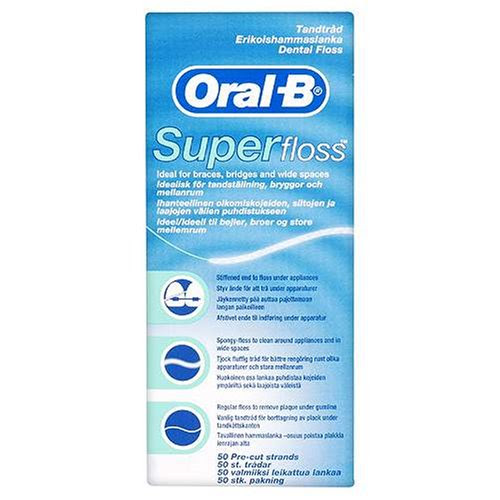
For those with braces, bridges, or large gaps between their teeth you may want to try Oral-B’s superfloss. It is a piece of floss that has one stiff end, a thicker, yarn-like middle section, and regular floss at the end. It’s hand to floss your thread through those brackets, bridges, permanent retainers, and then use the floss width that fits the area. This is a favorite of mine.
Also for places that have a little bit of a space, braces or bridges, is the interproximal brush. Some are disposable, some are reusable, just check them out and decide which one you would like. But these are great for teens who get something stuck in their teeth at school and don’t want to carry a toothbrush with them. Or for men just before business meetings.
 
And of course, there are the rubber tips toothpicks. You can go back to old school and use a regular wooden toothpick if that’s your preference but these are great. They are small, disposable, and awesome for on the go. They have a flexible rubber tip you can get inbetween tight spaces, permanent retainers, and brackets. Check them out, you may like them.
 
I know that there are several other gadgets out there but these are just a few of my personal favorites. If you see one you like, ask us about it and we’ll do the research for you to see if it’s the best one for you! But no matter what you do, just be sure that you do your best and remember what Dory from Finding Nemo says, “Just keep flossing, just keep flossing, flossing, flossing…..” Or was is swimming?

Cold Sores

photo

Ann Clark RDH

Ever have that “ tingling” feeling under your skin? An estimated 50-80% of people are familiar with this feeling and are infected with herpes simplex virus type 1 (HSV1). Cold sores aka: fever blisters are ugly, uncomfortable and embarrassing. These lesions are not caused by the common cold and they are not a canker sore( inside the mouth). They are a herpetic sores brought on through contact with infected skin or body fluid, manifesting around the mouth. They are clear, filled with fluid and unfortunately, a common problem that never really goes away.

dermnet_rf_photo_of_cold_sore_blisters

www.webmd.com

The first symptom of an outbreak is a tingling feeling in the skin, a warning… then, small fluid-filled blisters appear around the mouth on red, swollen areas of skin or mucous membranes. They rupture and crust over before healing. They are tender and painful and heal without scaring. In 80% of the adult population have antibodies against HSV1 and 25% against HSV2. They are extremely common and are only transmitted by close, personal contact…Kissing etc. The virus is usually present on an infected person’s lips, even if there’s no obvious sore. Because it can live in saliva sharing utensils or drinking glasses can also allow infection. Oral sex can lead to HSV1 infection of their partner’s genitals. HSV invades the cells of the epidermis (outer layer of skin), causing the blister to appear. The virus travels from the epidermis along the nerve paths to the roots of the nerves where it becomes inactive. A weakening of the body’s defenses due to severe cold, for example, can reactivate the virus causing reoccurring blisters.

HSV1 damages the skin as it reproduces itself creating a sore lasting approximately 1 week. Between sores, HSV1 hides itself inside the nerve cells, so you are never completely cured. Although usually inactive, a few things can trigger a reactivation such as: stress, sunlight, fever and menstruation. Though some will only get them 1-2x a year, others can get the outbreak monthly.

cold_sore1

www.arecold.com

The primary infection can progress in different ways. Some only get very mild symptoms or none. The first outbreak occurs 1-3 weeks after contracting the virus and usually goes away in a few weeks. The first symptom is an unpleasant tingling in the skin, then, the blisters appear. The sores become covered by scabs that usually fall off 8-10 days after they appear. The virus can spread until the sores are completely covered by scabs. 20% of people with HSV1 have recurrent attacks throughout their lives. In children the virus affects their mouth and throat and can be accompanied with fever, general aches and pains.

Medications

Oral antivirus meds help reduce the healing time if taken at the first sign- red/itchy skin.

Zovirax is taken before the virus fully flares and is taken 5x daily.

Vatnex is taken at first sign, then, 12 hours later.

Famvir is taken as a single dose.

Is THIS the virus? Not on the lips is not as common but anywhere on the face-cheeks, chin, nose. They usually will reappear in the same area each time. You can even get them on your finger or in your eye; most commonly the cornea causing damage or even blindness. Self-spreading can be prevented by washing hands and not touch the infection. Outbreaks can last up to 2 weeks. Recurrent outbreaks usually 1 week. Hot/cold compresses, OTC or Rx creams/gels (Abreva, Zovirax, Denavir) can relieve symptoms.

Source:

www.netdoctor.com.uk/diseases/facts/coldsores.htm

Want to learn more? Visit us at http://www.shalimarfamilydentistry.com