How to help with braces cuts or sores?

Kara


Kara Johansen BSRDH

If you have ever had braces you know that there are many annoying side effects of working towards a beautiful, healthy, straight smile. Often orthodontic problems that can be taken care of at home before you can make it to your orthodontist office. Here is a list of tips to help the fellow brace face 🙂

Newly tightened braces-

Each time you get your braces tightened it means one step closer to removing them. However, it does make your teeth ache. They can be sore for 3-5 days. One study stated that 91% of adolescents had tooth discomfort during the process of having braces. (1)

  • Before you go into have your teeth adjusted it has been suggested to take an ibuprofen. Remember to only take the medication as directed on the bottle. Take the ibuprofen with milk or food to avoid a stomach ache.
  • After the appointment stick with soft foods like soup or smoothies. Some have said that cool foods feel good on newly tightened teeth.
  • One study stated that chewing sugar free gum after the procedure can cause relief. Aspergum, which is a gum with a little bit of aspirin had a good response in pain reduction. (2)

Sores from braces

A common side effect of braces are cuts in the cheek or canker sores.

  • A warm salt water rinse works wonders. Put a teaspoon of salt into a warm glass of water then swish and spit.
  • Over the counter anesthetic gels have shown to give relief. Orabase or Oragel can help.
  • A tea bag can be placed over the sore to help with sensitivity and inflammation.

Wire pocking lips and gums-

Sometimes when you are eating or brushing a twisted wire can be moved out of place. Remember that lots of times this situation can be avoided with eating the proper foods recommended by your orthodontist. There are a couple of solutions for this predicament.

  • Flexible wires can slip out of the bracket slots on the back teeth. A sterile tweezer can be used to slip the wire into the tube and back into place.
  • You can use the end of a pencil eraser to push the out of place wire behind the arch wire to make it more comfortable. Only do this on softer wires.
  • Dental wax can also be used to be placed around the wire to protect your tissues until you can see your orthodontist to get it fixed.


orthowax

http://us-professional.gumbrand.com/gumr-orthodontic-wax-mint-with-vitamin-e-and-aloe.html

relief-wax-colored

http://www.dental-wax.com/

Loose bracket or band-

If a bracket or band becomes loose you can place wax over the area to hold it into place. If it falls off, save it for when you go back to your orthodontist.

Swollen or puffy gums-

Proper oral hygiene is very important when you have braces. Improper oral hygiene can cause weakening of the enamel (white/dark brown spots), permanent inflamed gums, bleeding gums, halitosis, and cavities.

  • Brush and floss after every meal. Most important is to brush and floss before you go to bed.
  • If you have swollen gums call your general dentist to get a cleaning. It is a good idea to have cleanings every 3 months when you have braces instead of every 6 months. Have your arch wire taken out before your cleanings.
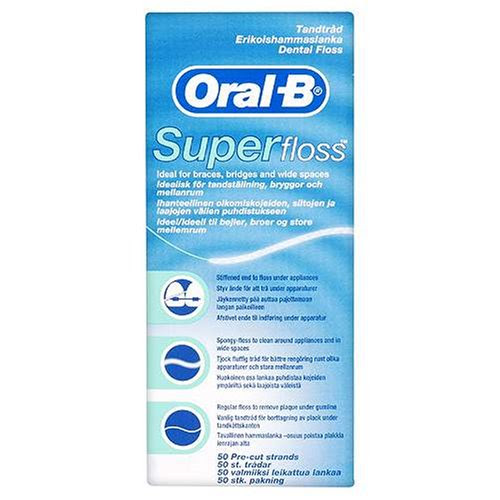
  • Super Floss, floss threaders, interproximal brushes, and Platypus flossers are very helpful.
  • Electronic toothbrushes are a better choice for cleaning your teeth and braces then a manual tooth brush. Water picks are also helpful to remove food debris.

imgres840r-2
874rn-2


imgres


www.oralb.com www.gumbrand.com www.PlatypusCo.com


Sources:

1. Attitudes and perceptions of adults towards orthodontic treatment in an Asian community. Lew KK Community Dent Oral Epidemiol. 1993 Feb; 21(1):31-5. [PubMed] [Ref list]

2. Proffit W R. Contemporary orthodontics. 3rd edn. St Louis: The CV Mosby Company; 2000. [Ref list]

3. http://www.orthocenters.org/emergency.php

Flossing…Do I have to?

KO6A0979-Edit[1]
Wendy Parker RDH
 
Absolutely! In some shape or form, flossing is essential in keeping the mouth and the rest of your body healthy!
As a hygienist, I have heard almost every excuse as to why people don’t floss, and trust me, I understand! From the “I’m too tired at night” to the “I just don’t have time” or the “I just forget to,” my job today is to try and make it a little simpler for you to want to floss and to help you understand why we should floss.
 
As a mother of 4 little ones, I understand that flossing isn’t a priority somedays….getting showered is. But with that, let me just say, flossing really is something that you don’t see the immediate results from, but in 20 years when you have your teeth still and you are smiling at their graduation with all your pearly whites, you will thank me.
 
So, let’s start with answering the basic questions about flossing….WHY should I floss? I brush really well!Brushing is a wonderful thing, and we are encouraged to do it twice a day, for two minutes with a fluoride toothpaste. What most people don’t realize is that brushing only reaches that tops, outside and inside surfaces of the teeth. But how to get inbetween? There really isn’t a substitute for flossing, sorry to be the bearer of bad news. Rinsing with mouthrinse or using an electric toothbrush will definitely help with keeping the mouth cleaner however, it is NOT a substitute for flossing. Plaque and bacteria form on every surface in the mouth, including the tongue and inbetween the teeth, therefore, you have to clean every surface of the teeth, not just the ones you can see. The tongue, saliva, and brushing take care of the plaque on most surfaces of the teeth, but floss truly is the only way to get the sticky plaque off the sides.The idea behind flossing is that as long as you disrupt the bacteria in the mouth once every 24 hours, you prevent it from hardening and becoming tartar. Flossing is MOST effective just before or after brushing at bedtime but really….you can do it any time of the day! Stuck in traffic? Floss. Waiting to pick the kids up? Floss. Going for a walk? Floss. Any time is a great time to floss! When you floss, it prevents Gingivitis (inflammation of the gum tissues), bleeding gums, bad breath, and will make easier dental appointments! The more you floss, the easier it becomes and the less your gums will bleed. It’s kind of like riding a bike. The first time you get one, you’re a little shaky but with practice you’ll be jumping off curbs in no time!
A lot of times people don’t floss because their gums bleed. That is because the gum tissue in that area is unhealthy so the body sends more blood to that area to help it heal. When your gums bleed, and the bacteria from the plaque and tartar are present, that bacteria gets into your bloodstream it is carried throughout the body increasing your chances of heart disease, compromising your immune system, and possibly causing an infection in the lining of your heart, which can be deadly! So, the more you floss, the healthier your gums are and the less they bleed!
 
So now that we know why, let’s focus on HOW to properly floss….

  • Starting with about 18 inches of floss, wind most of the floss around each middle finger, leaving an inch or two of floss to work with
  • Holding the floss tautly between your thumbs and index fingers, slide it gently up-and-down between your teeth
  • Gently curve the floss around the base of each tooth, making sure you go beneath the gumline. Never snap or force the floss, as this may cut or bruise delicate gum tissue
  • Use clean sections of floss as you move from tooth to tooth
  • To remove the floss, use the same back-and-forth motion to bring the floss up and away from the teeth
       floss1 floss2 floss3
 
The type of floss you choose is up to you. My personal favorites are Glide floss and Oral-B Satin floss. You may need to try a few different types to find the one that’s right for you. But don’t give up! It does get easier. Flossing looks simple, right? But what if you don’t have the perfect and easiest mouth to floss? Or you hate how the floss cuts off your circulation in your fingers every time? When you walk down the dental isle in any store there are so many aides to assist you, so which one is right for you? Hopefully you have already asked your hygienist this question but if not, here are a few things for you to check out the next time you are perusing the dental isle.
 
Several of my patients enjoy using floss picks. These are a great way to start your day. They don’t cut off your circulation and are totally disposable. These are great to keep a pack in your car or purse when you’re out and about.
And you can find all kinds of cute designs for your kids! Kids don’t usually become proficient at flossing until 10 or 11 years old. It’s never too young to start them on flossing. They’ll thank you later!
 

For those with braces, bridges, or large gaps between their teeth you may want to try Oral-B’s superfloss. It is a piece of floss that has one stiff end, a thicker, yarn-like middle section, and regular floss at the end. It’s hand to floss your thread through those brackets, bridges, permanent retainers, and then use the floss width that fits the area. This is a favorite of mine.
Also for places that have a little bit of a space, braces or bridges, is the interproximal brush. Some are disposable, some are reusable, just check them out and decide which one you would like. But these are great for teens who get something stuck in their teeth at school and don’t want to carry a toothbrush with them. Or for men just before business meetings.
 
And of course, there are the rubber tips toothpicks. You can go back to old school and use a regular wooden toothpick if that’s your preference but these are great. They are small, disposable, and awesome for on the go. They have a flexible rubber tip you can get inbetween tight spaces, permanent retainers, and brackets. Check them out, you may like them.
 
I know that there are several other gadgets out there but these are just a few of my personal favorites. If you see one you like, ask us about it and we’ll do the research for you to see if it’s the best one for you! But no matter what you do, just be sure that you do your best and remember what Dory from Finding Nemo says, “Just keep flossing, just keep flossing, flossing, flossing…..” Or was is swimming?

Oral Cancer Monthly Self Exam

KO6A3300-Edit[1]


Amanda Orvis RDH

The prevalence of oral cancer is on the rise; in fact one person dies per hour from oral cancer. In the early stages oral cancer can often times go unnoticed. It can be painless and not obvious to the naked eye. The most common areas for oral cancer are the floor of the mouth & sides of the tongue. That being said, oral cancer can be found in various locations as well as a variety of shapes, colors and sizes. It is important that you perform monthly oral self-exams. If you notice any suspicious areas that do not go away within seven to fourteen days make an appointment with your dentist to have them checked. Remember early detection saves lives.

OCF_wristband-2T

How to perform a monthly self-exam:

Supplies: Flash light and a mirror

Steps:

  • Take a moment to look at the skin on your face and neck in the mirror. Look for any changes in the color of your skin, any changes in moles or beauty marks, any swelling, lumps or sores.
  • Use both hands to gently feel along the outside of your cheeks, your lower jaw bone, your jaw joint, in front of and behind both ears. Checking for any areas that do not feel uniform on both sides, any lumps and/or any areas that are swollen or tender.
  • Gently use both hands to feel down the sides of your neck, follow the path along the neck muscles. Gently place your fingertips around your “Adam’s Apple” and swallow. Try to notice if it moves up and down normally or if there is any deviation.
  • Gently use both hands to feel the tissue above and around your clavicles for any swollen or tender areas, or areas that do not feel uniform on both sides.
  • Remove any removable dentures or appliances from your mouth.
  • Use the flashlight to check the roof of your mouth for changes in color or texture. Use your index finger to lightly sweep the roof of your mouth to feel for any lumps or swellings.
  • Pull out your upper lip and then your lower lip looking for any changes in color, size and/or texture. Gently squeeze each lip and cheek with your thumb and index finger feeling for any lumps or tender areas.
  • Using your fingers gently pull your tongue forward and check the back of your throat. Also check all the surfaces of the tongue and the floor of your mouth looking for any changes in color, size and/or texture in the tissue.
  • Lift your tongue to the roof of your mouth. Using both of your index fingers gently place one index finger on the floor of your mouth and the other index finger under your chin and press your fingers towards each other feeling for any swellings or tenderness along the floor of the mouth.
  • Look at your gums for any change in color and/or texture. Run a finger around all the surfaces of your gums feeling for any swollen or tender areas. \

What to look for specifically:

  • White patches
  • Red patches
  • Sores that fail to heal
  • Lumps, bumps or masses
  • Any areas that are differ from one side to another


oral-cancer

 Want to learn more? Visit us at http://www.alamedadentalaz.com


Sources:

http://myoms.org/procedures/head-neck-and-oral-cancer

http://fightoralcancer.org/information/images/

http://www.sixstepscreening.org/wp-content/uploads/SixStepScreening.pdf

http://oralcancerfoundation.org/

http://www.google.com/url?sa=i&rct=j&q=&esrc=s&source=images&cd=&cad=rja&uact=8&docid=lh3dem7gJGMA5M&tbnid=lSyDf2Zx6tGb8M:&ved=0CAUQjRw&url=http%3A%2F%2Fwww.ocfstore.org%2Foral_cancer_wristbands_p%2Focf_wristband.htm&ei=73M9U_K4DuO0yAGh6IDABA&bvm=bv.63934634,d.aWc&psig=AFQjCNE7TOClwAu96v2KHsbn1XlrAdQ49w&ust=1396622626125563

https://www.google.com/url?sa=i&rct=j&q=&esrc=s&source=images&cd=&cad=rja&uact=8&docid=osKRQqBu-J5qcM&tbnid=o3zZpWEozQnX-M:&ved=0CAUQjRw&url=https%3A%2F%2Fstjamesdentalgroupcudahy.wordpress.com%2Ftag%2Foral-cancer-self-exam%2F&ei=YXQ9U6uJBaKQyAGt9oHQDw&bvm=bv.63934634,d.aWc&psig=AFQjCNFoFpa18hNHhvzAAzKxqgandu3-2Q&ust=1396622812272438

http://www.google.com/url?sa=i&rct=j&q=&esrc=s&source=images&cd=&cad=rja&uact=8&docid=JWvDkHxnv4okFM&tbnid=VRZ3RjtVWC5AKM:&ved=0CAUQjRw&url=http%3A%2F%2Flaneendsdental.wordpress.com%2F2013%2F06%2F15%2Fmouth-oral-cancer-in-the-news%2F&ei=zHU9U_XoB6_lygHGu4HQDA&psig=AFQjCNEyDetzw_20EKBCjYSVXCnqHqZW5A&ust=1396623042961165


Dental Insurance 101

Kim McCrady

Kim McCrady RDH BS

Dental insurance can be a confusing subject to even the savviest subscriber.  Why?  They make it confusing for a reason. Dental insurance companies are in business to make money for their stockholders and to pay out as little as possible on YOUR dental claims. Did you know, on average an insurance company has a goal to pay out less than 35% of your total maximum annual benefits?  That is roughly $350 per patient per year.  That covers routine exams, x-rays and routine dental cleaning twice in a 12-month period of time.   The good news is we are here to help you navigate the gauntlet and get your moneys worth from your plan.

1-     Know your dental insurance plan.  A common mistake is to assume your medical and your dental insurance are the same company.  Almost always, this is not the case.  Interestingly,  many dental insurance companies do not provide you with an ID card.  The solution is to ask your HR department.  They should be able to provide you with the name and the phone number of your dental insurance carrier. EX:

imgres (2)

www.deltadentalva.com

2-     Providing accurate information to your dental office is the first step to getting your claims paid.  You will need your subscriber ID number and the subscribers’ date of birth and the patients date of birth.  You should know many companies still use your social security number to identify you in their system.  If you are uncomfortable with them using your social security number you can request a unique ID number.

3-     Know your annual deductible.  Almost every dental plan has a deductible they require you to satisfy before they begin to pay out benefits on your dental claims.  This deductible can vary in amount.  There are usually individual and family deductibles.  Family deductibles are often three times the individual deductible. Deductibles can apply to any dental service billed to your insurance company.

4-     Many plans do NOT reset your annual benefits in January.  You should know your benefit year.  This is important so you do not leave unused benefits to the insurance plan.  By knowing your plan year, you can maximize your coverage.

5-     Your plan has a maximum amount of benefits they will pay on each family member each benefit year.  The average maximum benefit is $1500 per year.

6-     Although your plan has a maximum amount of benefits per year that are earmarked for your care, the insurance companies pay out your benefits on a percentage scale, NOT at 100% per claim until you have reached your maximum.   This scale usually has three categories for dental services:

1-Preventative

2-Basic

3-Major

Each insurance company places dental services into a category.  It is important to know how your plan categorizes services so you can better understand you estimated coverage from you dental plan.

7-     When your dental office estimates insurance coverage for the dental services you are receiving from the office, it is only as ESTIMATE.  Any time you or your dental office call your insurance carrier, the insurance company representatives often read a disclaimer to inform you a description of benefits is NOT a guarantee of payment.  It can be very difficult to provide an accurate estimate of insurance coverage.  You should expect a down payment for your care and a balance bill after your carrier has processed your claim.

8-     Once your dental claim has processed and your plan has paid their percentage of the services to your dentist, you receive an explanation of benefits (EOB).  Many people do not even open their EOB’s and read them.   They can be very complex, but very informative.  EOB’s include the fees billed to your plan for services rendered, payments made by the insurance company on your claim and the patient portion for the services.  Often, your plan will include any notes explaining adjustments to payments, including subjecting the claim to frequency limits for services, other exclusions including a feature referred to as down coding.

eob-sample

www.bcbs.com

9-     Down coding is a loophole insurance companies have instituted that allows them to pay their contracted percentage on a lesser service.  The two most common down coded procedures are tooth colored crowns and tooth colored fillings on back (posterior) teeth.   For example, if a tooth colored filling costs $200 and you have 80% coverage on basic services, most plans will not pay the $160.  They will “down code” to minimize their responsibility for the services.   Therefore, the claim will be received at $200, subjected to your deductible, down coded to a fee for a lesser service, such as a silver filling at $140.  Assuming a $50 deductible, the insurance will pay their 80% on $90 instead of $200.  This nets a total insurance payment of $72 on your $200 claim and a $128 patient portion.

10- But what if you have a secondary plan to help with your dental claims? Be careful and DO NOT assume your secondary plan will pick up the patient portion for your primary claim.  You need to be sure you know if your secondary plan has a “non-duplication of benefits clause”.  This means your secondary plan will only pay the difference between what your primary plan covered and what they would have covered if they had been primary.  For example, if a claim is submitted for $1000 for dental services to your primary insurance company and your primary covers the service at 50% (assuming the deductible is satisfied and there is no down coding) the primary should pay $500.  If you have a non-duplication of benefits clause, the secondary will not pay the patient balance of $500 to complete the claim if, they too, would have covered the services at 50%.  But let’s say the secondary plan had 60% coverage for the services rendered and would have paid $600 on the claim.    Then they should make payment of an additional $100 so the total insurance payments received between the two plans is equal to the payment they would have made, had they been the primary plan.  Secondary insurance often is most beneficial when the primary plan has been maxed out and the secondary begins to pay benefits for care.

In plain English, dental insurance is very different than medical.  There are no set co-payments for each office visit.  Each visit is considered by your plan once it is received and processed according to the guidelines and limitations of your plan.  There are thousands of dental plans with thousands of loopholes and limitations.  And it seems the limitations are changing on a daily basis.

Your best bet to successfully utilize your dental insurance coverage is to join forces with your dental office administrators.   They spend hours obtaining breakdowns of benefits, applying this information to your care plan, sending the claim with all supporting documentation, following up on the claim weekly to assure payment on your behalf and will often have to repeat the process for you when the insurance company claims to have not received the information.  Be kind to them.  They are working for you to get you more than the average 35% of your benefits.

Want to learn more? Visit us at http://www.northstapleydentalcare.com/

Cold Sores

photo

Ann Clark RDH

Ever have that “ tingling” feeling under your skin? An estimated 50-80% of people are familiar with this feeling and are infected with herpes simplex virus type 1 (HSV1). Cold sores aka: fever blisters are ugly, uncomfortable and embarrassing. These lesions are not caused by the common cold and they are not a canker sore( inside the mouth). They are a herpetic sores brought on through contact with infected skin or body fluid, manifesting around the mouth. They are clear, filled with fluid and unfortunately, a common problem that never really goes away.

dermnet_rf_photo_of_cold_sore_blisters

www.webmd.com

The first symptom of an outbreak is a tingling feeling in the skin, a warning… then, small fluid-filled blisters appear around the mouth on red, swollen areas of skin or mucous membranes. They rupture and crust over before healing. They are tender and painful and heal without scaring. In 80% of the adult population have antibodies against HSV1 and 25% against HSV2. They are extremely common and are only transmitted by close, personal contact…Kissing etc. The virus is usually present on an infected person’s lips, even if there’s no obvious sore. Because it can live in saliva sharing utensils or drinking glasses can also allow infection. Oral sex can lead to HSV1 infection of their partner’s genitals. HSV invades the cells of the epidermis (outer layer of skin), causing the blister to appear. The virus travels from the epidermis along the nerve paths to the roots of the nerves where it becomes inactive. A weakening of the body’s defenses due to severe cold, for example, can reactivate the virus causing reoccurring blisters.

HSV1 damages the skin as it reproduces itself creating a sore lasting approximately 1 week. Between sores, HSV1 hides itself inside the nerve cells, so you are never completely cured. Although usually inactive, a few things can trigger a reactivation such as: stress, sunlight, fever and menstruation. Though some will only get them 1-2x a year, others can get the outbreak monthly.

cold_sore1

www.arecold.com

The primary infection can progress in different ways. Some only get very mild symptoms or none. The first outbreak occurs 1-3 weeks after contracting the virus and usually goes away in a few weeks. The first symptom is an unpleasant tingling in the skin, then, the blisters appear. The sores become covered by scabs that usually fall off 8-10 days after they appear. The virus can spread until the sores are completely covered by scabs. 20% of people with HSV1 have recurrent attacks throughout their lives. In children the virus affects their mouth and throat and can be accompanied with fever, general aches and pains.

Medications

Oral antivirus meds help reduce the healing time if taken at the first sign- red/itchy skin.

Zovirax is taken before the virus fully flares and is taken 5x daily.

Vatnex is taken at first sign, then, 12 hours later.

Famvir is taken as a single dose.

Is THIS the virus? Not on the lips is not as common but anywhere on the face-cheeks, chin, nose. They usually will reappear in the same area each time. You can even get them on your finger or in your eye; most commonly the cornea causing damage or even blindness. Self-spreading can be prevented by washing hands and not touch the infection. Outbreaks can last up to 2 weeks. Recurrent outbreaks usually 1 week. Hot/cold compresses, OTC or Rx creams/gels (Abreva, Zovirax, Denavir) can relieve symptoms.

Source:

www.netdoctor.com.uk/diseases/facts/coldsores.htm

Want to learn more? Visit us at http://www.shalimarfamilydentistry.com

Essential Oils

KO6A8495-Edit - Copy

Lora Cook RDH

     Recently several of my patients have asked me some questions about essential oils. To be honest I have a very limited knowledge of the subject. I hate when I don’t have all the answers for my patients. So I thought what better way to learn more about the subject then to write about it.

    However, let me preface this information with a reminder that while these essential oils can provide effective preventive and palliative care, it is not a substitute for dental care. If you have a cavity or a toothache please do not hesitate to give us a call. Periodontal disease and cavities left untreated will only become worse over time.

     As dental professionals we rely on tested clinical research and published research studies wither certain guidelines to substantiate any therapeutic claims and demonstrate effectiveness. However with essential oils there is little published research, because several problems present in trying to conduct research on essential oils. First, essential oils are not standardized. Synthetic Pharmaceuticals are reproduced to be identical, where as essential oils cannot be produced to be identical. Second, while conducting research on essential oils it is difficult to gage for individual differences in how the oils affect people. Also little funding is provided for research on homeopathic remedies. More research studies are done for synthetic therapeutics because these follow the usual scientific research path.

The Essential oils that I would like to talk about are:

  1. Cinnamon oil: bark and leaf
  2. Tea Tree oil
  3. Myrrh
  4. Clove oil
  5. Peppermint oil

1. Cinnamon:

product-rcd-346

risdoninternational.com

  • Leaf oil is primarily useful for palliative care. It may be effective in reducing pain and inflammation.
  •  Cinnamon Bark Oil has antibacterial qualities, it has been shown to effectively destroy 21 different types of bacteria.
  • How to use: You can rinse with diluted cinnamon oil after brushing, or put some on your tooth paste. Cinnamon oil is very strong and should not be ingested. Also some people have been known to have allergic reactions to cinnamon oil, so test in a small area of your mouth first.

2. Tea Tree Oil: This oil is effective for antibacterial, anti-fungal, and antiviral properties.

  • If you have a allergy to celery or thyme, you should not use this oil. Also just like the cinnamon oil, tea tree oil is very strong and should not be ingested.
  • How to use: There are wooded toothpicks that have been impregnated with tea tree oil. These can be found at a health food store, or purchased on-line. You can also mix a small amount with your toothpaste, then brush.

3. Myrrh: This is effective for mouth sores.

hu

doterrablog.com

  • How to use: Mix 1 to 2 drops in eight ounce glass of warm water, swish for thirty seconds then spit.

myrrh_gum_resin

http://www.mountainroseherbs.com

4. Clove Oil: This is effective for toothaches, also known to sooth sore gums.

cloves

libweb5.princeton.edu

  • How to use: Mix one drop with a plant based carrier oil, olive oil wood be a good carrier oil to use. Then apply with a cotton swab. For gum tissue and other oral tissues mix 1 to 2 drops in eight ounce glass of warm water, swish for thirty seconds then spit.

5. Peppermint Oil: This oil is effective in treating bad breath, it also has mild anesthetic properties.

peppermint-oil1-2

www.lalaessentialoils.com

  • How to use: Mix two drops of peppermint oil with two cups of distilled water. Shake we’ll before each use, swish a mouthful for one minute then spit. All essential oils should not be ingested, and always consult your medical physician before starting any type of therapy at home.

There are other essential oils that are effective for oral health that I did not include in this overview: basil, almond and lavender, just to name a few.  I hope that these basic guidelines can shed a bit more light on the subject.  All essential oils should not be ingested, and always consult your medical physician before starting any type of therapy at home.

Sources:

http://www.livestrong.com/article/284574-cinnamon-oil-for-cavities/

http://www.teatree.co.il/en/Files/oral.pdf

http://www.intelligentdental.com/2010/11/30/how-to-use-tea-tree-oil-for-dental-health/

http://birchhillhappenings.com/mouth.htm

What do our readers want to know about their oral health?

Dear Readers- 

     Here at Dentistry Done Differently we want to know what you want to know about your oral health. Have you ever left the dentist office remembering a question you forgot to ask your dentist. Here is your chance to ask. It can be from how to floss to what are root canals. At the bottom of this post leave your questions in the comment section and we will answer them to the best of our ability. Thank you for your previous comments and feed back. We want to create a community that is full of healthy mouths and happy smiles. 

Sincerely- 

SFD logo

NSDC (burnt orange logo, 2010,(sm)

Print

Oral Bacteria: Sharing or Spreading?

KO6A3321-Edit

Becky Larson RDH

            The sharing or spreading of oral bacteria happens very frequently and most people are unaware they are even doing it.  Our mouths are filled with millions of bacteria. When you share food, cups, utensils, toothbrushes, or have contact with someone else’s saliva these bacteria can be transferred from person to person. This can be particularly harmful when sharing with children.

Cavities (caries) are the result of a bacterial infection and young children can “catch” the harmful bacteria that cause cavities. While everybody has bacteria in their mouth, it’s important to try to keep these harmful bacteria from our children’s mouths during their first year or two. Babies are actually born without any harmful bacteria in their mouth.  Once the harmful caries bacteria are introduced, the child may experience tooth decay.

So what does this mean?  It means DON’T SHARE BACTERIA.  I’ve seen many parents (including my own husband) suck their child’s pacifier clean.  This can be both good and bad.  The parent has just introduced new bacteria into their child’s mouth.  Some bacteria are harmless and can actually help prevent allergic reactions.  However, if the parent has any caries bacteria, they have now given those bacteria to their child.  Sharing saliva can also spread the bacteria that cause inflammatory reactions and periodontal disease in adults.

Why does it matter? Tooth decay is the most common chronic childhood disease, five times more common than asthma.  When left untreated, the disease can cause developmental problems.  Tooth decay can lead to mouth pain, which makes it more difficult for a child to eat healthy foods, speak correctly, and even concentrate in school.  Tooth decay can also damage permanent teeth when they erupt.  Periodontal disease cannot currently be cured.  If left untreated, the gums, bone and tissues that support the teeth can be destroyed.  This can result in the loss of teeth.

            Tips on how to prevent bacteria transmission and cavities:

*If your child sleeps with a bottle, fill it with water rather than milk or juice

*Clean baby gums with wet cloth several times per day before baby teeth erupt

*Once your child has erupted teeth, brush them at least twice per day (even if it’s only one tooth!)

*Take your child to the dentist by their 1st birthday or when the first tooth erupts

*Avoid putting anything in your child’s mouth that has been in your mouth

*Avoid kissing your child on the lips

*Avoid sharing food, utensils, cups, and toothbrushes

*Help your child floss their teeth once the teeth are contacting

*Change toothbrushes every 3 months

*Eat a balanced diet, limit sugar intake

*Brush your own teeth twice per day and floss once per day

Sources:

http://www.perio.org/node/224

http://oralhealthmatters.blogspot.com/2013/05/bacteria-in-mouth-are-not-harmless.html

http://brushinguplasalle.com/tag/oral-bacteria/

https://www.deltadental.com/Public/NewsMedia/NewsReleaseBadThingsHappen201108.jsp

http://www.nbcnews.com/id/35989527/ns/health-oral_health/t/moms-kiss-can-spread-cavities-baby/#.UpYHZ9F3uM8

http://www.nidcr.nih.gov/OralHealth/Topics/GumDiseases/PeriodontalGumDisease.htm

Oral Piercings

KO6A8579-Edit

Lindsay Whitlock RDH

ORAL PIERCINGS THROUGH THE AGES:

imgres

  • Body art or oral piercings originally began as a sign of distinction, religious acts and sacrifice.
  • This culture is traced back to the Mayans who pierced their tongues to demonstrate courage and virility.
  • In purification rituals Eskimos, pierced the lips of infants.
  • As passage into puberty Aleuts pierced the mandibular lips of boys.
  • In Southern India, the tongue was pierced with a skewer to take a vow of silence.
  • In history, oral jewelry such as stones, bones, ivory, and adorned wooden disks are used as tribal influence for those in Ethiopia and Brazil (The Perils).
  • In several third world countries body art is still a practiced custom.
  • Today, body art and oral jewelry have become a huge phenomenon in the western culture as a compulsive tendency to be different.

EFFECTS OF ORAL PIERCINGS:

6DSCN3057

  • Infection, Swelling, Pain: The oral cavity is a damp, warm environment, which houses millions of bacteria. An infection can quickly become life threatening; it’s a possibility for the piercing to cause the tongue to swell, potentially blocking one’s airway.
  • Damage To Gums, Teeth, Fillings: A common habit of biting the oral piercing can injure one’s gums, chip or injure teeth or a filling.
  • Nerve Damage: Following a piercing, one may experience a numb tongue, which is caused by temporary or permanent never damage. The injured nerve may affect how one moves their mouth, and sense of taste. Damage to the tongue’s blood vessels can cause serious loss of blood.
  • Hypersensitivity To Metals: Allergic reactions at the piercing location is common.
  • Excessive Drooling: Oral piercing can greatly increase saliva production
  • Dental Appointment Difficulties: Oral piercings/jewelry can interfere with dental care by blocking X-rays.

4812852-f6

WHAT YOU SHOULD DO IF YOU ALREADY HAVE AN ORAL PIERCING?:

  • Contact your dentist or physician immediately if you have any signs of infection—swelling, pain, fever, chills, shaking or a red-streaked appearance around the site of the piercing.
  • Keep the piercing site clean and free of any matter that may collect on the jewelry by using a mouth rinse after every meal.
  • Try to avoid clicking the jewelry against teeth and avoid stress on the piercing. Be gentle and aware of the jewelry’s movement when talking and chewing.
  • Check the tightness of your jewelry periodically (with clean hands). This can help prevent you from swallowing or choking if the jewelry becomes dislodged.
  • When taking part in sports, remove the jewelry and protect your mouth with a mouthguard.
  • See your dentist regularly, and remember to brush twice a day and floss daily.

before-3_med_hr 

IMG_1181

Works Cited

American Dental Association. Oral Health Topics: Tongue Piercing and Tongue Splitting. Amended. October 2004. Retrieved 30 April 2013. http://www.ada.org/2750.aspx?currentTab=2 Body piercing Statistics. (2012). Retrieved from http://www.statisticbrain.com/body-piercingstatistics Chimenos-Küstner.E. (2003). Appearance and culture: oral pathology associated with certain “fashions” (tattoos, piercings, etc.). retrieved from  http://www.ncbi.nlm.nih.gov/pubmed/12730654

Ford CA, Bearman PS, Moody J JAMA. Foregone health care among adolescents.1999 Dec 15; 282(23):2227-34. Retrieved from http://www.ncbi.nlm.nih.gov/pmc/articles/PMC1360944/

Francesco Inchingolo, Marco Tatullo, Fabio M. Abenavoli, Massimo Marrelli, Alessio D.             Inchingolo, Antonio Palladino,Angelo M. Inchingolo, and Gianna Dipalma. Oral            Piercing and Oral Diseases: A Short Time Retrospective Study. Published 2011 October    18. Retrieved 30 April 2013. http://www.ncbi.nlm.nih.gov/pmc/articles/PMC3204433/

Kelly Soderlund, ADA News staff. Fewer adults visiting the dentist. Updated 13 March 2013.     Retrieved 30 April 2013. http://www.ada.org/news/8366.aspx

Oral Piercings. Retrieved from http://www.ncbi.nlm.nih.gov/pmc/articles/PMC1360944/

The Perils of Oral Piercing Retrieved from http://www.rdhmag.com/articles/print/volume- 26/issue-3/feature/the-perils-of-oral-piercing.html

Wilkins, E. M. 2011. Clinical Practice of the Dental Hygienist. Philidelphia: Lippincott Williams & Wilkins.

Image Sources:

Spheno Palatine Gangleonerualgia

Kim McCrady

Kim McCrady RDH BA

Spheno Palatine Gangleonerualgia

Spheno Palatine Gangleoneuralgia!  Now that’s a mouthful.  But believe it or not, most everyone has experienced spheno patlatine gangleoneuralgia at one time or another.  In fact, as scary as the condition sounds, its uncomfortable but harmless.

So, what causes spheno palatine gangleoneuralgia?  It is the rapid release of blood back to the brain back from the palate after something very cold has been present in the mouth and contacted the roof of the mouth.  This results in a sharp uncomfortable headache.  Fortunately, the headache does not last long.  Have you figured it out yet?  What is spheno palatine gangleoneuralgia?  If you guessed a good old fashioned brain freeze, you are correct.

The roof of our mouths are made up of a hard area, referred to as the hard palate.  Your hard palate is located toward the front of the mouth and extends to the about the middle of the second molars.  It is hard because there are three bones that fused together as you grew to create the hard palate.  The soft palate is located just behind the hard palate and continues down into the throat area.  It is soft because there are no bones present.  The brain freeze according to recent studies is caused by an intense and sudden increase in blood flow through the brain’s anterior cerebral artery due to dilation of the artery.  When the artery constricted, the brain-freeze pain sensation wears off.

460800_f496

Of course, allowing your cold treat a moment to warm up before it contacts your palate is a start to preventing brain freeze.  But, if your brain freeze is underway the quicker you can warm your palate the quicker the headache will recede.  Cupping you hand like a mask around your mouth and breathing in and out into your cupped hand helps to warm the palate.  As well has pressing your tongue or thumb on the roof of the mouth can shorten that headache. The goal is to prevent the blood vessels in your palate from constricting and dilating due to extreme changes in temperature.

Next time you are in need of a conversation starter, consider asking your friends if they have ever experienced spheno palatine gangleoneuralgia.

Medical News Today:  http://www.medicalnewstoday.com/articles/244458.php

Discovery Fit and Health: http://www.medicalnewstoday.com/articles/244458.php

Photo: http://robjundt.hubpages.com/hub/Brain-Freeze-Adventures