I am a Dental Hygienist

PeggyS

Peggy Crooper, RDH

I am a dental hygienist… and I love what I do.

I am a dental hygienist. I am not a dental assistant and I am not a dentist.

“Yes, I am qualified to do this. Yes, I am licensed to do this. Yes, I went to school for this. Yes, what I told you is true”.
RDH3

I am a dental hygienist.

No, I do not “just clean teeth.”

Yes I do scale above and below your gum tissues to remove calculus, bacteria, and plaque from your teeth.

Yes I do polish your teeth.

Is that all I do? I will let you decide.

image

I am a dental hygienist.

I give multiple injections to make sure you are comfortable.

I administer nitrous oxide to make sure you are not nervous.

I take x-rays of your teeth to detect bone loss, decay and restorations.

I take complete comprehensive health histories; I take your vital signs, perform oral cancer screenings and periodontal exams to ensure not only your oral health, but your overall health.

I counsel and motivate you with tobacco cessation, nutritional counseling and oral health care. I recommend you seek medical attention if it is in your best interest.

I treat your children and I apply fluoride and sealants to save you the time, pain and expense that comes with tooth decay.

I help you achieve that whiter smile and fresh breath to give you more confidence. We know that gum disease has a contribution to other diseases, such as heart disease, diabetes, and stroke.  We are learning more everyday about this systemic link and I educate you about this link.

But I “just clean teeth.”
RDHs

I am a dental hygienist.

They tell me it is not a real job. They don’t know that I went to school and have a degree.

Some have devalued my profession. Many do not even know that we are a profession.

They do not even know what to call me.

image

I am a dental hygienist.

I have been trained to respond to medical emergencies and give CPR.

I have learned and understand how to treat a variety of patients.

I research their medical conditions, accommodate their special needs and put their concerns as a priority.

I have extensive knowledge of the general sciences, Anatomy, Microbiology, Human Development, Pharmacology, and Psychology.

I have to be well versed in oral pathology and I look for signs of oral disease, pathology, and cancer.

image

I have learned to take multiple forms of x-rays and I am able to understand and explain pathology if present.

I have developed the extremely difficult skill and techniques of scaling that strains my hands, my neck, and my back while making sure you are not in pain.

I am a dental hygienist.

They say anyone can do what I do.

They say its “just a cleaning.”

image

I am a dental hygienist.

To be considered for Dental Hygiene school, I made A’s in Biology, Microbiology, Chemistry, Anatomy, and Physiology. I took 2 years of higher-level courses in Psychology, Mathematics, English, and other required course work.

Once accepted, I had 2 years of intensive clinical training, alongside detailed courses in Head and Neck Anatomy and Physiology, Oral Pathology, Pharmacology, Dental Anatomy, Human Development, and Public Health.

I had countless clinical examinations.

I had someone watching over my shoulder while I tried not to shake.

I had 50 patient cancellations and no-shows.

I often had to pay my patients to allow me to treat them.

image

I had anxiety and cried weekly.

I still have nightmares about school a year after graduation.

I took 5 licensing exams, while my nursing friends took one.

I paid thousands of extra dollars for my dental instruments, licenses, and loupes on top of my tuition. I will be paying student loans for years. And now that I am working and out of school, I must continue to take multiple courses every year to remain current and to maintain my licenses.

image

I am a dental hygienist.

They thanked me.

They brought me homemade gifts.

They cried out of gratitude.

They recommended their friends and family.

They requested me.

They told me all about their life, their joys and their sorrows.

They grew to love me and I them. They know that I care about them.

image

I am a dental hygienist.

I work in a private practice.

I work in schools.

I work in hospitals.

I work in retirement homes.

I work in jails.

I travel to other countries delivering care.

I travel to group homes for those with special needs.

I travel to multiple events to volunteer my time to helping my community.

I am a dental hygienist, and I may be underappreciated.

But I love what I do.

image

When I do get those patients who are thankful for my help,

I am reminded of why I chose this profession.

When I find oral cancer,

or help someone control their periodontal disease,

or help someone quit smoking,

I know I make a difference.

So whether or not you know and appreciate what I do,

I know my role in prevention of disease.

I know my role in promotion of health. I know that I am a clinician, an educator, and a health care professional. And I know that I love what I do.
Amanda Andra AZ MOM

Want to learn more? Visit us at

http://www.shalimarfamilydentistry.com

http://www.northstapleydentalcare.com

http://www.alamedadentalaz.com

http://www.dentistingilbert.com



Orthodontic Retainers

LindsayW

Lindsay Olsen, RDH

Orthodontic Retainers

            You’ve been waiting for this day for over eighteen months; your braces are coming off today! Interestingly enough, one of the most important stages of your orthodontic treatment begins, the retainer phase.  Retainers are the only insurance policy orthodontia patients have to keep their smile straight, and bite perfect.

There are two types of orthodontic retainers:

  • Permanent (Fixed Bonded)
  • Removable

Permanent retainers cannot be removed. A thin wire is bonded on the tongue side of your lower front teeth (sometimes the upper teeth). This style retainer is great for individuals who will not remember to wear their removable retainers each night. Permanent retainers are not recommended for patients who have poor brushing and flossing habits at home. Permanent retainers require meticulous flossing (With a floss threader), and twice daily brushing in order to prevent plaque/tartar buildup from accumulating around the retainer.

Call your dentist, or orthodontist ASAP if you feel or notice your permanent retainer is broken, or distorted in any way.

There are two types of removable retainers: a Hawley style retainer, or an Essix style (Invisible) retainer. Removable retainers are popular among orthodontic patients because they can be removed, and cleaned by hand. These style retainers also do not get in the way during flossing, and brushing.

How to Care for Your Removable Retainer?

  • If you have an removable style retainer DO NOT soak it in boiling, or even extremely hot water, as it can easily melt, or become distorted. Also living in Arizona, store your retainer indoors. If it is left in your car during the summer months, it can melt, or become distorted.
  • If you are not wearing your retainer, keep it in its case, on a high shelf, away from pets. Dogs are attracted to smell/taste of human saliva. Your dog will chew, and destroy your retainer if they can get their paws on it.
  • DO NOT soak your retainer in mouthwash, as it will stain your retainer. Simply rinse with water, after each use, and gently brush with your soft toothbrush (NO TOOTHPASTE). Once a week, I disinfect my removable retainers. Simply place your retainers in warm water, with a denture or orthodontic cleaning tablet for 15-20 minutes, and then rinse under water. I personally use Retainer Brite tablets (Purchased from Amazon.com).


How Often, or How Long Do I Need to Wear My Removable Retainers?

It is recommended to wear your removable retainers, every night, for the rest of your life to retain your straight teeth.

You are welcome to bring in your removable style retainers with you to each preventative cleaning appointment. They can be cleaned in the ultrasonic, and then the Dr. can examine the fit. If you have any additional questions about your retainers, please contact your dental office!

Want to learn more? Visit us at

http://www.shalimarfamilydentistry.com

http://www.northstapleydentalcare.com

http://www.alamedadentalaz.com

http://www.dentistingilbert.com


The “T’s” of Thanksgiving

KO6A0979-Edit[1]

Wendy Parker RDH

The “T’s” of Thanksgiving

It’s that time of year again, when the holidays are upon us, family and friend gatherings, and days seem to get shorter and shorter.  With each passing year, it seems like we become busier and busier and time grows shorter and shorter.  This holiday season, I hope we all take the challenge and remember all the big and the little things we can be thankful for each and every day.  At the end of your day, I hope that we remember to say thank you to someone, to smile, and to be grateful for the small and simple things in life.  With that said, and with the fact that I am a hygienist, I am listing just a few things that I am thankful that begin with the letter “T.”

TEETH that help me smile, talk, and eat
Teeth
Toothbrushes and Toothpaste to keep my mouth healthy and happy
Turkey, who doesn’t love Turkey?!
Turkey
Trivia, to enlighten me with random facts of knowledge
Trivia Pursuit
Technology that enables us to solve problems and obtain information at the touch of hand
Technology
Terrific Employers, Friends/Employees I work with and Patients that make my job more than just an occupation
Signature
consisting of:
North Stapley
Shalimar
Alameda
Smiles
Screen Shot 2015-11-07 at 4.20.13 PM
From all of us here, we wish you the happiest and most memorable holiday season!  May you know how grateful we are for YOU this Thanksgiving Season!

Tooth Sensitivity

KatieM

Katie Moynihan RDH

Tooth Sensitivity

Sensitive teeth is one of the most common concerns among dental patients. Tooth sensitivity occurs due to enamel loss or gum recession which exposes the underlying dentin structure of the tooth. The dentin layer of your tooth is found underneath the enamel and contains several tiny tubes which run from the nerve to the outside of the tooth. When exposed, these tubes are highly sensitive to temperature changes, sweets, or mechanical forces. Not to mention very painful!

Untitled

Tooth sensitivity can be caused by several factors. Aggressive brushing can wear away your enamel at the gumline leading to gum recession and exposed tooth root. Another cause of sensitivity can be from continuous grinding of the teeth to the point that the enamel is completely worn down to the dentin layer. Cracked teeth or worn fillings can create passageways to the nerve of the tooth. Periodontal disease, or severe gum disease, can contribute to sensitivity because the gums around the teeth break down and lead to gum loss and bone loss.

Untitled

Untitled

There are several ways to help reduce tooth sensitivity either at home or at the dental office. The type of treatment will depend of what is causing the sensitivity.

At home treatments include:

  • using a soft or extra-soft toothbrush while brushing gently in order to avoid toothbrush abrasion at the gumline (take a good look at your toothbrush…if the bristles are pointing in multiple directions, you’re brushing too hard!)
  • using a toothpaste that contains potassium nitrate, which penetrates the exposed dentin and soothes the nerve endings
  • using a fluoride toothpaste to help strengthen the tooth and exposed dentin
  • using MI Paste (available at your dental office) to block dentin tubule openings
  • limit acidic foods and drinks because they can remove small amounts of enamel over time

In office treatments include:

  • application of a fluoride varnish – helps seal the tubules and rebuild exposed dentin
  • application of a fluoride foam – provides a high dose of fluoride to help strengthen teeth
  • bonding agents can be placed at the gumline if necessary to seal exposed dentin and reduce sensitivity
  • restorative treatment if needed to correct the tooth that is causing the sensitivity
  • periodontal treatment if needed to keep gums healthy around the teeth

A mix of potassium nitrate and fluoride is your best solution for desensitization. Some products which include these active ingredients include Sensodyne, Pronamel, Colgate Sensitive Pro Relief, and Colgate Prevident 5000 Sensitive. These products must be used on a regular basis for at least 30 days before any therapeutic benefit will take place. Whitening and tartar control toothpastes contain abrasive ingredients that can damage tooth enamel and may be too harsh for those with sensitive teeth. The application of a fluoride varnish is always available in-office at your request. If you suffer from tooth sensitivity, feel free to ask us which desensitizing agents will work best for you!

Untitled

Want to learn more? Visit us at

http://www.shalimarfamilydentistry.com

http://www.northstapleydentalcare.com

http://www.alamedadentalaz.com

http://www.dentistingilbert.com

Sources:

http://www.ada.org/~/media/ADA/Publications/Files/patient_33.ashx

https://us.sensodyne.com/faq.aspx

http://www.colgate.com/en/us/oc/oral-health/conditions/tooth-sensitivity/article/treatment-options-for-tooth-sensitivity

http://www.mouthhealthy.org/en/az-topics/s/sensitive-teeth

Whitening Options

PeggyS

Peggy Storr RDH

Screen Shot 2015-03-15 at 10.00.43 PM

When considering whitening your teeth, the options may seem confusing. There are many products that you can buy over the counter, online, or in your dental office; should you whiten at home, should you go in and have it done professionally, or just cross your fingers and hope that your toothpaste will do what it says it will do?

For starters, many whitening toothpastes can often have positive whitening and brightening effect because they have abrasive agents that remove surface staining. However, these toothpastes don’t lighten the tooth from the inside. The jury is out on too much use of abrasive products. I think occasional use of these kinds of toothpastes is not harmful.

Another inexpensive option is of course the whitening strips, which some patients of mine have had good results with. They are peroxide based and seem to work best in young adults. The disadvantage to these is they can sometimes be tedious, as you need to use them twice daily and they slip and slide.  Whitening rinses are also peroxide based like the strips, but they definitely are less effective than the strips and take up to 12 weeks to see results.

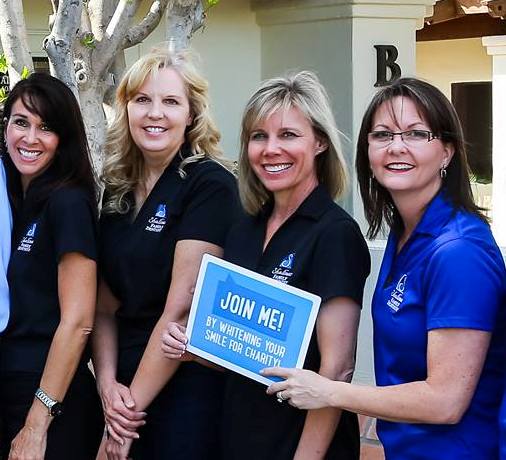
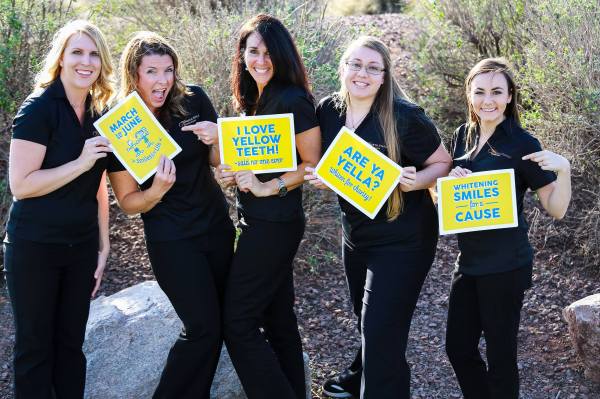
The fastest and most effective way if you’re willing to make the investment is in-office whitening. In our office, for example, a dental assistant will apply the whitening product directly to your teeth and you will have results in about 60 minutes. My daughter had this done after she got her braces off and the results were dramatic! You can also have trays made custom to your teeth and then take the product home and do it yourself. These trays will fit your teeth perfectly, and thus, work better than the over-the-counter trays. In addition, they won’t irritate your gum tissue.  Now is a great time to whiten your teeth professionally.  The Smiles for Life program is open from now until the end of June.  100% goes to children’s charities and it’s tax deductible for you.  Contact us for more details!

Overall, there really is no wrong way to go. It’s all in your preference, your budget, and your time frame. For example, if you want to get your teeth whitened for your wedding, the in-office treatment is the way to go for sure. ☺ But remember, your oral health is most important before you consider any bleaching option. Always check with your dental professional first!

Want to learn more? Visit us at

http://www.shalimarfamilydentistry.com

http://www.northstapleydentalcare.com

http://www.alamedadentalaz.com

http://www.dentistingilbert.com

Sourcehttp://www.webmd.com/oral-health/teeth-whitening

Smiles For Life

KO6A0990-Edit

Andra Mahoney, BS RDH

Screen Shot 2015-02-20 at 4.21.16 PM

From March – June, our offices will be participating in Smiles for Life.

What is Smiles for Life? The Smiles for Life Foundation raises money for seriously ill, disabled, and underprivileged children in our local communities and around the world.  It also helps sponsor Dental Humanitarian trips throughout the world.

How does it work?  We welcome you to our office, whether it’s your first visit or you are a long time patient.  Ultradent donates the whitening materials, and our Dentists donate their time.  Together, we offer professional teeth whitening services at substantially reduced prices (donations).  You may choose between three different whitening options:

1. Professionally made-to-fit-your-mouth trays and 8 tubes of take home whitening gel
2. In Office Whitening
3. In Office Whitening with take home trays and 8 tubes of take home whitening gel

Where does my donation go?  No proceeds stay in the office.  100% of your donation goes to children’s charities!  50% will go to Hope Arising, a charity that our offices work directly with.  The other 50% is given to a children’s charity approved by the Smiles For Life Foundation. And for you, it is all tax deductible!

What are the benefits to professional whitening? Whitening helps you look and feel younger.  And when you professionally whiten your teeth, you are ensuring a safer, more effective way of whitening.  Over the counter items may be quicker and cheaper, but they are not tailored to your specific mouth and are not as effective.  If you have ever wanted to whiten, now is the time.  Everybody wins!

Want to learn more? Visit us at

http://www.shalimarfamilydentistry.com

http://www.northstapleydentalcare.com

http://www.alamedadentalaz.com

Screen Shot 2015-02-20 at 5.01.00 PM

Sources:

If you would like more information on Smiles for Life, please check out this short video: http://youtu.be/asAom_V5ukY or visit them at: http://www.smilesforlife.org

If you would like to learn more about the organization we specifically work with, Hope Arising, you may check out this video: http://youtu.be/zi06jlAVQOc or visit their website here: http://hopearising.org  (you may even see some of our great Doctors pictured on their page!)

What is a Sealant?

KatieM

Katie Moynihan RDH

What is a Sealant?

Dental sealants are thin plastic-like coatings applied to the chewing surfaces of molars to prevent cavities. They work by providing a protective shield over the deep grooves and pits to seal out plaque and food. Often times, your toothbrush bristles do not reach all the way into the grooves to remove plaque and food. Once these vulnerable areas of your teeth are sealed, you can decrease your chance of tooth decay and be on your way to maintaining a healthy mouth!

Sealant 1

How are sealants applied?

In 5 easy steps:

1. The tooth is thoroughly cleaned.

2. It is then dried properly and covered in cotton, so it stays dry.

3. A solution is applied on the tooth to make it rough, so the sealant sticks better.

4. The tooth is rinsed, dried and again covered in cotton, so it stays dry.

5. The sealant material is painted on the tooth and hardened with a light.

Sealant 2

The likelihood of developing pit and fissure decay begins early in life. Sealants are often applied on children as a preventative method once their adult molars come in. However, adults with deep grooves on their teeth can also benefit from sealants. The process is a quick and painless method. Once applied, sealants can withstand the force of normal chewing and last for several years. During your regular dental visits, we will check the condition of the sealant and re-apply as needed.

Want to learn more? Visit us at

http://www.shalimarfamilydentistry.com

http://www.northstapleydentalcare.com

http://www.alamedadentalaz.com

Sources:

Hood, Alex. Sealants: A Weapon Against Cavities. http://www.deltadentalar.com/blog/sealants-a-weapon-against-cavities

Dental Sealants. (2013). http://www.cdc.gov/oralhealth/publications/faqs/sealants.htm

Sealants. http://www.mouthhealthy.org/en/az-topics/s/sealants

What do our readers want to know about their oral health?

Dear Readers- 

     Here at Dentistry Done Differently we want to know what you want to know about your oral health. Have you ever left the dentist office remembering a question you forgot to ask your dentist. Here is your chance to ask. It can be from how to floss to what are root canals. At the bottom of this post leave your questions in the comment section and we will answer them to the best of our ability. Thank you for your previous comments and feed back. We want to create a community that is full of healthy mouths and happy smiles. 

Sincerely- 

SFD logo

NSDC (burnt orange logo, 2010,(sm)

Print

Spheno Palatine Gangleonerualgia

Kim McCrady

Kim McCrady RDH BA

Spheno Palatine Gangleonerualgia

Spheno Palatine Gangleoneuralgia!  Now that’s a mouthful.  But believe it or not, most everyone has experienced spheno patlatine gangleoneuralgia at one time or another.  In fact, as scary as the condition sounds, its uncomfortable but harmless.

So, what causes spheno palatine gangleoneuralgia?  It is the rapid release of blood back to the brain back from the palate after something very cold has been present in the mouth and contacted the roof of the mouth.  This results in a sharp uncomfortable headache.  Fortunately, the headache does not last long.  Have you figured it out yet?  What is spheno palatine gangleoneuralgia?  If you guessed a good old fashioned brain freeze, you are correct.

The roof of our mouths are made up of a hard area, referred to as the hard palate.  Your hard palate is located toward the front of the mouth and extends to the about the middle of the second molars.  It is hard because there are three bones that fused together as you grew to create the hard palate.  The soft palate is located just behind the hard palate and continues down into the throat area.  It is soft because there are no bones present.  The brain freeze according to recent studies is caused by an intense and sudden increase in blood flow through the brain’s anterior cerebral artery due to dilation of the artery.  When the artery constricted, the brain-freeze pain sensation wears off.

460800_f496

Of course, allowing your cold treat a moment to warm up before it contacts your palate is a start to preventing brain freeze.  But, if your brain freeze is underway the quicker you can warm your palate the quicker the headache will recede.  Cupping you hand like a mask around your mouth and breathing in and out into your cupped hand helps to warm the palate.  As well has pressing your tongue or thumb on the roof of the mouth can shorten that headache. The goal is to prevent the blood vessels in your palate from constricting and dilating due to extreme changes in temperature.

Next time you are in need of a conversation starter, consider asking your friends if they have ever experienced spheno palatine gangleoneuralgia.

Medical News Today:  http://www.medicalnewstoday.com/articles/244458.php

Discovery Fit and Health: http://www.medicalnewstoday.com/articles/244458.php

Photo: http://robjundt.hubpages.com/hub/Brain-Freeze-Adventures

STOP IT!! These habits can harm your teeth!

photo

Ann Clark RDH

Enamel is the toughest substance of the body.  But teeth can still be vulnerable when it comes to neglect, abuse or misuse.

1) Chewing on ice, pencils- Harmless? think again.  This habit can chip or crack your tooth.  It can also irritate the inside of the tooth causing toothaches or sensitivity.

ice chewing

2)Sports without mouthguards-Many sports require a mouthguard, a molded piece of plastic protecting your teeth.  Without one you an chip or even knock one out.  Get a custom fit one from your friendly dentist.

3)Bedtime bottles-Giving baby juice, milk or formula at bed can lead to decay.  The remnants bathe the teeth in sugars over night.

getty_rf_photo_of_baby_with_bottle

4)Tongue piercing-Biting on a stud can crack a tooth.  Metal rubbing against gums can cause damage that may lead to tooth loss.  The mouth  is a haven for bacteria increasing the risk of infection.  Over time the metal can also wear down the enamel changing its shape.

piercing

5)Drinking coffee-The dark color and acidity can cause yellowing over time.  Fortunately, it’s one of the easiest to treat with a little whitening.

coffee-black

6)Smoking/tobacco products-These stain the teeth and lead the way to periodontal disease.  Tobacco can also cause cancer of the mouth, lips and tongue.

cigarette

7)Drinking wine-The acids in wines eat at the enamel creating rough spots.  A stained tooth is like sandpaper attracting more bacteria.  Red wine contains chromogen and tannins which help the color to stick…rinse with water, alcohol dries out your mouth.

8)Constant snacking- This produces less saliva than when eating a meal, leaving food bits in the teeth longer.  Snacks should be low in sugar/starch…try carrots.

9)Binge eating-Binging and purging(Bulemia) can do damage from acids found in vomit that erode enamel, leaving them brittle and weak.  Acids also cause bad breath.

10)Whitening too often- Chronic whitening or not following directions acn lead to gum irritation and increased sensitivity.

11) Bottled water- Most have little to no Fluoride as do home filtration units.  Fluoride remineralizes and strengthens tooth structure.

12)Grinding/Clenching-Bruxism wears the tooth down over a period of time.  If worn to the  inner dentin your teeth become sensitive.  Stress, boredom, and sleeping habits make it hard to control. Worn down teeth make you look older and cause pressure to fracture the teeth.

13)Medications-Oral contraceptives can change your hormones and lead to periodontal disease.  Cough drops are high in sugar content leading to decay.  Antihistamines asue dry mouth as do many meds.  We need our saliva to protect our teeth!

14)Drug Abuse(Meth)- Crystal Meth, an illegal and addictive drug can destroy your teeth.  Users crave sugary drinks and foods, clench and have dry mouth.  They notoriously lack in taking care of themselves.

15)Gummy candy-Sticky foods keep sugars and resulting acids in contact with your enamel for hours.  Eat them with a meal as more saliva is produced helping to rinse your mouth.

gummy bear

16)Sodas/Sports drinks/Fruit juice-Sodas have 11teas. of sugar per serving.  They also contain phosphorus and citric acids which eat at enamel.  Diet skips the sugar but adds more acid (artificial sweetners).  Don’t sip these beverages keeping the teeth bathed, chug them and rinse with water

17)Potato chips-Bacteria in plaque will break down starchy foods into acid.  This acid can attack teeth for 20+ minutes if stuck between the teeth…floss!

18)Using your teeth as a tool-It’s convenient to open a bottle or package this way but it canlad to a chip or crack and nail biting is full of germs and bacterias, don’t chew on them.

tooth tool

19) Brushing too much, too hard or with a hard bristle brush-This can erode enamel. Toothpaste can be abrasive, technique is important so as not to take away enamel.  Skipping check ups and not flossing will, of course, cause problems as well.

Being informed is your best defense!

Ann Clark RDH

 
Photo cited:
 
Cigarette  www.webmd.com
Baby bottle www.webmd.com
Gummy Bear www.markmatters.com
Tooth Tool www.webmd.com
Ice Chewing. www.personal.psu.edu