You’ve been waiting for this day for over eighteen months; your braces are coming off today! Interestingly enough, one of the most important stages of your orthodontic treatment begins, the retainer phase. Retainers are the only insurance policy orthodontia patients have to keep their smile straight, and bite perfect.
There are two types of orthodontic retainers:
Permanent (Fixed Bonded)
Removable
Permanent retainers cannot be removed. A thin wire is bonded on the tongue side of your lower front teeth (sometimes the upper teeth). This style retainer is great for individuals who will not remember to wear their removable retainers each night. Permanent retainers are not recommended for patients who have poor brushing and flossing habits at home. Permanent retainers require meticulous flossing (With a floss threader), and twice daily brushing in order to prevent plaque/tartar buildup from accumulating around the retainer.
Call your dentist, or orthodontist ASAP if you feel or notice your permanent retainer is broken, or distorted in any way.
There are two types of removable retainers: a Hawley style retainer, or an Essix style (Invisible) retainer. Removable retainers are popular among orthodontic patients because they can be removed, and cleaned by hand. These style retainers also do not get in the way during flossing, and brushing.
How to Care for Your Removable Retainer?
If you have an removable style retainer DO NOT soak it in boiling, or even extremely hot water, as it can easily melt, or become distorted. Also living in Arizona, store your retainer indoors. If it is left in your car during the summer months, it can melt, or become distorted.
If you are not wearing your retainer, keep it in its case, on a high shelf, away from pets. Dogs are attracted to smell/taste of human saliva. Your dog will chew, and destroy your retainer if they can get their paws on it.
DO NOT soak your retainer in mouthwash, as it will stain your retainer. Simply rinse with water, after each use, and gently brush with your soft toothbrush (NO TOOTHPASTE). Once a week, I disinfect my removable retainers. Simply place your retainers in warm water, with a denture or orthodontic cleaning tablet for 15-20 minutes, and then rinse under water. I personally use Retainer Brite tablets (Purchased from Amazon.com).
How Often, or How Long Do I Need to Wear My Removable Retainers?
It is recommended to wear your removable retainers, every night, for the rest of your life to retain your straight teeth.
You are welcome to bring in your removable style retainers with you to each preventative cleaning appointment. They can be cleaned in the ultrasonic, and then the Dr. can examine the fit. If you have any additional questions about your retainers, please contact your dental office!
Look into the mirror, stick out your tongue. What does it look like? What is the color, the texture, what do you think it is saying about you? Here are some examples of what you might see and what it means.
WHITE PATCHES:
This may be a sign of a overgrowth of candida or yeast in your mouth. You may have also heard this condition called thrush. This condition is very treatable with prescription from your dentist for a anti fungal mouth wash from the pharmacy.
BLACK AND HAIRY:
This can have several different causes; poor oral hygiene, bacteria overgrowth, or yeast growth. This may look alarming it does not cause any health problems and is usually painless. This condition will usually resolved without treatment.
RED AND WHITE SPOTS:
These are usually areas where your taste buds have worn down. This is very common and no need to treat.
WEBBED OR STRIPED LOOK:
This is a chronic auto immune disease that effects the mucus membrane in your mouth.
RED TONGUE:
This may simply indicate a fever or strep throat. However chronic redness in tongue may indicate a deficiency in certain vital nutrients such as; folic acid, B12, or iron. This is a photo of a individual with B12 deficiency; smooth, beefy, red tongue.
RIDGES:
This is a result of the tongue pressing into teeth, usually while you are sleeping. This may be a tell tale sign that you tend to clinch and grind your teeth in your sleep, usually stress induced.
This ridges will go away, the treatment for clinch and grinding is a custom night guard.
Another potential cause of these ridges is if your tongue becomes slightly enlarged or swollen. This may be a indication of thyroid problems.
Being pregnant comes with various responsibilities and it is important that you continue to maintain your normal brushing and flossing routine throughout your pregnancy.
For most women your routine dental visits are safe throughout your pregnancy. Make sure when calling to make your dental appointments you let your dental office know what stage of your pregnancy you are in. Let the office know if you have had any changes in your medications or if you have received any special instructions from your physician. Depending on your specific situation and your treatment needs, some of your dental appointments and procedures may need to be postponed until after your pregnancy.
Dental x-rays are sometimes necessary if you suffer a dental emergency during your pregnancy, or if they are needed for diagnostic purposes. It may be wise to contact your physician prior to your dental appointment to get their approval to have x-rays done if they are necessary.
During pregnancy some women may develop a temporary condition known as pregnancy gingivitis which is typically caused by hormonal changes you experience during pregnancy. This is a mild form of periodontal disease that can cause the gums to be red, tender and/or sore. It may be recommended that you be seen for more frequent cleanings to help control the gingivitis. If you notice any changes in your mouth during pregnancy, please contact your dentist.
During your pregnancy you may have the desire to eat more frequently. When you feel the need to snack try to choose foods that are low in sugar and that are nutritious for you and your baby. Frequent snacking can cause tooth decay. It is also a great idea to incorporate fluoridated mouth rinse into your daily routine. There are several different brands to choose from. Make sure to look for the ADA seal of approval which guarantees safety and effectiveness
If you experience morning sickness anytime throughout your pregnancy you can try rinsing with a teaspoon of baking soda mixed with water. This mixture lowers the acidity present in your mouth. This acidity can cause erosion of the enamel. Your gag reflex may also become overly sensitive during your pregnancy, so switching to a smaller toothbrush head may be beneficial.
Please remember that the body goes through many changes during pregnancy and maintaining your normal brushing and flossing routine plays an important role in your overall health.
Working in the dental field for twenty years I have seen many patients unsure if they should cancel their dental appointment due to not feeling good. Many are concerned because they are unsure if it’s going to get worse or not. Most offices charge a late fee if the appointment is not cancelled within a 48 hours’ notice. Should I cancel or just go in for my appointment?
The biggest question “Do I have the flu?” It’s not always obvious how infectious you are to others. Also, it’s hard to know if you have the flu or a cold early on with your symptoms. The best thing you can do is take your temperature and monitor it. If it continues to rise, more than likely you have the flu.
Center for disease control states the symptoms of the flu are fever, chills, fatigue, body aches, sore throat, and headache are common symptoms of flu. Not everyone with flu will have a fever. The flu can cause mild to severe illness, and at times can lead to death. The flu is different from a cold. The flu usually comes on suddenly.
If a patient is suffering from flu-like symptoms, we recommended that you reschedule your appointment. The flu, or influenza, is spread from an infected person through small particles released into the air when you sneeze or cough; even talking may release small particles into the air. A single sneeze may infect numerous people. Not only can you infect other patients, but you can also spread the infection to the dental staff. Dental professionals work in direct contact with fluids in the mouth so if you’re infected, they may get the virus. Although they engage in frequent hand-washing and barriers such as: gloves, masks and eyewear to protect themselves from infectious diseases, these are not foolproof.
Be sure to phone the dental office and explain why you need to reschedule. Some offices appreciate that you’re considering their health and the health of other patients and will waive the fee if you’re not a frequent offender. When in doubt, ask your dental office if the visit should be cancelled.
Every year from March 1st through June 30th, hundreds of dental practices across the United States and Canada perform professional teeth whitening for the Smiles for Life charity, and our practice is one of them! Smiles For Life is a charity that benefits children who are ill, disabled, and/or underprivileged, and when patients make a donation to have their teeth whitened, 100% of the donation goes to charity. Half of the donations are made directly to the Smiles for Life charity, and the other half are made to a charity that we choose to sponsor. This year, we are sponsoring Hope Arising, a charity which benefits the village of Dera, Ethiopia, in developing perpetual self-reliance through education, healthcare, and micro-enterprise.
Teeth whitening works by applying a solution of hydrogen peroxide to the teeth, which diffuses through the enamel and breaks downs compounds inside the teeth that are causing them to be discoloured. Once these compounds are broken down, the teeth are lighter! Teeth whitening works best on clean, healthy teeth which are free from cavities, plaque, or tartar, while under the direction of a dentist.
There are many different over-the-counter whitening products available that use low concentrations of hydrogen peroxide, but the safest, most effective, and most efficient way to whiten your teeth is by using professional concentration hydrogen peroxide, prescribed by your dentist. By having your teeth whitening done in your dental office by a dental professional, or at home under the dentist’s direction, your dentist can ensure that you are a good candidate for whitening, can provide predictable results after your whitening, and can verify the whitening progress to determine when you have reached your maximum white shade, and when it is no longer safe to continue whitening.
Each individual has a limit to how white their teeth can become; this limit is called a whitening plateau. A whitening plateau is reached when the discoloured compounds in the teeth have all been broken down, and the teeth will not become any lighter. If whitening products, whether professional or over-the-counter, are applied to the teeth after this whitening plateau, the hydrogen peroxide begins to damage the teeth by breaking down the proteins in the enamel. This is called over-bleaching, and can be avoided by following directions for safe use of whitening products provided by your dentist, or on the packaging of over-the-counter whitening products.
Other methods of whitening your teeth are available, but not always advisable. Toothpastes and dental floss that are marketed as whitening products remove stain from teeth, but not in the same way hydrogen peroxide whitening products do. Hydrogen peroxide whitening products remove stain from the inside of the tooth, whereas whitening toothpastes and dental floss use tiny abrasive particles that work like sandpaper to remove stain present on the outside of the tooth. When used for a long period of time, these abrasive particles remove superficial layers of your enamel and can overall be detrimental to the teeth.
Whitening your smile is safe when done as directed, and can be a great way to prepare for a special event such as prom, or a wedding, or just to enhance your everyday confidence. If you’ve recently quit smoking, whitening away those tobacco stains can be a great way to reward yourself! A beautiful white smile is important in making a first impression, and starting March 1st through the end of June, Smiles For Life whitening provides a unique opportunity to help children in need while treating yourself, too.
Have you ever tried to brush the little one’s teeth and been so frustrated you just give up?!? I have! With 4 children of my own, I can tell you first hand that it’s not the easiest task to accomplish and each child is so different and will respond just a little differently. So if one of these techniques don’t work for you, just try, try again.
Tip #1: For the babies who are teething or whose teeth are just breaking through, chewing on a toothbrush is an excellent idea! No toothpaste needed, just the brush and lots of saliva!
Tip #2:For the little ones, just when they’re starting to get their teeth – You sit on the floor, criss-cross apple sauce, and lay their head in your lap with their legs facing away from you. (It will look like they’re laying in a dental chair, without the chair.) Then have them extend their chip up towards you as you lightly brush their teeth in circular motions, just doing the best you can. At first, you may be only able to brush for a few seconds, but after a while, they’ll get more used to it (and you, too) and before you know it, you’re brushing morning and night! There are finger brushes that you can try as well if they don’t like the toothbrush.
Tip #3: Use a timer. Any timer will do, just make sure that it stays in the bathroom where they’ll see it on the counter and use it. It can be a one minute timer, one minute for the top and then flip it and do it again for the bottom teeth. That way they are counting down to when they’re finished.
Tip #4: SING! Sometimes I sing so much that my children tell me to stop, however, it truly works. Find a song they like to sing or a number they like to count up to, and do it while you are brushing their teeth! Some songs that worked well for my littles were “Itsy Bisty Spider,” sung twice, The ABC song, Wheels on the Bus, or London Bridges. Whatever the song, decide how to break it up into two sections, brush the bottom teeth first, pause for a second to let them swallow and then finish on the top. They think it’s fun and brushing time will go quickly and end up being fun instead of a drag.
Most importantly…..BE PATIENT! It will come and eventually they will brush their teeth on their own. It just takes time and lots of patience. Don’t let this little thing become a battle early in their little lives. If you need extra tips or help, don’t be afraid to ask your hygienist on your next visit in to see us! Happy Brushing!
Next week is February and February is National Pet Dental Health Month. Just like in humans, it’s very important for your pets to have healthy, happy teeth! Plaque and tartar grow on animals teeth, just as they do in humans. Animals can get periodontal disease, just like humans. The down side is when your pet’s mouth hurts, they cannot tell you the same way humans can.
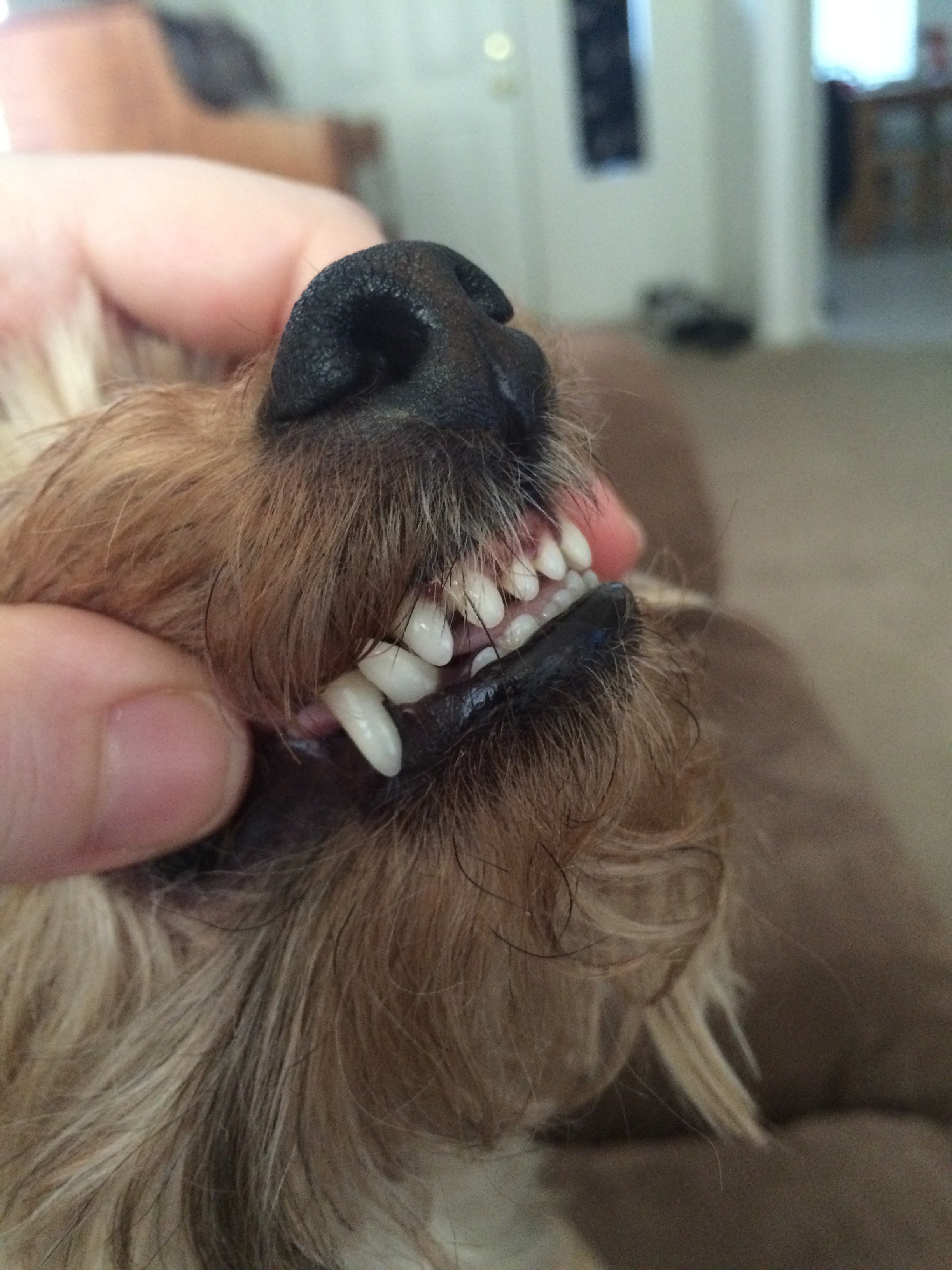
This is a 6 year old, male, Yorkshire Terrier. His owners has taken care of his mouth his whole life. He has received healthy, crunchy, dog kibble, and minimal human food. His teeth are brushed. He has appropriate chew toys and treats. As you can see his teeth are white and shiny. Gums are healthy and happy too!
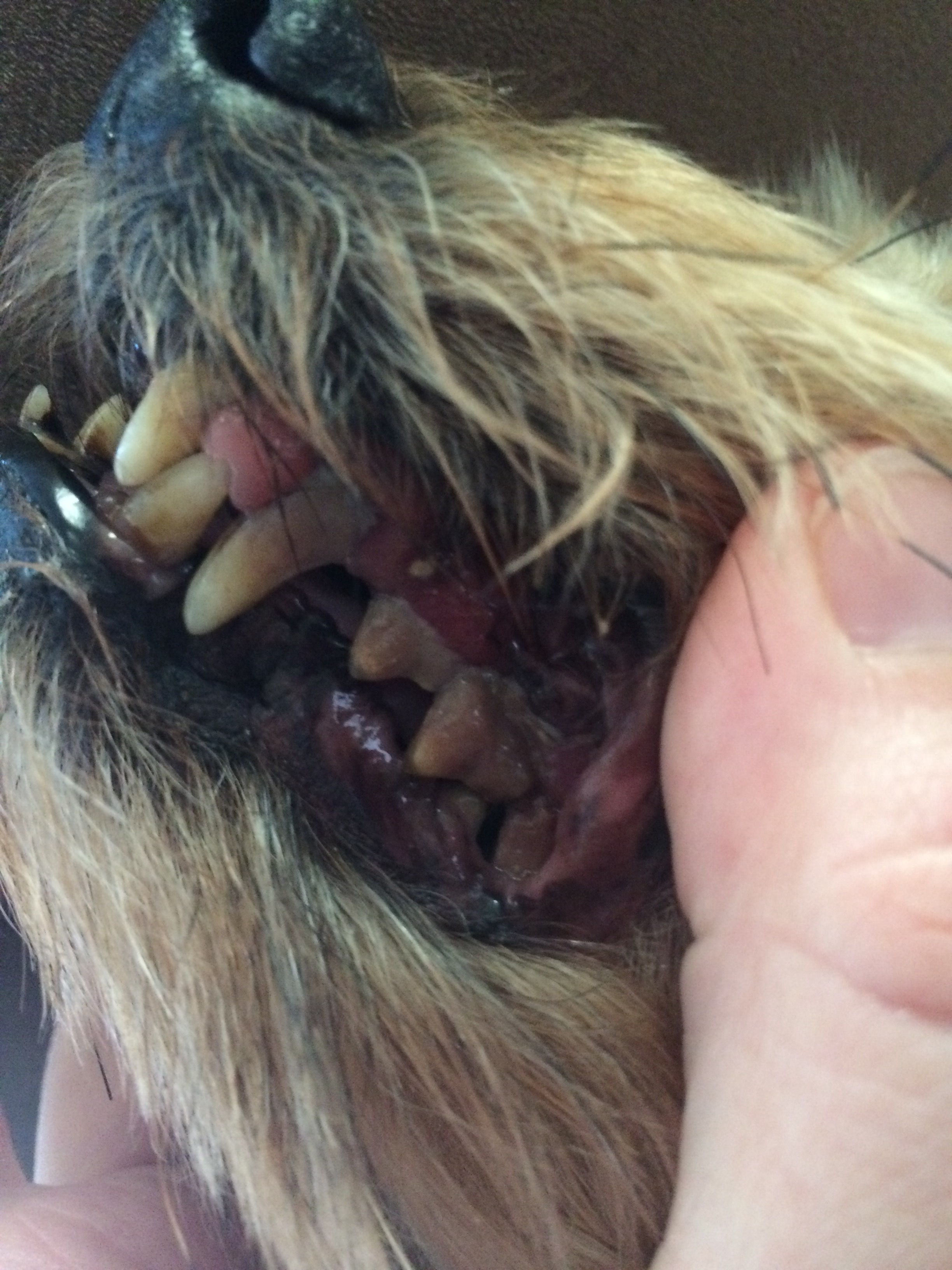
This is a 12 year old, female, Yorkshire Terrier. Her pervious owners did not take care of her mouth. As a result you can see her yellow/brown teeth covered in tartar. Her gums are angry and inflamed. She has periodontal disease and will soon loose more teeth than she already has. Until she has her cleaning and her teeth/gums are in health, she cannot eat crunchy kibble. Her food has to consist of soft foods she doesn’t have to really chew. She cannot enjoy the same treats as the previous dog. And the vet has said that her periodontal bacteria has caused her to have a respiratory condition.
The American Veterinarian Medical Association has a wonderful article on the importance of your pet’s dental health. You will find a lot of similarities between the importance of keeping your mouth keep and the importance of keeping your pet’s mouth clean!
“Dental health is a very important part of your pet’s overall health, and dental problems can cause, or be caused by, other health problems. Your pet’s teeth and gums should be checked at least once a year by your veterinarian to check for early signs of a problem and to keep your pet’s mouth healthy.
What is veterinary dentistry, and who should perform it?
Veterinary dentistry includes the cleaning, adjustment, filing, extraction, or repair of your pets’ teeth and all other aspects of oral health care. These procedures should be performed by a veterinarian or a board-certified veterinary dentist. Subject to state or provincial regulation, veterinary technicians are allowed to perform certain dental procedures under the supervision of a veterinarian.
The process begins with an oral exam of your pet’s mouth by a veterinarian. Radiographs (x-rays) may be needed to evaluate the health of the jaw and the tooth roots below the gumline. Because most dental disease occurs below the gumline, where you can’t see it, a thorough dental cleaning and evaluation are performed under anesthesia. Dental cleaning includes scaling (to remove dental plaque and tartar) and polishing, similar to the process used on your own teeth during your regular dental cleanings.
Oral health in dogs and cats
Your pet’s teeth should be checked at least once a year by your veterinarian for early signs of a problem and to keep your pet’s mouth healthy.
Have your pet’s teeth checked sooner if you observe any of the following problems:
bad breath
broken or loose teeth
extra teeth or retained baby teeth
teeth that are discolored or covered in tartar
abnormal chewing, drooling, or dropping food from the mouth
reduced appetite or refusal to eat
pain in or around the mouth
bleeding from the mouth
swelling in the areas surrounding the mouth
Some pets become irritable when they have dental problems, and any changes in your pet’s behavior should prompt a visit to your veterinarian. Always be careful when evaluating your pet’s mouth, because a painful animal may bite.
Causes of pet dental problems
Although cavities are less common in pets than in people, they can have many of the same dental problems that people can develop:
broken teeth and roots
periodontal disease
abscesses or infected teeth
cysts or tumors in the mouth
malocclusion, or misalignment of the teeth and bite
broken (fractured) jaw
palate defects (such as cleft palate)
Periodontal disease is the most common dental condition in dogs and cats – by the time your pet is 3 years old, he or she will very likely have some early evidence of periodontal disease, which will worsen as your pet grows older if effective preventive measures aren’t taken. Early detection and treatment are critical, because advanced periodontal disease can cause severe problems and pain for your pet. Periodontal disease doesn’t just affect your pet’s mouth. Other health problems found in association with periodontal disease include kidney, liver, and heart muscle changes.
It starts with plaque that hardens into tartar. Tartar above the gumline can often easily be seen and removed, but plaque and tartar below the gumline is damaging and sets the stage for infection and damage to the jawbone and the tissues that connect the tooth to the jaw bone. Periodontal disease is graded on a scale of 0 (normal) to 4 (severe).
The treatment of periodontal disease involves a thorough dental cleaning and x-rays may be needed to determine the severity of the disease. Your veterinarian or a board-certified veterinary dentist will make recommendations based on your pet’s overall health and the health of your pet’s teeth, and provide you with options to consider.
Why does dentistry require anesthesia?
When you go to the dentist, you know that what’s being done is meant to help you and keep your mouth healthy. Your dentist uses techniques to minimize pain and discomfort and can ask you how you are feeling, so you accept the procedures and do your best to keep still. Your pet does not understand the benefit of dental procedures, and he or she reacts by moving, trying to escape, or even biting.
Anesthesia makes it possible to perform the dental procedures with less stress and pain for your pet. In addition, anesthesia allows for a better cleaning because your pet is not moving around and risking injury from the dental equipment. If radiographs (x-rays) are needed, your pet needs to be very still in order to get good images, and this is unlikely without heavy sedation or anesthesia.
Although anesthesia will always have risks, it’s safer now than ever and continues to improve so that the risks are very low and are far outweighed by the benefits. Most pets can go home the same day of the procedure, although they might seem a little groggy for the rest of the day.
What can I do at home for my pet’s oral health?
Prevention of the most common oral disease in pets consists of frequent removal of the dental plaque and tartar that forms on teeth that are not kept clean. Regularly brushing your pet’s teeth is the single most effective thing you can do to keep their teeth healthy between dental cleanings, and may reduce the frequency or even eliminate the need for periodic dental cleaning by your veterinarian. Daily brushing is best, but it’s not always possible and brushing several times a week can be effective. Most dogs accept brushing, but cats can be a bit more resistant – patience and training are important.
There are many pet products marketed with claims that they improve dental health, but not all of them are effective. Talk with your veterinarian about any dental products, treats, or dental-specific diets you’re considering for your pet, or ask your veterinarian for their recommendation.”
Below is a video produced by the AVMA that is published on their youtube page. It is very informative video on how to brush your pet’s teeth. Check it out: https://youtu.be/wB3GIAgrTPE
Breathing out of your mouth may not seem like a huge problem, but in terms of oral health and facial development, mouth breathing can create numerous oral health concerns. Chronic mouth breathing occurs when your body cannot get enough oxygen through your nose, therefore, must resort to your mouth for the necessary oxygen supply. It can be caused by several different factors – obstructive, habitual, and anatomic conditions. In most cases, mouth breathing is caused by chronic nasal obstruction. Examples of this include enlarged tonsils, allergies, nasal congestion, asthma, and nasal polyps. It may also be caused just by habit. A person might not even know any better because it is the norm for them to breathe through their mouth. Some anatomic conditions that can cause mouth breathing include Down syndrome, malocclusion, tongue thrusting, cerebral palsy, and sleep apnea. Each of these conditions contribute to the deprivation of oxygen which can lead to a host of unpleasant symptoms.
Signs and symptoms of mouth breathing in dentistry include:
dry lips and mouth
decreased saliva
inflamed and bleeding gums
increased plaque
frequent cavities
chronic bad breath
swollen tonsils/adenoids
Mouth breathing has been known to cause developmental problems in children. Often times children breathe through their mouth habitually and many parents never think twice about it. However, if left undiagnosed and untreated, it may lead to permanent skeletal deformities. The face can begin to grow long and narrow, the nose can become flat with small nostrils, and the lips can be thin on top and quite pouty on the bottom. This, in addition to the other negative effects to oral health, shows that mouth breathing is a whole body problem and should be treated as early as possible.
Yes, you read that right, mouth breathing can be treated! You would think that it would be an easy habit to change – just close your mouth, right? Unfortunately, for people who struggle with mouth breathing, it’s not that easy. The body simply doesn’t know how to breathe normally, and the muscles of the face and mouth have compensated and learned to work incorrectly. In order to stop mouth breathing, the muscles must be re-trained to function in new ways. Treatment includes respiratory exercises, lifestyle changes, and in some cases medical surgeries and devices. If you feel as though your mouth breathing is occurring more than normal, please consult with your dental or health care professional to determine the cause and treatment needed to correct your chronic mouth breathing.
Tips for Flossing and Maintaining Your Oral Health While in Braces
Flossing may seem like it is almost impossible when you are in braces. It can even seem intimidating. It is a fact that it takes longer to floss your teeth if you have traditional wired braces. Thankfully there are tools that can help take some of the hassle out of flossing around braces. Please read below for some suggestions.
Floss Threaders
These threaders are a great tool to help achieve getting your floss behind your wire and between your teeth. Simply grab a normal piece of floss and one threader. Thread the floss through the loop hole in the threader, the same way you would thread a needle. After you have threaded the floss threader, simply guide the threader behind your orthodontic wire and floss between your teeth. See picture below.
Super Floss
Super floss is a pre-threaded flosser. It consists of three parts. Part one is the stiffened needle-like end. Part two is the spongy floss. Part three is the regular floss. This one piece threaded floss is great for maneuvering around those orthodontic wires. The great thing about super floss is that you do not have to thread the floss at all; it is already done for you! The spongy part of the floss is great for those wider spaces between your teeth that you get while your teeth are moving and shifting while you are in braces. The traditional end of the floss is great for those tighter spaces. See picture below.
Proxabrushes
These small brushes are great for cleaning between the teeth and behind your orthodontic wires. Proxabrushes help to remove the plaque in those hard to reach areas which are commonly missed. To use these brushes, you simply guide the brush behind the wire and move the brush up and down cleaning any remaining plaque on the teeth after brushing.
Waterpik
Waterpiks, also known as water flossers, are great to use around orthodontic brackets and wires. They are easy and effective. You simply point the water flosser between your teeth along the gumline and let the water spray between the teeth. Water flossers help to remove plaque and food debris in those hard to reach areas.
*If you would like a demonstration on any of these products please ask your dentist or dental hygienist at your next dental visit.
Bottled water is cheap, convenient, and easily accessible. One would think that choosing a bottled water brand should be a mindless decision. “It’s water” one would think, “It’s all the same wet stuff”. Whenever I find myself shopping for bottled water, I am sold on the pretty packaging, or their claim to fame that the water comes from a melting glacier in some foreign land. I think, “This water comes in a fancy glass bottle, and cost me $4.75, it has to be quality water.” FALSE.
As a bottled water consumer, and a Dental Hygienist, I am here to briefly educate you on the different pH levels of popular brands of bottled waters. Why do I care you ask? If you are sipping on a low pH (Acidic) bottle of water all day long, you are at a greater risk for tooth decay (Cavities). Bacteria that cause tooth decay can only thrive in your mouth when there is a low (Acidic) pH. Food (Or water) for thought.
Below is a basic chart to help educate oneself on what is Acidic vs. Neutral vs. Alkaline pH.
Next time you reach for a bottle of water, choose a brand that claims of be alkaline, or a high pH! Your teeth will thank you!


![KO6A3300-Edit[1]](https://dentistrydonedifferently.com/wp-content/uploads/2014/01/ko6a3300-edit1.jpg)




![KO6A0979-Edit[1]](https://dentistrydonedifferently.com/wp-content/uploads/2014/03/ko6a0979-edit1.jpg)



 Where Dentistry is done differently

